—
rating
Ludopedia
—
rating
BGG
Our Verdict
FOR GENRE FANS
If you're a fan of historical wargames and love diving into the tactical details of World War II, Rattenkrieg! is for you. The game offers an immersive and detailed experience, with rules that emphasize the reality of the battlefield.
Highlights
- Detailed historical simulation
- Modular rules for customization
- Well-implemented solo mode
Keep in mind
- Complexity may intimidate beginners
- Long playtime
Rules manual not indexed yet
Upload the PDF rulebook to ask questions about this game with AI.
About the game
What you do in a play session
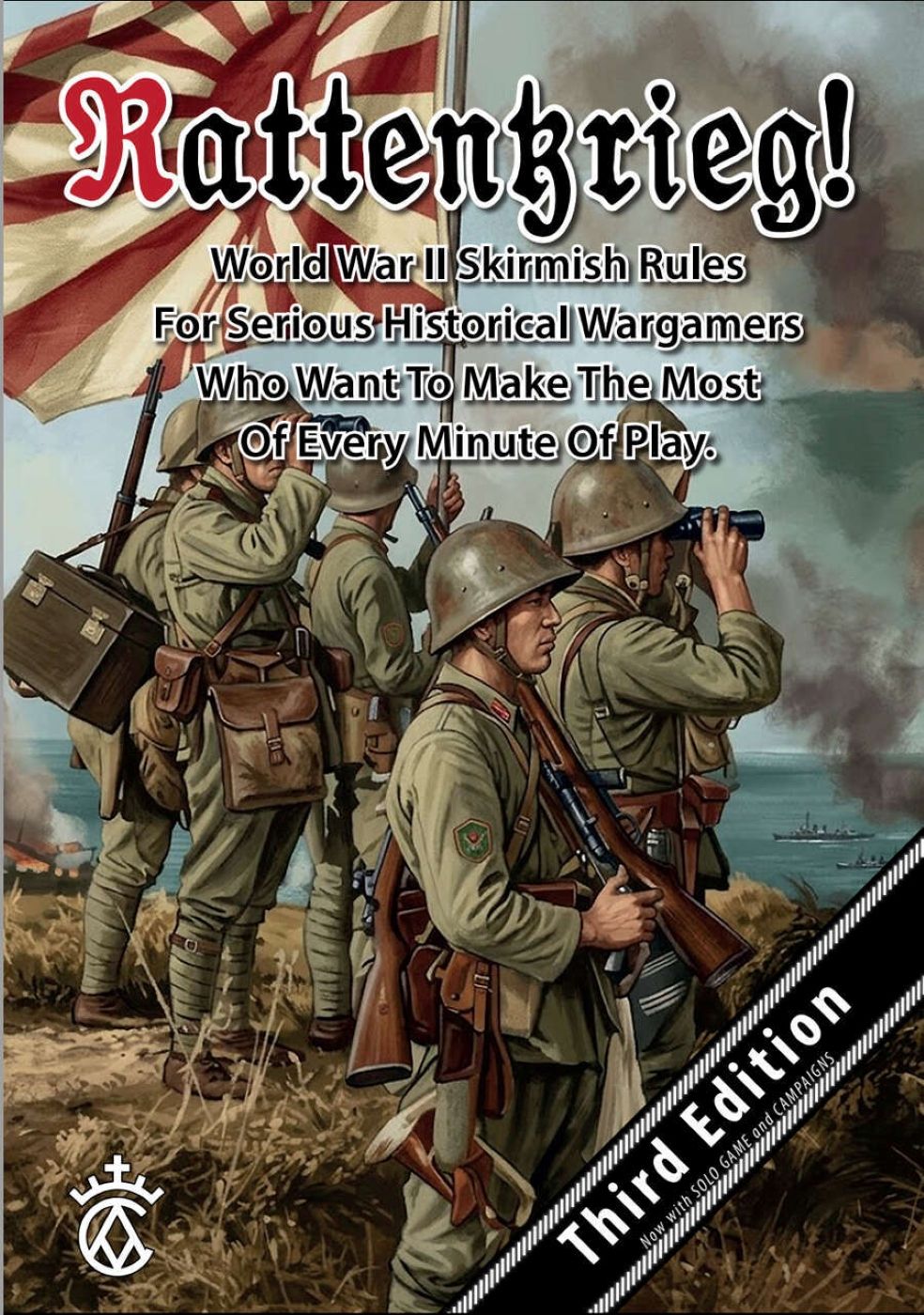
Rattenkrieg! is a tabletop miniatures wargame designed to recreate tactical combat during the Second World War, from small infantry patrols to combined-arms engagements involving armored vehicles, artillery, engineers, reconnaissance units, and air support. Every soldier, weapon, and vehicle is represented individually, allowing players to recreate a wide variety of historical situations within a single, integrated ruleset. The game is intended for players who enjoy historical wargaming and who are interested in exploring the tactical problems faced by Second World War commanders through a structured and consistent simulation. Rather than focusing primarily on competitive balance, the rules emphasize the interaction between doctrine, leadership, firepower, terrain, and the many practical limitations that shaped combat on the battlefield. The development of Rattenkrieg! has followed a straightforward principle: whenever possible, the rules have been built from historical evidence rather than adapting historical data to fit pre-existing game mechanics. Military manuals, technical publications, combat reports, firing tables, and contemporary documentation have been used extensively throughout the design process to establish the characteristics of weapons, vehicles, and military organizations. When reliable data could not be established directly, values were generated using mathematical and technical models designed to apply the same methodology consistently across the entire system. The objective is to create a coherent framework where similar problems are approached using the same principles, whether they concern infantry weapons, artillery, armored vehicles, or anti-tank ammunition. The rules attempt to represent the factors that most influenced tactical combat in reality: command and control, initiative, morale, suppression, terrain, visibility, logistics, communications, engineering, and the physical characteristics of weapons. Success depends not only on the quality of individual units, but also on how effectively they are coordinated, how well commanders exploit opportunities, and how successfully they adapt to changing battlefield conditions. The differences between armies are intended to emerge naturally from their historical doctrine, organization, equipment, and tactical methods rather than from artificial balancing mechanisms. Historical battles were rarely fought between evenly matched forces, and the rules treat this as a characteristic of warfare rather than as a design problem to be eliminated. Scenarios may therefore present significant disparities in strength, requiring players to achieve their objectives through planning, maneuver, and effective use of the resources available to them. Rattenkrieg! has also been designed as a modular ruleset. The core mechanics provide a complete game on their own, while additional modules allow players to introduce greater levels of detail in areas such as ballistics, armored warfare, command procedures, engineering, and other specialized aspects of combat. Each group can therefore choose the level of complexity that best suits its interests without learning an entirely different ruleset. The system is equally suitable for recreating historical engagements and for designing original scenarios inspired by the period. Because all units are developed according to the same underlying methodology, players can confidently expand the game beyond published scenarios while maintaining internal consistency throughout the system. Rattenkrieg! includes a dedicated solo play system, allowing you to enjoy the experience without the need for a second player. This mode also helps the player improve their tactical skills by forcing a systematic analysis of the terrain and a constant evaluation of potential threats. Rattenkrieg! does not intend to tell players what happened. It intends to provide a consistent framework for exploring why it happened.
Gallery
Box and component photos
Tap any photo to open fullscreen. Photos submitted by the community or publisher.
Best player count
BGG community vote
1
OK
2
OK
3
OK
4
OK
Soundtrack
Ambience suggested by Melodice
Loading playlist...
Where to Buy
Prices monitored daily
Finding best prices...
Prices unavailable at this time.
Price history — last 6 months (lowest new offer)
Alert enabled!
Join the BoardGamesBot deals group
Get the best board game deals every day — without message spam.
Join the WhatsApp groupGame details
Mechanics, categories, families and credits
Mechanics
Categories
Families
Publisher
Barrage Miniatures
Designer
Alf M Comps
Artist
Alf M Comps
Community
Data from BoardGameGeek
1wishlist
Frequently Asked Questions
Quick answers before you buy
How many players can play Rattenkrieg!?
Rattenkrieg! can be played with 1 to 4 players, including a well-developed solo mode.
What is the average playtime?
A game can last between 90 and 180 minutes, depending on the scenario and complexity chosen.
Is the game suitable for beginners?
Rattenkrieg! is more suitable for experienced wargamers due to its complexity and detail.
What are the main components of the game?
The game includes detailed miniatures, maps, tokens, and an extensive rulebook.
Can I create my own scenarios?
Yes, the modular system allows you to create custom scenarios beyond those published.
Are there expansions available?
Yes, there are additional modules that allow you to increase the level of detail in specific areas such as ballistics and armored warfare.
Is the game focused on competition or cooperation?
Rattenkrieg! is primarily competitive, but the solo mode allows for an individual experience focused on tactics.
Other Games You'll Like
Based on mechanics and theme