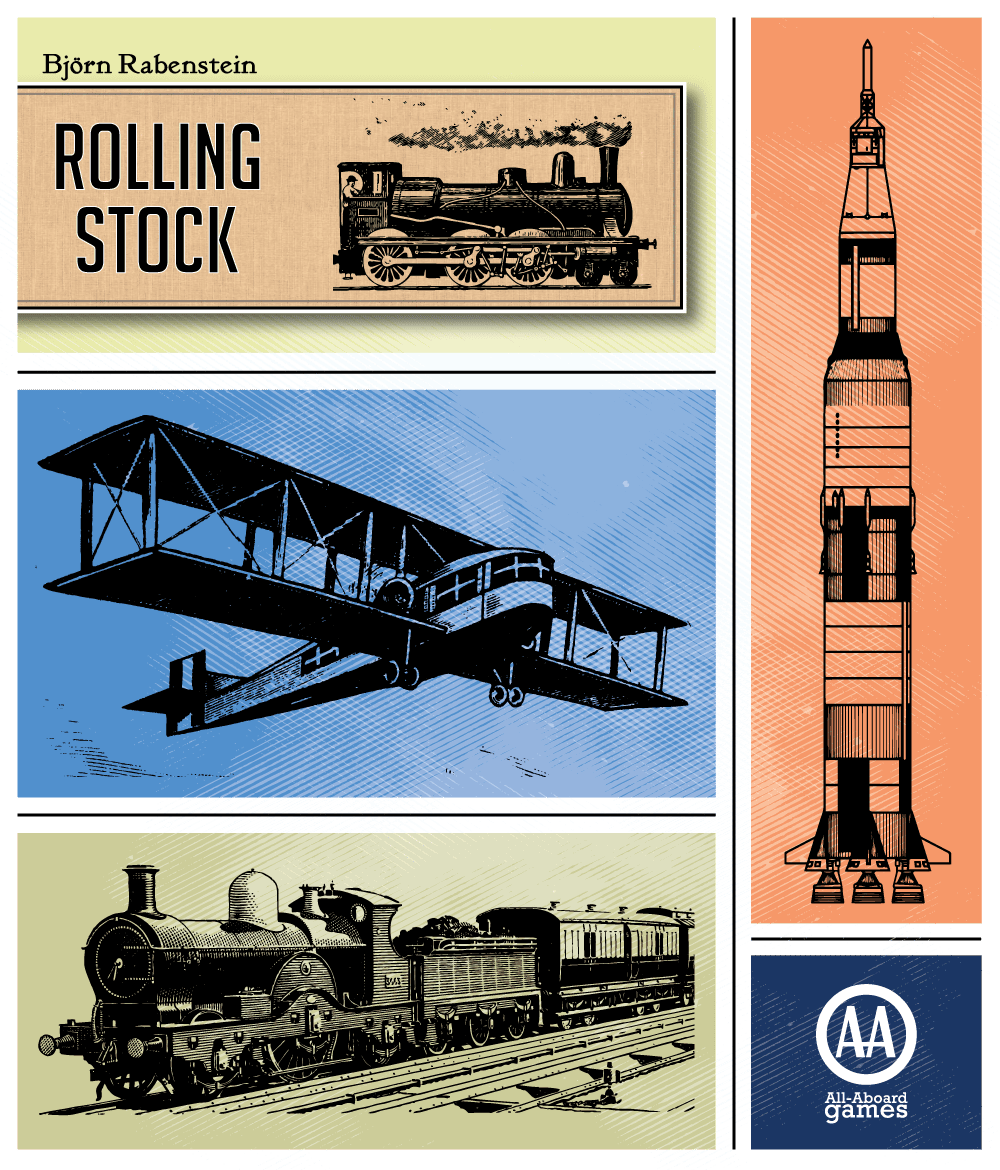
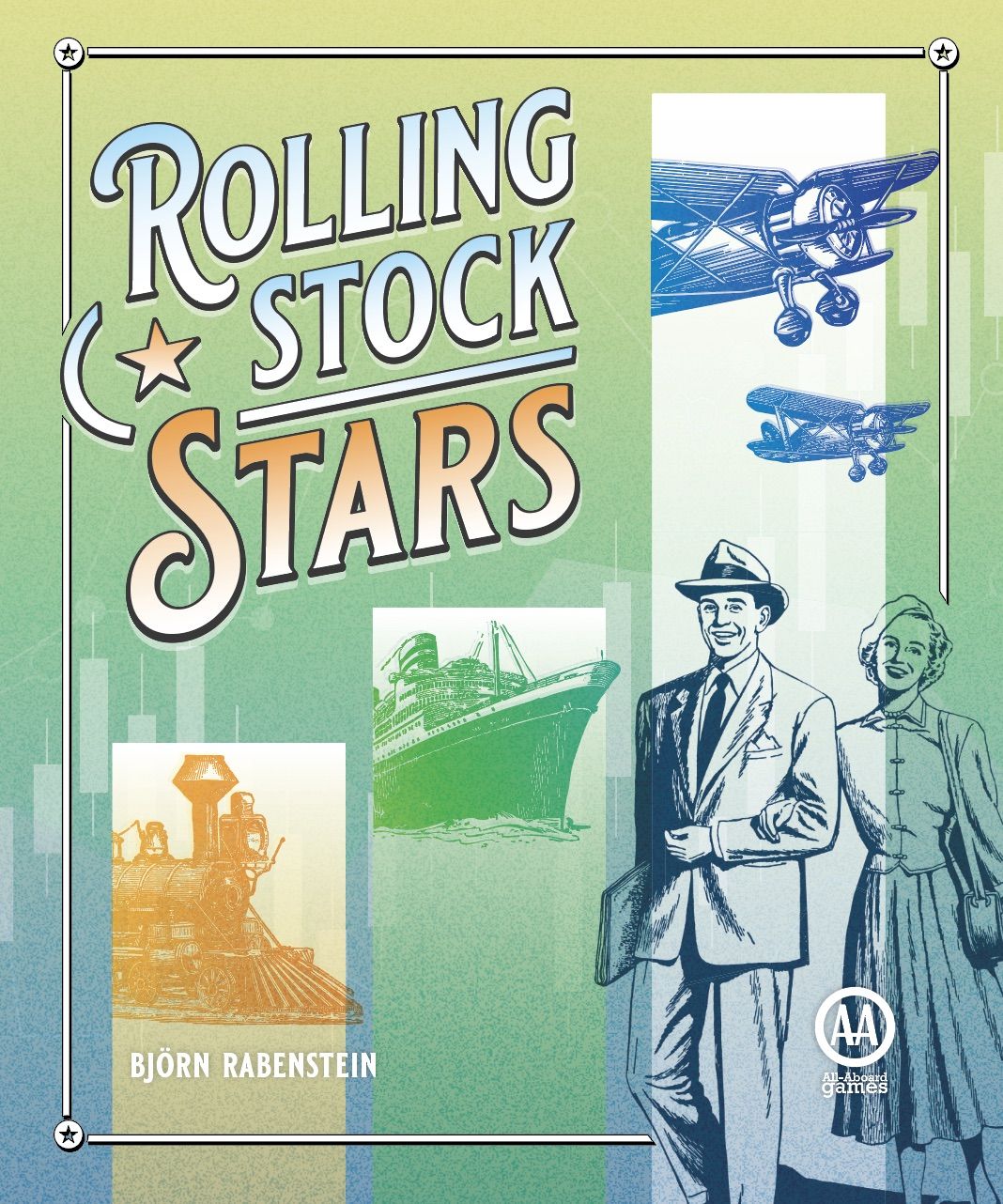
If you enjoy the adrenaline of the stock market and complex negotiations, Rolling Stock is a sure bet! It captures the essence of railway and finance games, but in a more accessible way, without losing depth. Get ready for a game that will make you think hard, but with rules that won't give you a headache. It's a dense and rewarding experience for those who like to plan every step in the business world.
thumb_up
Highlights
check_circle
Auction and stock mechanics
check_circle
Strategic depth
check_circle
Simpler rules than 18xx
check_circle
Company trading
check_circle
Thematic evolution
warning_amber
Keep in mind
report_problem
Long playtime
report_problem
Learning curve
report_problem
Intense interaction
upload_file
Rules manual not indexed yetUpload the PDF rulebook to ask questions about this game with AI.
info
About the game
What you do in a play session
In Rolling Stock, players take on the role of shrewd investors in a dynamic stock and company market. This card game focuses on trading private companies, acquired in exciting auctions, which can be turned into public corporations through IPOs or sold to become subsidiaries of already established corporations. Control of a corporation is determined by holding the majority of its shares, granting the majority shareholder the power to make crucial decisions: issuing new shares, paying dividends, and expanding the corporate empire by buying more subsidiaries from other players, corporations, or even an enigmatic foreign investor. The game's thematic universe begins with Prussian railways, gradually expanding to Germany, Europe, and, in a futuristic twist, even space. As the game's scope increases, older companies lose profitability and are eventually written off, severely impacting the book value of their owners. Although it lacks a physical board to simulate transportation, Rolling Stock models networking effects through synergies between geographically adjacent subsidiaries belonging to the same corporation. This simplified approach serves as a backdrop for the game's true heart: the complex trading of stocks and companies. Subtly inspired by the acclaimed 18xx series, Rolling Stock differentiates itself with significantly simpler rules, while maintaining comparable strategic depth.
photo_library
Gallery
Box and component photos
11 photos · from the community
01 / 11
Tap any photo to open fullscreen. Photos submitted by the community or publisher.
Digital Implementations: 18xx.gamesTheme: Stock Market
businessPublisher(Web published), All-Aboard Games
editDesignerBjörn Rabenstein
groups_2
Community
Data from BoardGameGeek
357owners
223wishlist
61want to play
quiz
Frequently Asked Questions
Quick answers before you buy
7 questions
Who is Rolling Stock for? expand_more
It's ideal for players who love economic games with lots of negotiation, auctions, and stock management, especially those seeking a deep strategic experience without the extreme complexity of the 18xx series.
What is the average playtime? expand_more
Prepare for a robust session! Rolling Stock has an estimated playtime of 240 minutes, which is about 4 hours. It's a game to dedicate an entire afternoon or evening to.
How many players can participate? expand_more
The game is designed for 3 to 5 players. The auction and negotiation dynamics work best with this number, ensuring constant interaction and impactful decisions.
Is it too complex for beginners? expand_more
While it has simpler rules than its 18xx inspiration, Rolling Stock is still a medium-to-heavy weight game (3.89/5 on BGG). Beginners in economic games might find it challenging, but experienced players in the genre will adapt well.
Do I need a game board to play? expand_more
No! Rolling Stock is a pure 'Card Game,' meaning it does not use a physical board. Interaction and network effects are modeled by cards and synergies between companies.
What are the 'synergies' between companies? expand_more
Synergies occur when geographically adjacent subsidiaries belong to the same corporation. This represents an increase in profit and is an abstract way to simulate the network effects of a transportation system, even without a board.
Is there a digital version of Rolling Stock? expand_more
Although the game is vaguely inspired by the 18xx series and there are digital implementations for games in that family, Rolling Stock itself is a 'Print & Play' tabletop game. Check online communities for unofficial adaptations.