7.2
rating
Ludopedia
6.7
rating
BGG
Our Verdict
If you enjoy a good eurogame with an Egyptian theme and plenty of optimization, Sailing Toward Osiris might be your next obsession! It's a game that shines in action management and timing.
Highlights
- Smooth worker placement
- Immersive Egyptian theme
- Crucial timing decisions
- Strategic pattern building
- Elegant indirect interaction
Keep in mind
- May have low direct interaction
- Initial learning curve
- Requires good planning
RECOMMENDED
Rules manual not indexed yet
Upload the PDF rulebook to ask questions about this game with AI.
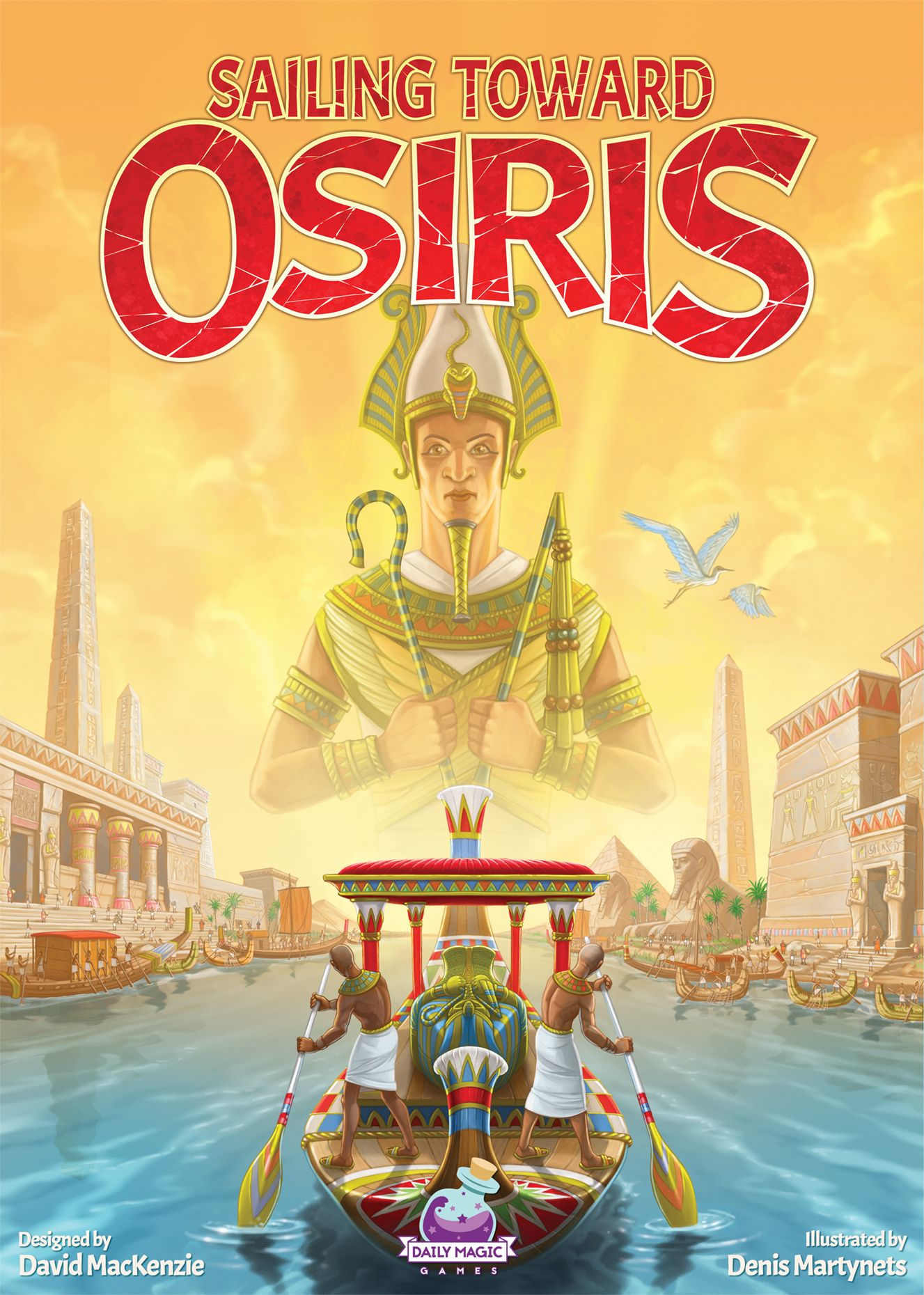
In Ancient Egypt, the Pharaoh has passed without an heir, and his funerary barge slowly sails down the Nile towards Osiris's judgment. To ensure the gods' favor for the king's spirit and, incidentally, to contend for the throne, the land's governors must erect the grandest monuments in his honor. But beware: resources are limited, the gods are unpredictable, and time is short! The memorials must be completed before the barge reaches Osiris's temple. Sailing Toward Osiris is a eurogame that puts you in the shoes of one of these ambitious governors, combining worker placement and resource management with a touch of pattern building. In each of the game's four 'seasons,' which track the barge's progress on the Nile, players draw workers from a communal bag and take turns performing a series of quick actions. You can send workers to gather resources, acquire cards in cities, lead or follow caravans, hire more labor, trade at the market, plan and build monuments (sphinxes, obelisks, and pylons), or use city and boon cards. The goal is to accumulate glory points by constructing monuments in strategic river locations and in specific configurations. As the game progresses, the scarcity of resources and building sites increases, demanding creativity and planning. The governor with the most glory at the end of the game will be crowned the new Pharaoh. A historical tidbit: the game is inspired by the real events surrounding the death of Ramses XI and the ascension of Smendes, a powerful governor of Lower Egypt.
GALLERY
11 photos · from the community
Tap any photo to open fullscreen. Photos submitted by the community or publisher.
In English
2
REC
3
BEST
4
BEST
5
BEST
Loading playlist...
Finding best prices...
Prices unavailable at this time.
Price history — last 6 months (lowest new offer)
Mechanics
Categories
Families
Publisher
Daily Magic Games, Crazy Pawn Games, Pixie Games, Schwerkraft-Verlag
Designer
W. David MacKenzie
Artist
Denis Martynets
How many players does Sailing Toward Osiris support, and what's the average game duration?
The game is ideal for 2 to 5 players. A game typically lasts between 60 and 90 minutes, depending on the number of participants and familiarity with the rules.
What is the complexity level of the game? Is it for beginners or more experienced players?
Sailing Toward Osiris is considered a medium-weight game (2.8/5 on BGG). It has accessible rules but offers enough strategic depth to appeal to intermediate and even more experienced players looking for a tactical challenge without being overly heavy.
What are the main objectives to win the game?
Your primary goal is to accumulate the most glory points. This is mainly achieved by building monuments (sphinxes, obelisks, pylons) in strategic locations along the Nile and in specific configurations, as well as leveraging bonuses from cards and divine favors.
Is there a lot of player interaction, or is it more of a 'multiplayer solitaire'?
Interaction is primarily indirect. You compete for action spaces in worker placement and for board locations to build monuments, which can 'block' opponents' plans. There's also a caravan mechanic that allows you to follow other players. There's no direct conflict, but competition for resources and bonuses is constant.
Are the components of good quality? What can I expect in the box?
The game typically comes with a main board representing the Nile River, wooden pieces for workers and resources, action and boon cards, and monument pieces. The quality is typical of a eurogame, functional and thematic, with art that effectively evokes Ancient Egypt.
Does the game have good replayability? Are the games always the same?
Yes, replayability is good! The variation in card distribution, the order in which players choose their actions, and the competition for different locations on the board ensure that each game presents new challenges and strategies to explore.