Shinjuku — Prices
リゴレ (rigoler), (Web published), HeidelBÄR Games · Board game · 2024
2–4 · best 4
60 min
Weight 2.5/5
Buy · from US$ 49.01
7.5
rating
Ludopedia
7.3
rating
BGG
Our Verdict
RECOMMENDED
Perfect for those who love logistics and resource management; the wild card system is brilliant.
Highlights
- Very clever wild card mechanic
- Immersive and elegant urban theme
- Great balance between building and delivery
- Well-optimized game length
Keep in mind
- Moderate initial learning curve
- Requires strict planning to win
Rules manual not indexed yet
Upload the PDF rulebook to ask questions about this game with AI.
About the game
What you do in a play session
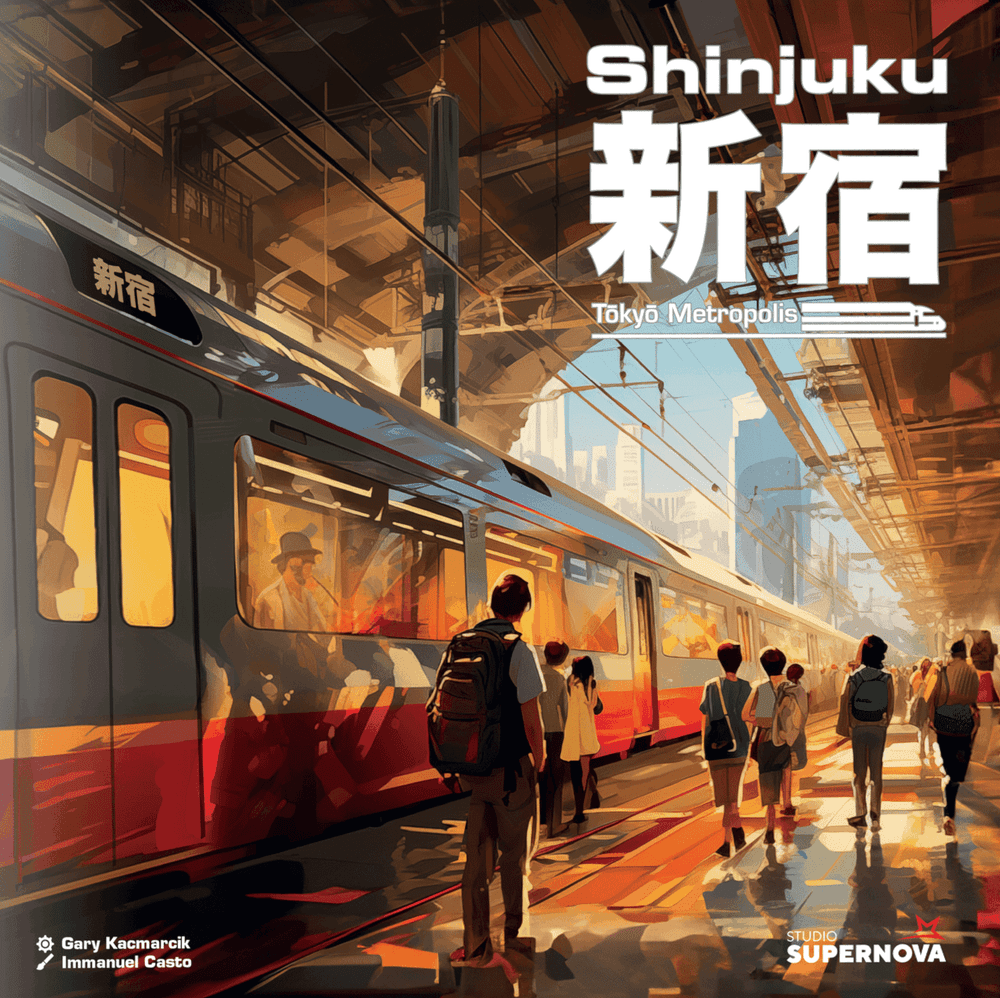
Ever dreamed of dominating Tokyo's commercial scene? In Shinjuku, you step into the shoes of a tycoon striving to build the city's most successful shopping and railway conglomerate. The core of the game is strategic: building stores is great, but the fanciest shop is useless if customers can't reach it. That's why expanding your rail network is crucial to attract and transport shoppers.
The game dynamics revolve around customers appearing on the map, each seeking one of four different types of goods. On your turn, you can choose two different actions. You might open a new store, expand your rail lines, upgrade your shop into a department store for more power, draw cards for income, or—the most critical part—move customers along the rails until they reach your stores and make a purchase.
Hand management is the heart of the experience. You start with four location cards and draw a new one every turn. To build, expand, or move, you must play the matching location card from your hand. But here is the clever twist: if you already own a store at a specific location, the corresponding card in your hand becomes a wild card, usable for any other action. This creates an interesting loop where investing in infrastructure simplifies your future moves.
The competition ends one round after the last customer is placed, and victory goes to the player who collects the most sets of customers. It's a game of efficiency, where every card played and every rail laid must be calculated to optimize the flow of consumers. If you enjoy logistics games with a modern 'eurogame' feel, Shinjuku is the perfect choice to test your urban planning skills.
The game dynamics revolve around customers appearing on the map, each seeking one of four different types of goods. On your turn, you can choose two different actions. You might open a new store, expand your rail lines, upgrade your shop into a department store for more power, draw cards for income, or—the most critical part—move customers along the rails until they reach your stores and make a purchase.
Hand management is the heart of the experience. You start with four location cards and draw a new one every turn. To build, expand, or move, you must play the matching location card from your hand. But here is the clever twist: if you already own a store at a specific location, the corresponding card in your hand becomes a wild card, usable for any other action. This creates an interesting loop where investing in infrastructure simplifies your future moves.
The competition ends one round after the last customer is placed, and victory goes to the player who collects the most sets of customers. It's a game of efficiency, where every card played and every rail laid must be calculated to optimize the flow of consumers. If you enjoy logistics games with a modern 'eurogame' feel, Shinjuku is the perfect choice to test your urban planning skills.
Gallery
Box and component photos
Tap any photo to open fullscreen. Photos submitted by the community or publisher.
Rules videos
Learn by watching before you open the box


Best player count
BGG community vote
2
REC
3
REC
4
BEST
Soundtrack
Ambience suggested by Melodice
Loading playlist...
Where to Buy
Prices monitored daily
Finding best prices...
Prices unavailable at this time.
Price history — last 6 months (lowest new offer)
As an Amazon Associate I earn from qualifying purchases. Prices and availability subject to change.
Alert enabled!
Join the BoardGamesBot deals group
Get the best board game deals every day — without message spam.
Join the WhatsApp groupGame details
Mechanics, categories, families and credits
Mechanics
Categories
Families
Publisher
リゴレ (rigoler), (Web published), HeidelBÄR Games, Maldito Games, Studio Supernova
Designer
Gary Kacmarcik
Artist
Gary Kacmarcik, Immanuel Casto, Rokkakudō DADA (六角堂DADA)
Community
Data from BoardGameGeek
709owners
685wishlist
164want to play
Frequently Asked Questions
Quick answers before you buy
Is the game too complex for beginners?
It has a medium weight (2.5 on BGG). It's not a 'gateway' game, but anyone familiar with Eurogame logic will pick it up quickly.
How long does a game take?
It usually lasts about 60 minutes, remaining quite dynamic for the amount of strategy it offers.
Does it work well with 2 players?
Yes, the game supports 2 to 4 players, maintaining competitiveness even in smaller sessions.
Do I need to know English to play?
No, the game has no language dependency, so the cards and components are intuitive.
What is the main goal to win?
The focus is on collecting the most sets of customers, so delivery efficiency is everything.
Other Games You'll Like
Based on mechanics and theme