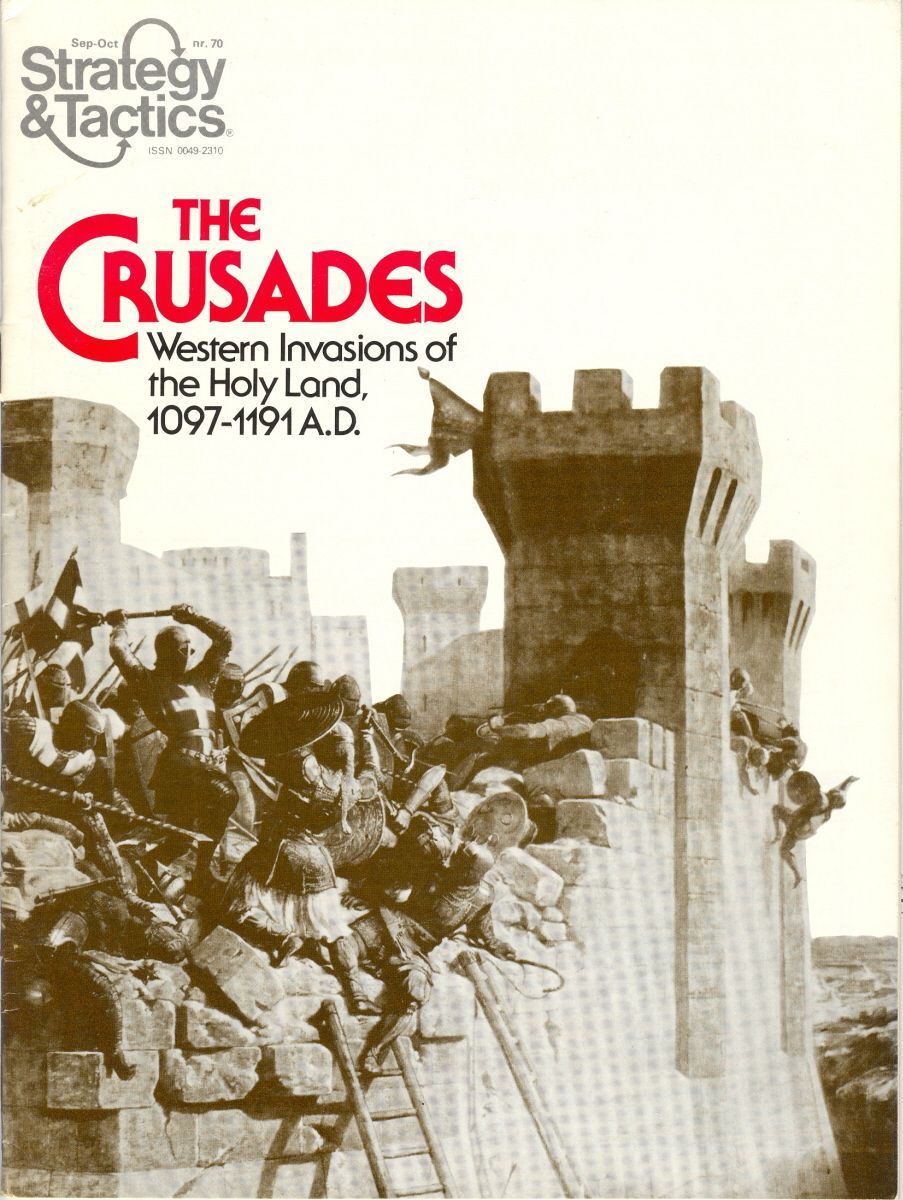
The Crusades: Western Invasions of the Holy Land 1097-1191 A.D.
SPI (Simulations Publications, Inc.) · Board game · 1978An absolute classic for those who love deep historical simulation wargames. The experience is dense, requiring rigorous planning with written orders and a healthy dose of political strategy. It is perfect for those looking for a long-form challenge where every move and siege matters immensely. If you enjoy feeling the weight of history and don't mind mechanics from a golden era, this game will provide an incredible level of immersion.
- Extremely detailed historical simulation
- Immersive written orders system
- Cooperative-competitive political dynamics
- Vast geographical and historical scope
- Extremely long and dense sessions
- High complexity for beginners
- Dated game mechanics
About the game
What you do in a play session
The game truly shines in its atmosphere. You are not just moving pieces on a hex map; you are dealing with historical leaders, random events like plagues and treachery, and even diplomatic interventions from powers like Byzantium and Armenia. The First Crusade scenario is particularly interesting: it creates a dynamic where players must cooperate for the collective goal to succeed, yet they cannot forget their own personal objectives. It is that kind of political tension that turns the board into a diplomatic battlefield.
The Third Crusade scenario focuses on a direct duel for two players, being more contained and focused on military engagement. Sieges are fundamental here, and combat is resolved through those classic Combat Results Tables (CRT) that make any wargame veteran feel right at home. The map covers a vast area, from South-East Asia Minor to Northern Egypt, offering a geographical scope that really helps to visualize the scale of the conflict. While it is a game that demands patience and time—especially due to the written orders—it remains one of the most detailed and atmospheric representations of the Crusades ever made. If you enjoy simulations that take history seriously and are not afraid of a session that lasts an entire afternoon, this is a classic that every enthusiast should know, even if there are more modern options on the market today.
Gallery
Box and component photos
Tap any photo to open fullscreen. Photos submitted by the community or publisher.
Rules videos
Learn by watching before you open the box
In English

Best player count
BGG community vote
Soundtrack
Ambience suggested by Melodice
Where to Buy
Prices monitored daily
Price history — last 6 months (lowest new offer)
As an Amazon Associate I earn from qualifying purchases. Prices and availability subject to change.
Alert enabled!
Join the BoardGamesBot deals group
Get the best board game deals every day — without message spam.
Join the WhatsApp groupGame details
Mechanics, categories, families and credits
Mechanics
Categories
Families
Community
Data from BoardGameGeek
Frequently Asked Questions
Quick answers before you buy
Is the game very difficult to learn?
How long does a game take?
Can it be played solo?
How does combat work?
Is the game cooperative or competitive?
Other Games You'll Like
Based on mechanics and theme