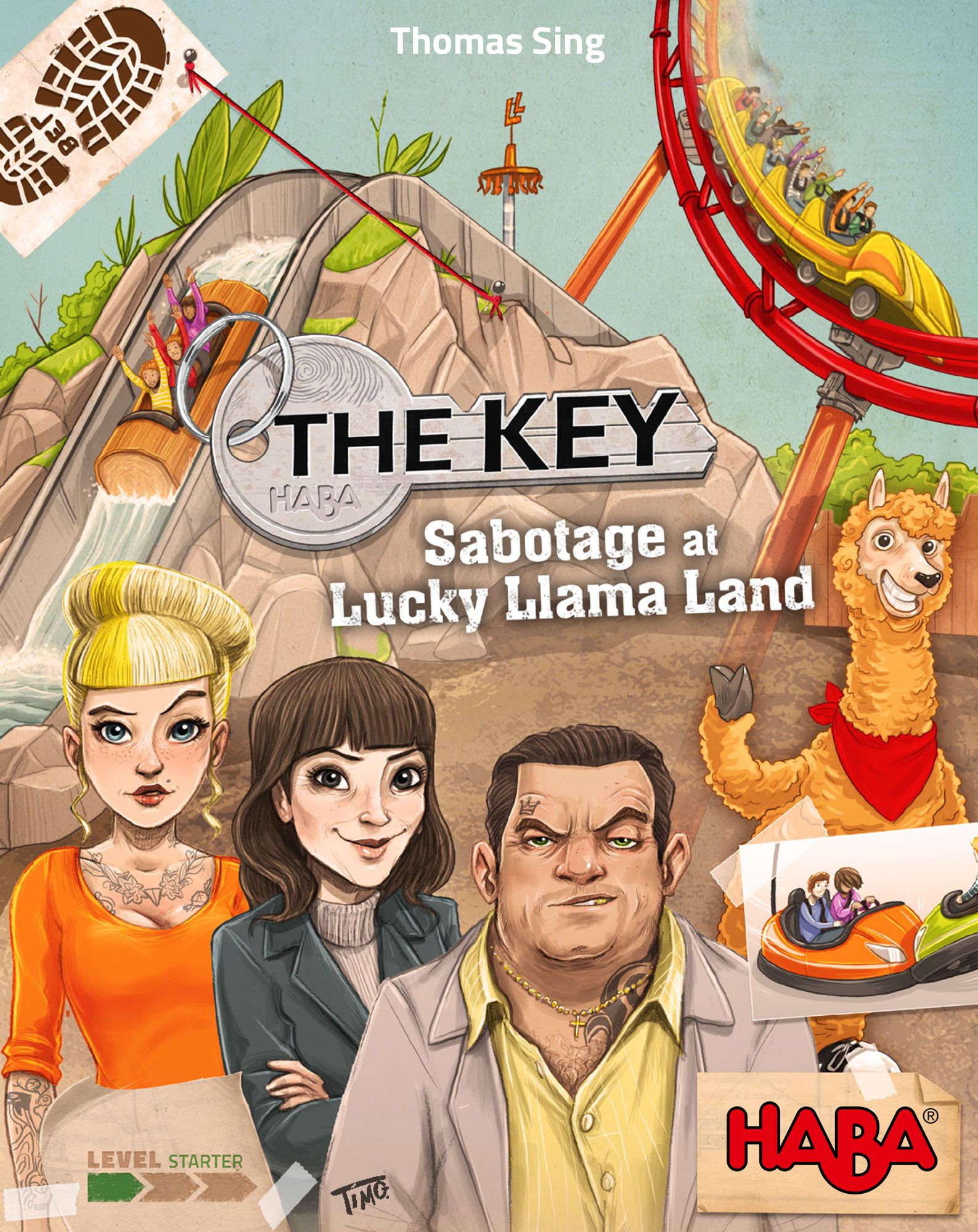
If you're a fan of mysteries and love to put your mind to work, The Key: Sabotage at Lucky Llama Land is a treat! It's a super clever deduction game that puts you in the shoes of a detective in a messy amusement park. The experience is addictive, with the tension of solving the case before others, but with the twist that efficiency is worth more than pure speed. Perfect for those who enjoy a good mental challenge and want to feel like a true investigator.
thumb_up
Highlights
check_circle
Clever deduction
check_circle
High replayability
check_circle
Fun theme
check_circle
Mental challenge
check_circle
Efficient victory
warning_amber
Keep in mind
report_problem
Can be frustrating
report_problem
Requires attention
report_problem
Language dependent
upload_file
Rules manual not indexed yetUpload the PDF rulebook to ask questions about this game with AI.
info
About the game
What you do in a play session
Alright, detective! Get ready for a mystery-filled investigation at Lucky Llama Land, a theme park that has become the scene of a series of sabotages. The attractions have all been tampered with, and now it's up to you and your fellow investigators to uncover who is behind all this chaos. In The Key: Sabotage at Lucky Llama Land, you'll dive headfirst into a complex case, collecting clues about the days of the crimes, identifying the saboteurs, discovering the tools used, and, of course, the crime scenes. The ultimate goal is to assemble the correct number code that will give you the key to apprehend the culprits. But here's a secret: it's not just about being the fastest. Efficiency is key! You need to be the sharpest detective, solving the case with the fewest unnecessary clues. This is the third title in the acclaimed The Key series, created by Thomas Sing, and it arrives with new types of clues and puzzles to test your deductive skills. It's a mystery game that offers plenty of replayability, ensuring that each new game is a fresh and exciting challenge. If you enjoy a good enigma and love feeling like a true Sherlock Holmes, this game is for you!
photo_library
Gallery
Box and component photos
11 photos · from the community
01 / 11
Tap any photo to open fullscreen. Photos submitted by the community or publisher.
Series: Family Games (HABA)Series: The Key (HABA)Theme: Amusement Parks / Theme Parks
businessPublisherHABA
editDesignerThomas Sing
paletteArtistTimo Grubing
groups_2
Community
Data from BoardGameGeek
1,082owners
244wishlist
41want to play
quiz
Frequently Asked Questions
Quick answers before you buy
7 questions
How many players can participate in The Key: Sabotage at Lucky Llama Land? expand_more
This game is quite versatile and can be played by 1 to 4 players, which is great for those who want a solo experience or to play with friends.
What is the average duration of a game? expand_more
A game of The Key: Sabotage at Lucky Llama Land is quick! It usually takes between 20 and 20 minutes, perfect to fit into any schedule.
What is the complexity level of the game? expand_more
It's considered a light-weight game (1.8/5 on BGG), which means the rules are easy to learn, but the deduction still offers a good challenge. It's accessible for beginners but fun for experienced players.
Is The Key: Sabotage at Lucky Llama Land a game for children? expand_more
Being a HABA game and part of the 'Family Games' series, it's designed to be played as a family, with a fun theme and rules that older children and teenagers can understand and enjoy, always with adult supervision for the nuances of deduction.
Do I need any prior knowledge to play? expand_more
Not at all! The game is self-contained. All you need is your observation and deduction skills. It teaches you what you need to know to solve the mystery.
Does the game have replayability? expand_more
Yes, and a lot! With different combinations of clues and crime scenes, each game becomes a new challenge, ensuring you can play multiple times without feeling like you're repeating the same thing.
Are the game components language dependent? expand_more
Yes, Ludopedia indicates moderate language dependency, suggesting that having a translated spreadsheet or cards can help with fluidity, especially for those unfamiliar with English.