—
rating
Ludopedia
9.5
rating
BGG
Our Verdict
RECOMMENDED
A fascinating dive into classical physics for those who love strategy and action combos.
Highlights
- Highly satisfying action chaining
- Engaging and faithful scientific theme
- Increasing tension every round
- Smart resource management
Keep in mind
- Machine costs escalate quickly
- Requires long-term planning
Rules manual not indexed yet
Upload the PDF rulebook to ask questions about this game with AI.
About the game
What you do in a play session
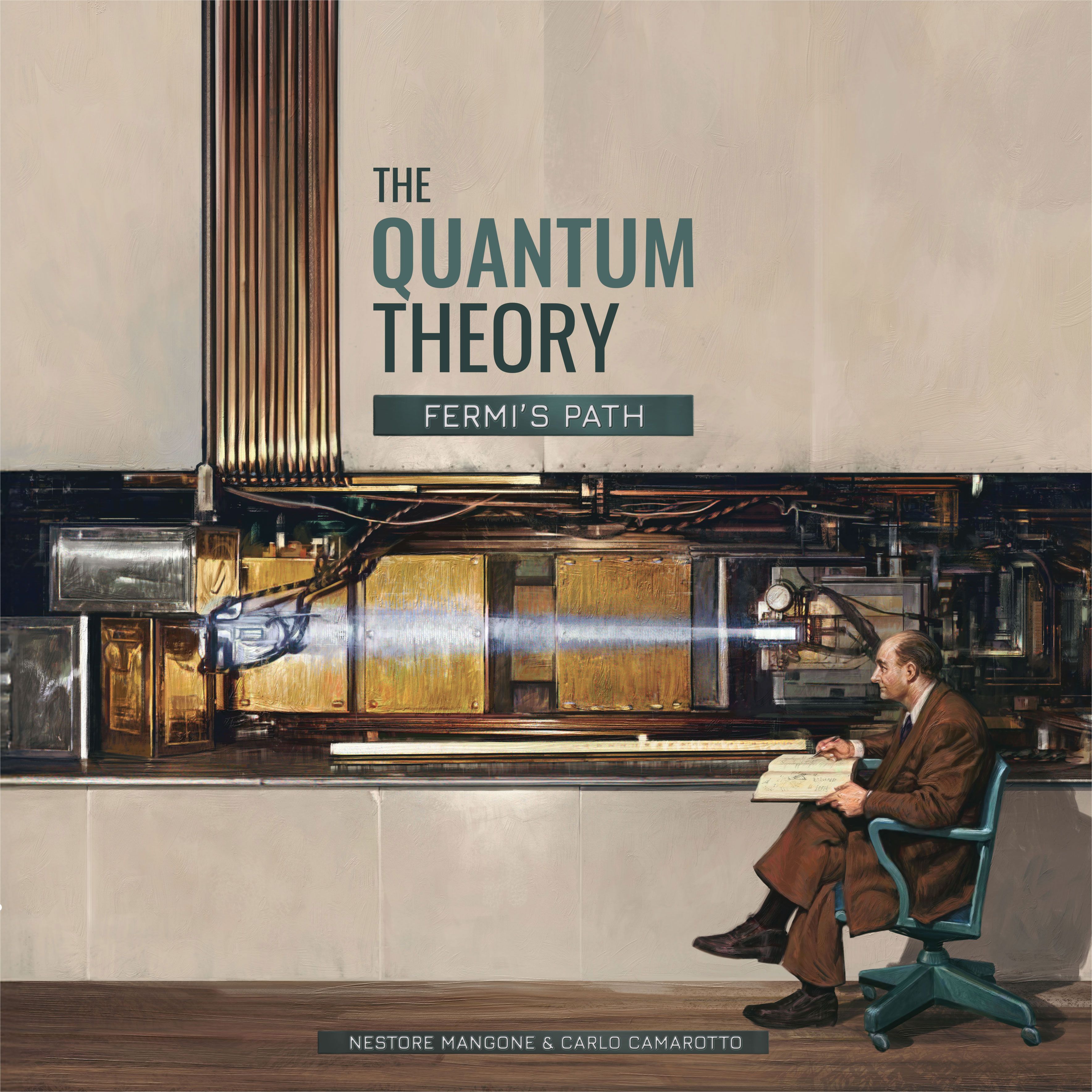
Grab your lab coat and brew some coffee, because we're traveling back to the first half of the 20th century! In The Quantum Theory: Fermi's Path, you take charge of an elite physics laboratory during the golden age of nuclear discovery. Inspired by the genius of Enrico Fermi, your goal is to turn your research center into the most prestigious in the world through cutting-edge theoretical and experimental breakthroughs.
The gameplay is a race for prestige where you must balance developing state-of-the-art instruments, training brilliant assistants, and presenting your theories at international conferences. The core loop is engaging: you select actions to build machines, generate new ideas, publish papers, or shine at conferences. The standout feature is the chaining mechanic, allowing you to create sequences of continuous growth and make your moves increasingly powerful.
But don't think it's all just theory; there's constant tension on the board. The machines you build are shared resources, and their costs escalate quickly. If you take too long to solidify your discoveries, the rising costs might prove fatal. It's a game of time and resource management where efficiency is the key to scientific glory. Can you master quantum physics before the research costs spiral out of control?
The gameplay is a race for prestige where you must balance developing state-of-the-art instruments, training brilliant assistants, and presenting your theories at international conferences. The core loop is engaging: you select actions to build machines, generate new ideas, publish papers, or shine at conferences. The standout feature is the chaining mechanic, allowing you to create sequences of continuous growth and make your moves increasingly powerful.
But don't think it's all just theory; there's constant tension on the board. The machines you build are shared resources, and their costs escalate quickly. If you take too long to solidify your discoveries, the rising costs might prove fatal. It's a game of time and resource management where efficiency is the key to scientific glory. Can you master quantum physics before the research costs spiral out of control?
Gallery
Box and component photos
Tap any photo to open fullscreen. Photos submitted by the community or publisher.
Best player count
BGG community vote
1
OK
2
OK
3
OK
4
OK
Soundtrack
Ambience suggested by Melodice
Loading playlist...
Where to Buy
Prices monitored daily
Finding best prices...
Prices unavailable at this time.
Price history — last 6 months (lowest new offer)
Alert enabled!
Join the BoardGamesBot deals group
Get the best board game deals every day — without message spam.
Join the WhatsApp groupGame details
Mechanics, categories, families and credits
Mechanics
Categories
Families
Publisher
Tabula Games
Designer
Carlo Camarotto, Nestore Mangone
Artist
Antonio De Luca
Community
Data from BoardGameGeek
84wishlist
6want to play
Frequently Asked Questions
Quick answers before you buy
What is the average playtime?
Games typically last between 60 and 90 minutes, depending on the player count.
How complex is the game?
It has medium-to-high strategic depth, perfect for those who enjoy resource management and combo planning.
How many players is it for?
It works great for 1 to 4 players, making it an excellent option for solo play.
What is the main theme?
The development of nuclear physics in the early 20th century, focused on research laboratories.
Is it highly competitive?
Yes, there is direct competition for prestige and the use of shared resources like machines.
Other Games You'll Like
Based on mechanics and theme