Undo: Blood in the Gutter
Pegasus Spiele, Albi, DV Games · Board game · 2019
2–6 · best 2, 3
45–90 min
Weight 1.2/5
Buy · from US$ 6.74
6.6
rating
Ludopedia
5.6
rating
BGG
Our Verdict
FOR GENRE FANS
Perfect for those who love narrative mysteries and want to feel the weight of their choices. The emotional core is its strongest suit.
Highlights
- Engaging and emotional narrative
- Creative time travel mechanics
- Immersive cooperative experience
- Easy to learn and play
Keep in mind
- Limited replayability once solved
- Highly language dependent
Rules manual not indexed yet
Upload the PDF rulebook to ask questions about this game with AI.
About the game
What you do in a play session
Ever wondered what it would be like to have the power to travel back in time to save someone? In Undo: Blood in the Gutter, you and your friends step into the shoes of fate weavers—agents sent by the gods to undo sudden deaths. The mission is straightforward: prevent a tragedy from happening, but the path is far from linear. You won't just jump back a few minutes; you might travel hours or even millennia to change tiny details that eventually alter the course of fate.
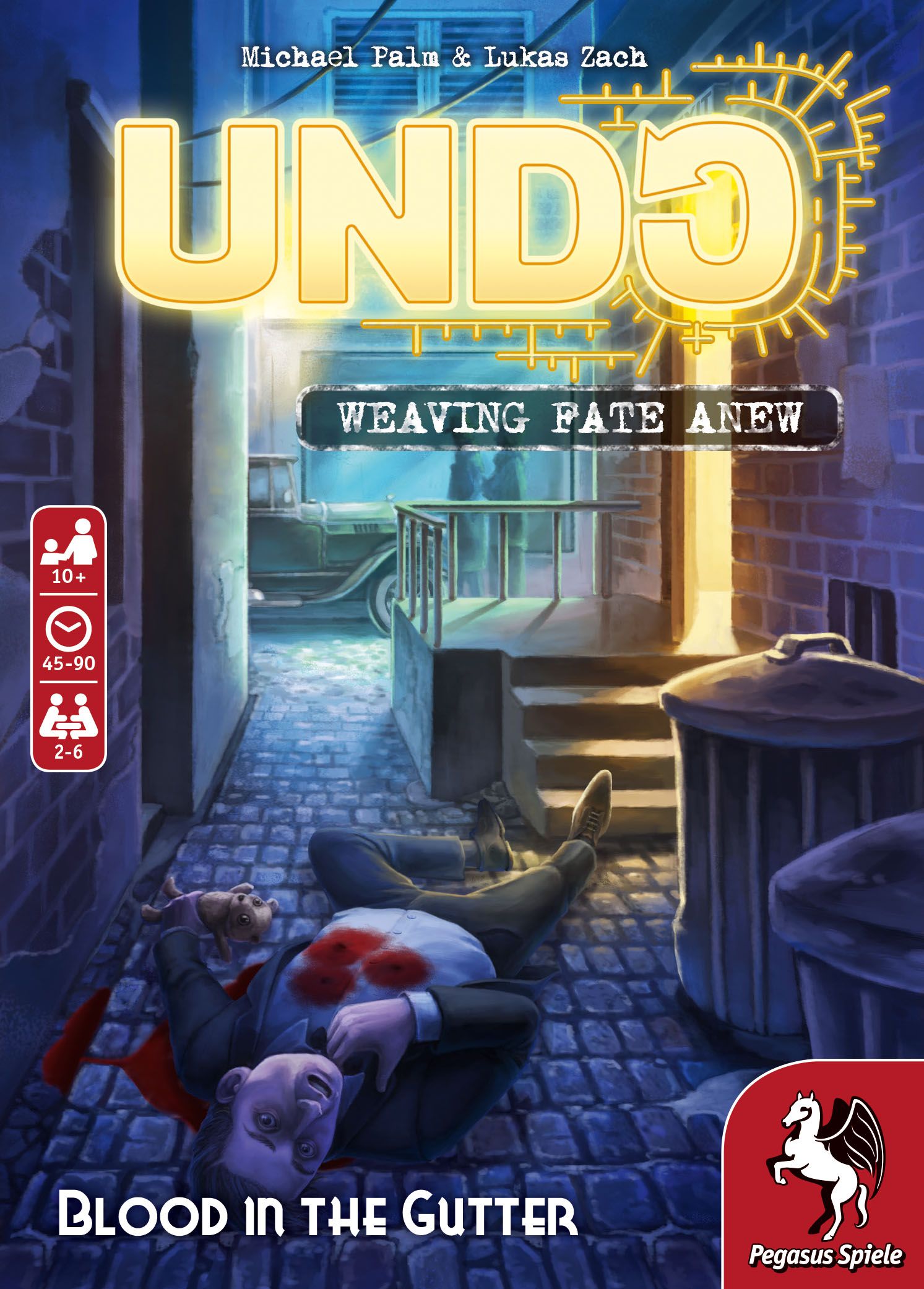
In this specific case, the setting is Chicago in October 1929. The atmosphere is grim: a young man lies dead on the cobblestones of a dirty alley, bullet holes in his coat and a flickering neon sign casting a bleak light over the scene. From there, the investigation begins. You'll need to piece together the victim's life, exploring touching themes of poverty, grief, and family bonds. The experience is entirely cooperative and narrative-driven, where every time jump presents crucial choices. But be warned: messing with time is risky, and not every change for the better. Sometimes, trying to fix one mistake can lead to an even worse outcome.
The game functions as an interactive mystery. You explore the dead man's past, gather clues, and decide where and how to intervene. The best part is that since no components are permanently altered or damaged, you can attempt the case multiple times, experimenting with different paths to see how the story unfolds. It's almost like a 'choose your own adventure' book, but with group dynamics and the tension of a deduction game. If you love emotional stories and the 'what if' scenario, this game is for you.
In this specific case, the setting is Chicago in October 1929. The atmosphere is grim: a young man lies dead on the cobblestones of a dirty alley, bullet holes in his coat and a flickering neon sign casting a bleak light over the scene. From there, the investigation begins. You'll need to piece together the victim's life, exploring touching themes of poverty, grief, and family bonds. The experience is entirely cooperative and narrative-driven, where every time jump presents crucial choices. But be warned: messing with time is risky, and not every change for the better. Sometimes, trying to fix one mistake can lead to an even worse outcome.
The game functions as an interactive mystery. You explore the dead man's past, gather clues, and decide where and how to intervene. The best part is that since no components are permanently altered or damaged, you can attempt the case multiple times, experimenting with different paths to see how the story unfolds. It's almost like a 'choose your own adventure' book, but with group dynamics and the tension of a deduction game. If you love emotional stories and the 'what if' scenario, this game is for you.
Gallery
Box and component photos
Tap any photo to open fullscreen. Photos submitted by the community or publisher.
Best player count
BGG community vote
2
BEST
3
BEST
4
REC
5
OK
6
OK
Soundtrack
Ambience suggested by Melodice
Loading playlist...
Where to Buy
Prices monitored daily
Finding best prices...
Prices unavailable at this time.
Price history — last 6 months (lowest new offer)
As an Amazon Associate I earn from qualifying purchases. Prices and availability subject to change.
Alert enabled!
Join the BoardGamesBot deals group
Get the best board game deals every day — without message spam.
Join the WhatsApp groupGame details
Mechanics, categories, families and credits
Mechanics
Categories
Families
Publisher
Pegasus Spiele, Albi, DV Games, Ediciones MasQueOca, Gigamic, Hobby Japan, Lifestyle Boardgames Ltd, PaperGames (III), Swan Panasia Co., Ltd., White Goblin Games
Designer
Lukas Zach, Michael Palm
Artist
Lea Fröhlich, Lisa Lenz
Community
Data from BoardGameGeek
1,397owners
79wishlist
13want to play
Frequently Asked Questions
Quick answers before you buy
Is the game hard to learn?
Not at all! It has a low weight, so your group can start playing quickly without spending hours studying the rulebook.
Can I play it solo?
The game supports 2 to 6 players, but the narrative experience is usually richer with more people discussing theories.
Is it replayable?
Yes, you can try to solve the mystery again to see different outcomes, but once the final solution is known, the surprise is gone.
How long does a game take?
Usually between 45 and 90 minutes, depending on how much time you spend debating the clues.
Do I need an app to play?
No, the entire experience is based on the cards and the game's narrative.
Is it recommended for non-gamers?
Absolutely! Since it's focused on story and cooperation, it's a great entry point for new players.
Other Games You'll Like
Based on mechanics and theme