7.0
rating
Ludopedia
6.0
rating
BGG
Our Verdict
If you love strategy with a nostalgic twist, Villages is for you!
Highlights
- Low entry cost
- Renaissance theme
- Accounting challenge
Keep in mind
- Requires paper and pen
- Extensive record keeping
Rules manual not indexed yet
Upload the PDF rulebook to ask questions about this game with AI.
About the game
What you do in a play session
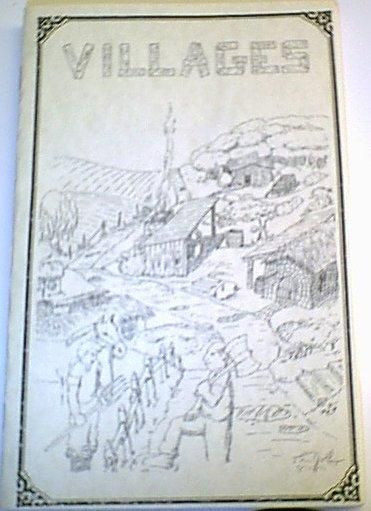
Villages is a 1991 classic that brings the feel of a computer game straight to the tabletop, but with the charming (and sometimes frustrating) necessity of doing all the bookkeeping by hand. Each player starts with a modest village – 5 people, 5 gold, 5 land, 5 food, and 5 seed – and tries to grow until they reach 20 land, 200 gold, or 35 people. The heart of the game is the roll of three dice: the red die tells you which event table to consult (Attacks, Catastrophes, Good Times, etc.), while the green and white dice form the event number. After resolving the event, all players go through a harvest phase: plant seed, produce food, forge weapons, feed the population, trade with the king or with other players, and record everything on paper. The paper‑and‑pencil mechanic can be tedious, but it also gives a nostalgic charm – you literally see your village grow on your sheet. Trading is the only way to avoid attacks, which only happen when the red die lands on 1. Once a player hits one of the victory thresholds before the others, they win. The game is easy to learn but the amount of bookkeeping can make the experience a bit repetitive. It’s perfect for those who love classic strategy games and don’t mind using pen and paper, or for anyone who wants to pass the time at a bar while the food arrives.
The game has a Renaissance feel, with themes of agriculture, trade, and territorial expansion. It blends dice‑rolling, negotiation, and resource management mechanics, but most of the work comes from manual recording. Despite its low weight (1.5/5 on BGG), it offers a fun and challenging experience, especially in longer sessions.
For players who enjoy management challenges, Villages is a solid pick, but if you prefer faster, less bureaucratic games, you might want to look elsewhere.
The game is suitable for 2‑6 players, with a playtime of 1 to 1.5 hours, and works well in groups that can tolerate a good dose of paper and pen.
Summary: Villages is a Renaissance‑era strategy game that mixes dice, trade, and a lot of hand‑written bookkeeping. If you enjoy building empires and don’t mind using paper, this classic title could be your next treasure.
The game has a Renaissance feel, with themes of agriculture, trade, and territorial expansion. It blends dice‑rolling, negotiation, and resource management mechanics, but most of the work comes from manual recording. Despite its low weight (1.5/5 on BGG), it offers a fun and challenging experience, especially in longer sessions.
For players who enjoy management challenges, Villages is a solid pick, but if you prefer faster, less bureaucratic games, you might want to look elsewhere.
The game is suitable for 2‑6 players, with a playtime of 1 to 1.5 hours, and works well in groups that can tolerate a good dose of paper and pen.
Summary: Villages is a Renaissance‑era strategy game that mixes dice, trade, and a lot of hand‑written bookkeeping. If you enjoy building empires and don’t mind using paper, this classic title could be your next treasure.
Gallery
Box and component photos
Tap any photo to open fullscreen. Photos submitted by the community or publisher.
Best player count
BGG community vote
2
OK
3
OK
4
OK
5
OK
6
OK
Soundtrack
Ambience suggested by Melodice
Loading playlist...
Where to Buy
Prices monitored daily
Finding best prices...
Prices unavailable at this time.
Price history — last 6 months (lowest new offer)
As an Amazon Associate I earn from qualifying purchases. Prices and availability subject to change.
Alert enabled!
Join the BoardGamesBot deals group
Get the best board game deals every day — without message spam.
Join the WhatsApp groupGame details
Mechanics, categories, families and credits
Mechanics
Categories
Publisher
Jolly Games
Designer
Tom Jolly
Community
Data from BoardGameGeek
10owners
4wishlist
2want to play
Frequently Asked Questions
Quick answers before you buy
How long does a game of Villages last?
On average, a game takes about 1 to 1.5 hours, depending on the number of players and how quickly everyone records.
How many players can join?
2 to 6 players. The more players, the more record‑keeping, so it can get a bit chaotic.
What’s the complexity level?
Medium. Rules are simple, but the constant bookkeeping can be a bit tedious.
What components are needed?
A rule booklet, three six‑sided dice, and a pad of paper for notes.
Who will enjoy this game the most?
Fans of classic strategy games, Renaissance themes, and those who aren’t afraid of using paper and pen.
Is there an advantage to playing in a bar?
Yes! It’s a great way to pass time while the food arrives, and the notes give it a retro “computer game” vibe.
Does the game have any combat mechanics?
Yes, attacks only happen when the red die rolls a 1, and you can attack other players if you wish.
Other Games You'll Like
Based on mechanics and theme