Amerigo — Prices
Queen Games, Arclight Games · Board game · 2013
2–4 · best 4
90 min
Weight 3.0/5
Buy · from US$ 49.01
8.4
rating
Ludopedia
7.4
rating
BGG
Our Verdict
RECOMMENDED
Perfect for those who love Euros with unusual components and exploration. The cube tower adds an incredible tactical freshness!
Highlights
- Super original cube tower
- Modular board ensures high replayability
- Great balance of luck and strategy
- Well-implemented historical theme
Keep in mind
- Moderate learning curve
- Reliance on tower randomness
Rules manual not indexed yet
Upload the PDF rulebook to ask questions about this game with AI.
About the game
What you do in a play session
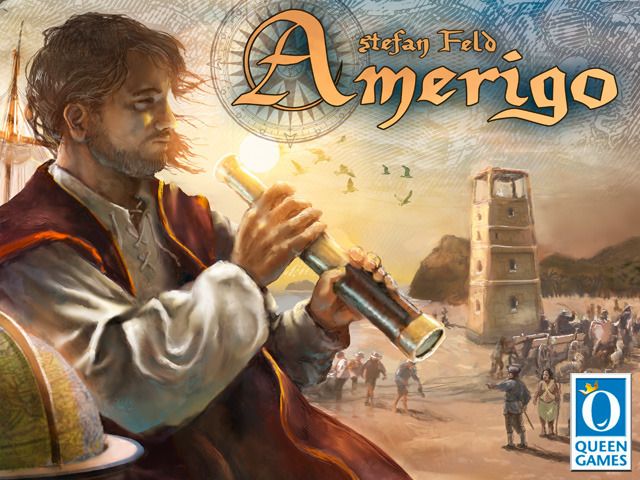
Set sail and adjust your course, because in Amerigo, you take on the role of an explorer assisting Amerigo Vespucci in the discovery of new lands! Your goal is to navigate the waters of South America, mapping islands, securing trade routes, and founding settlements to claim victory. But it's not just about sailing: resource management and the struggle for influence are the heart of the experience.
The standout feature here is the cube tower. Forget traditional dice; the actions available to players are decided by colored cubes falling from this tower. Each color represents a different type of action. The twist is that the tower is dynamic: by dropping new cubes, you might release actions that were stuck or, worse, block someone's move. This creates a tense balance between immediate tactics (using what just fell) and long-term strategy (planning which cubes to inject into the tower to manipulate the future).
The board is modular, scaling in size based on the number of players, ensuring that every game features a unique map. As you navigate, you'll need to decide where to build your settlements to extract resources and score victory points. And watch out for pirates! To keep your cargo safe, investing in cannons is essential. Additionally, there are progress tokens that provide special advantages, allowing you to optimize your game engine. This is a perfect title for those who enjoy Euro games with a touch of unpredictability and interesting tactile components.
The standout feature here is the cube tower. Forget traditional dice; the actions available to players are decided by colored cubes falling from this tower. Each color represents a different type of action. The twist is that the tower is dynamic: by dropping new cubes, you might release actions that were stuck or, worse, block someone's move. This creates a tense balance between immediate tactics (using what just fell) and long-term strategy (planning which cubes to inject into the tower to manipulate the future).
The board is modular, scaling in size based on the number of players, ensuring that every game features a unique map. As you navigate, you'll need to decide where to build your settlements to extract resources and score victory points. And watch out for pirates! To keep your cargo safe, investing in cannons is essential. Additionally, there are progress tokens that provide special advantages, allowing you to optimize your game engine. This is a perfect title for those who enjoy Euro games with a touch of unpredictability and interesting tactile components.
Gallery
Box and component photos
Tap any photo to open fullscreen. Photos submitted by the community or publisher.
Rules videos
Learn by watching before you open the box
In English
-
 Amerigo Review - This Board Game Life
-
 Amerigo - Introduction from Queen Games
-
 Amerigo: How to Play
-
 Amerigo Unboxing - This Board Game Life
-
 Hans Solo: Amerigo
-
 Amerigo - Gameplay Runthrough - Part1
-
 Amerigo - Gameplay Runthrough - Part2
-
 Amerigo How to + Playthrough
-
 Amerigo - Full Tutorial and 2-player Play-through of Amerigo - Computerized
Best player count
BGG community vote
2
REC
3
REC
4
BEST
Soundtrack
Ambience suggested by Melodice
Loading playlist...
Where to Buy
Prices monitored daily
Finding best prices...
Prices unavailable at this time.
Price history — last 6 months (lowest new offer)
Alert enabled!
Join the BoardGamesBot deals group
Get the best board game deals every day — without message spam.
Join the WhatsApp groupGame details
Mechanics, categories, families and credits
Mechanics
Categories
Families
Publisher
Queen Games, Arclight Games
Designer
Stefan Feld
Artist
Claus Stephan, Harald Lieske
Community
Data from BoardGameGeek
8,036owners
1,488wishlist
318want to play
Frequently Asked Questions
Quick answers before you buy
Is the game too complex?
It has a medium weight (around 3/5). It's not a gateway game, but anyone familiar with Euro games will pick it up quickly.
Is the cube tower just about 'luck'?
Not exactly. While the drop is random, you can influence the tower by injecting cubes, turning luck into probability management.
Does it work well with 2 players?
Yes, the board is modular and adjusts to the number of players, keeping it competitive even in a duo.
How long does a game take?
The average is 90 minutes, though it may vary depending on how analytical the players are.
Do I need English to play?
Hardly any. The game has very little text, relying mostly on icons and components, which makes it very accessible.
Other Games You'll Like
Based on mechanics and theme