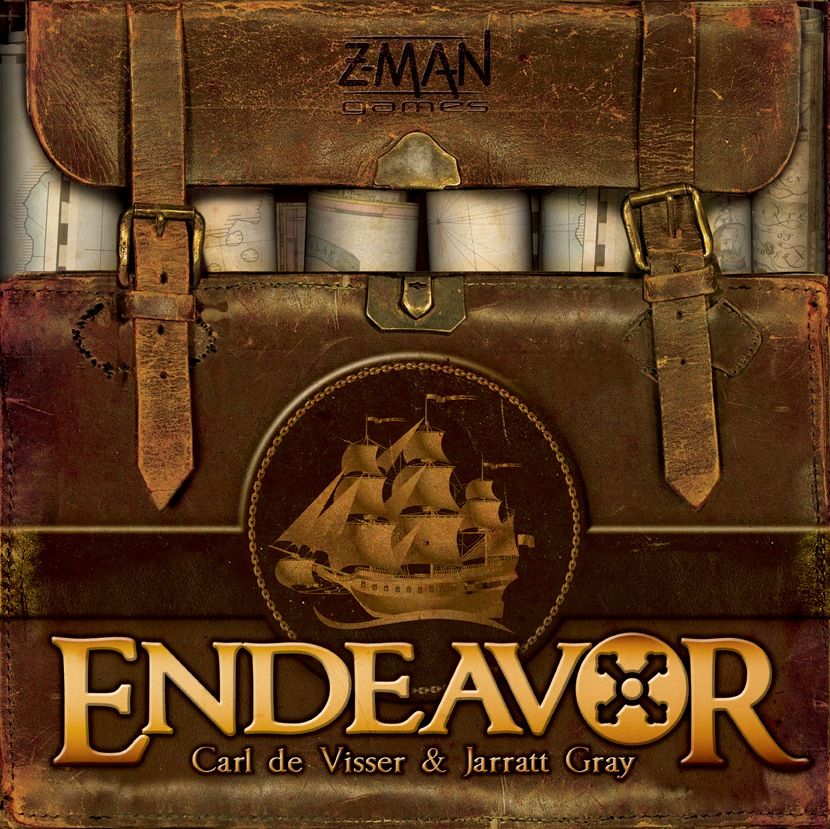
Endeavor
Z-Man Games, Albi, Hobby Japan · Board game · 2009What do you want to do now
Ask anything about Endeavor: rules, setup, components, complexity, price, or whether it fits your group.
If you enjoy a strategic eurogame with plenty of interaction and an empire-building theme, Endeavor is a perfect fit. It's a game that makes you think about every action, balancing present and future!
- Well-integrated mechanics
- Player interaction
- Satisfying progression
- Engaging exploration theme
- Constant strategic decisions
- Potential for 'kingmaking'
- Initial learning curve
- Best with 4-5 players
About the game
What you do in a play session
Through exploration, shipping, colonization, and even conflict, you'll compete with other great powers for control of resources and regions that unfold before you. The game lasts seven intense rounds, and the main objective is to accumulate the most Glory points for your empire. These points are earned by advancing on the Industry, Culture, Finance, and Politics tracks, as well as by occupying strategic cities, controlling connections between them, and collecting Asset Cards and Building Tiles.
Each round is a cycle of decisions: you build a new building (based on your Industry track), gain new population markers (via the Culture track), and retrieve used markers (via the Finance track). In the action phase, players take turns to activate buildings with their population markers or spend trade tokens to perform actions such as Ship, Occupy, Attack, Payment, or Draw cards. Shipping opens new regions for occupation and drawing, and yields trade tokens. When a shipping track is full, the player with the most influence in that region gains the powerful Governor card. Occupying a city brings glory and tokens, while attacking allows you to steal a city from an opponent. Both occupation and attacking can yield control of connections between cities if you dominate both. Drawing cards, limited by your Politics track, allows you to acquire cards from a region where you have influence. In the end, whoever has the most Glory takes the victory!
Gallery
Box and component photos
Tap any photo to open fullscreen. Photos submitted by the community or publisher.
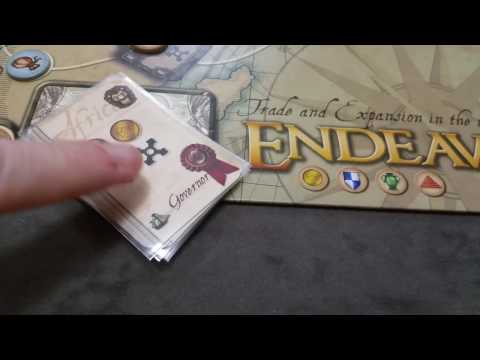
Rules videos
Learn by watching before you open the box
In English

Rules manual
Official PDF file
Best player count
BGG community vote
Soundtrack
Ambience suggested by Melodice
Where to Buy
Prices monitored daily
Price history — last 6 months (lowest new offer)
As an Amazon Associate I earn from qualifying purchases. Prices and availability subject to change.
Alert enabled!
Join the BoardGamesBot deals group
Get the best board game deals every day — without message spam.
Join the WhatsApp groupGame details
Mechanics, categories, families and credits
Mechanics
Categories
Families
Community
Data from BoardGameGeek
Frequently Asked Questions
Quick answers before you buy
What is the average playtime for Endeavor?
How many players can play Endeavor?
What is the complexity level of Endeavor?
Are the components of Endeavor good quality?
Does Endeavor have language dependency?
Who is Endeavor recommended for?
Other Games You'll Like
Based on mechanics and theme