/pic4607875.png)
What is your question about Leaders (fan expansion for 7 Wonders Duel)?
Ask before downloading the manual: the assistant was trained on this file and answers instantly, citing the exact page.
Ask questions about the game
Ask anything about Leaders (fan expansion for 7 Wonders Duel): rules, setup, components, complexity, price, or whether it fits your group.
Write your question first. You will create your free account to see the answer — it takes 20 seconds.
Full rulebook
Browse the manual or download the original PDFFull manual text available to read Open text
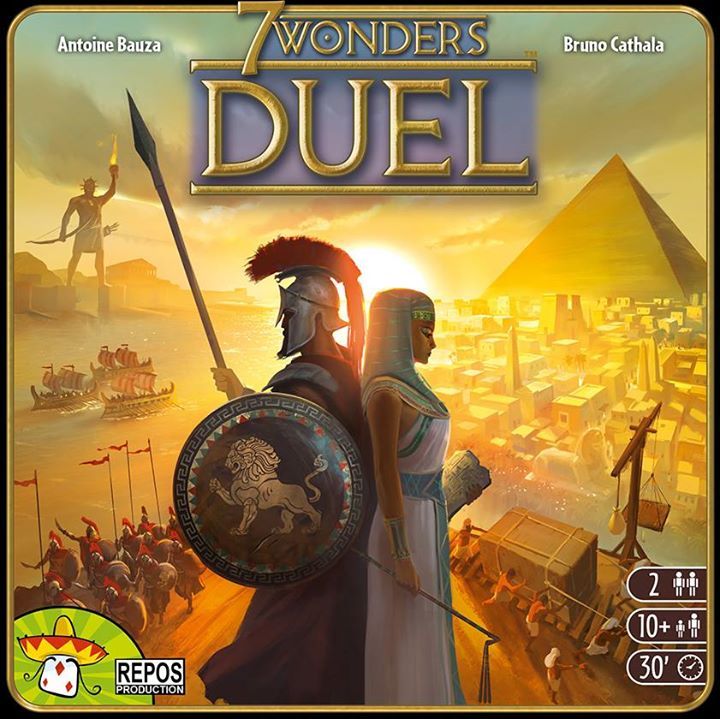
7 WONDERS
DUEL
LEADERS
A Print & Play Expansion for 7 Wonders Duel
All assets from 7 Wonders and related games are property of Repos Productions
---
2
Contents
Introduction.........................................2
Rules......................................................3
Leader Overview..................................4
Wonder Overview...............................10
Variants................................................11
Credits..................................................11
Introduction
7 Wonders Duel: Leaders is a print and play fan expansion that
enables players to adopt the mechanics and personalities from 7
Wonders: Leaders and experience them in a game of 7 Wonders Duel.
Leader cards allow players to enhance their gameplay and specialize
their strategies in ways that they would not normally be able to during
a game of 7 Wonders Duel.
This fan expansion adds a step to the beginning of the game during
which players draft from two groups of leaders (similar to drafting
Wonders). Players assemble a hand of four leaders and prior to each
age, there is a Recruitment Phase where players may recruit leaders or
discard them for two coins.
Additionally this expansion comes with two new Wonders, each
focused on leaders in a unique way. Rome allows players to draw and
play additional leaders, while Abu Simbel allows a player to bury an
already recruited leader to earn additional victory points.
---
3
Rules
Changes to Preparation
Each player takes 3 additional coins from the bank, for a total of 10 coins.
Additional Leader Phase
Before the Wonder Selection Phase, perform a Leader Phase. Players draft leaders in a similar manner to drafting Wonders, except that the 2nd player picks first from the first batch.
• Choose a first player (skip this step in the Wonder Selection Phase)
• Shuffle the leader cards
• Place 4 random leaders, face up, between the two players
• The second player chooses 1 leader
• The first player chooses 2 leaders
• The second player takes the remaining leader
• Place 4 more leaders and repeat the selection process. This time, start with the first player
Once this step is complete, each player will have 4 leaders. The chosen leaders should be kept face up and available for both players to examine. The only moment when leaders are not available for inspection is the moment when players are deciding which leader to use for that age.
Changes to the Wonder Selection Phase:
• Skip the “Choose a first player” step, as you already chose a first player in the Leader Phase
• During the “Shuffle the 12 Wonders tiles” step, shuffle the new Wonders Rome and Abu Simbel, with the others
Changes to the Overview of an Age:
For each age, before preparing the structure for that age, each player will have the opportunity to build a leader during the Recruitment Phase.
• Each player takes the leaders that they have not recruited yet into their hand
• Each player chooses one face down
• Players turn their selected leader face up simultaneously
• Each player simultaneously declares if they are recruiting their leader, or discarding it for money
• For each leader that a player discards for money, they return the leader card to the box and gain 2 coins (This amount is not increased by yellow cards in a player’s city)
• For each leader that a player recruits, they pay the leader’s cost in coins to the bank, place it in their play area and resolve its ability, if applicable
• Each player returns their unplayed leaders to the board, face up, until the next Recruitment Phase of the next age
Once this phase is finished, the Age is played normally by the normal 7 Wonders Duel rules.
Note: Players will receive money for their discarded leaders prior to the resolution of their opponent’s leaders.
Note: It is recommended that players place a chit or marker on leaders that they have recruited so as to eliminate any possible confusion between which leaders have been recruited and which are eligible to be recruited in the future.
Note: It may matter which player’s leader resolves first. If it does, the player who is playing first or who has the choice for who plays first in the coming age resolves their leader first. If a military or scientific victory is achieved at this point, the game ends.
Wonders: When playing with 7 Wonders Duel: Leaders, do not return your 4th wonder to the box if your opponent has built their 4th wonder. Instead keep it in front of you, but turn it face down. You are unable to build that wonder if your opponent has built all 4 of their wonders.
Note: For more information on why you should turn the 8th wonder face down instead of returning it to the box, see the card for the leader Imhotep.
---
4
Leader Overview
Alexander
Alexander gives you bonus victory points at the end of the game depending on how many military conquests have been removed from your opponent’s side of the military track. If one of the military conquest tokens closest to your opponent has been removed, Alexander is worth 2 victory points. If both of the military conquest tokens closest to your opponent have been removed, Alexander is instead worth 5 victory points.
• You earn these victory points even if the conflict pawn is no longer in one of these zones.
Amytis
Amytis is worth 2 victory points for each wonder you have built.
Archimedes
Archimedes provides the listed linking symbols. You may build a card with these symbols in its cost for free.
• Archimedes will aid in scoring victory points via Vitruvius’ leader card and coins via Urbanism.
Aristotle
Aristotle is worth three victory points for each progress token you have.
Aspasia
Aspasia cancels the movement of the conflict pawn the next time that it would be moved.
• Aspasia will cancel the movement of the conflict pawn regardless of the direction it would move.
• You cannot decline to cancel the next movement.
• It is recommended that you place the token that is included on Aspasia’s card when she is recruited and when she cancels the movement of the conflict pawn to place that token on that card to easily track which card has been canceled.
Berenice
Berenice counts as a yellow card in your city when determining how many coins you receive when you discard a card.
• Berenice does not count as a yellow card for any other purpose.
Bilkis
Each time you build a card, you may buy one resource from the bank for 2 coins. This cost is not increased because of the brown or grey cards of the opposing city.
Caesar
Caesar provides two shields, similar to constructing a Military card.
• There is no penalty for being forced to lose coins that you do not have.
• If Caesar forces the conflict pawn to enter a zone for the first time, your opponent will lose coins accordingly. This will take effect after your opponent has paid for their current leader, so it is impossible to force them to not be able to afford the leader that they choose to build. However, if they discarded the leader for coins, it is possible those coins will be lost.
---
5
Caligula
Whenever your opponent loses coins due to your military conquests, they lose twice as many coins.
• There is no penalty for being forced to lose coins that you do not have.
• If a player has recruited both Caligula and Nero, they will gain the additional coins that their opponent loses due to their military conquests, but cannot gain more coins than their opponent loses.
Cleopatra
Cleopatra is worth 5 victory points.
Croesus
After building the structure, take the three cards of the current Age which were returned to the box during the game’s setup. Choose and construct one for free, returning the other two to the box.
• If the wonder The Statue of Liberty is played later in the age, the wonder’s player will choose and construct one for free and give one to their opponent to construct for free. There will not be a card added to the discard pile.
Darius
Your opponent loses two coins.
• Darius does not cost any coins to recruit.
• There is no penalty for being forced to lose coins that you do not have.
• Darius takes effect after your opponent has paid for their current leader, so it is impossible to force them to lose coins and not be able to afford the leader that they choose to build. However, if they discarded the leader for coins, it is possible those coins will be lost due to Darius’s leader card.
Diocletian
Your opponent loses four coins.
• There is no penalty for being forced to lose coins that you do not have.
• Diocletian will take effect after your opponent has paid for their current leader, so it is impossible to force them to lose coins and not be able to afford the leader that they choose to build. However, if they discarded the leader for coins, it is possible those coins will be lost due to Diocletian’s leader card.
Da Vinci
Da Vinci provides the listed linking symbols. You may build a card with these symbols in its cost for free.
• Da Vinci will aid in scoring victory points via Vitruvius’ leader card and coins via Urbanism.
• If playing with Da Vinci, it is recommended to not play with Archimedes, Hammurabi, Leonidas or Xenophon in your Leader pool.
Euclid
Once per game when you get a card that would give you a pair of science symbols, you may put one of them under Euclid. The card under this one provides all of its normal benefits, but instead of any other science symbol, it provides a Law symbol. As the card provides a Law symbol instead of its normal symbol, you should not take a progress token for having a pair (as you no longer have a pair).
• If you have a Law symbol and utilize this ability, you may take a progress token for having a pair of Law symbols. There is no benefit for having three of the same type of symbol, Law or otherwise.
Example: Antoine has the Pharmacist from Age 1 and Euclid in his city. In Age 2 he builds the Dispensary. Instead of playing it normally, he places the Dispensary under Euclid. The Dispensary now provides a law symbol instead of the pestle and mortar symbol. It still provides 2 victory points at the end of the game. Since Antoine does not have matching symbols he does not take a progress token. However, he now has two different symbols and is closer to winning the game via Scientific Supremacy.
---
Hammurabi
Hammurabi provides the listed linking symbols.
You may build a card with these symbols in its
cost for free.
• Hammurabi will aid in scoring victory points via
Vitruvius’ leader card and coins via Urbanism.
Hannibal
Hannibal provides one shield, similar to
constructing a Military card.
• There is no penalty for being forced to
lose coins that you do not have.
• If Hannibal forces the conflict pawn to enter a zone for the first
time, your opponent will lose coins accordingly. This will take
effect after your opponent has paid for their current leader,
so it is impossible to force them to not be able to afford the
leader that they choose to build. However, if they discarded the
leader for coins, it is possible those coins will be lost.
Hatshepsut
Whenever your opponent buys resources from
the bank, you get 1 coin for each resource they
buy. This coin comes from the bank.
• You do not receive coins if they purchase a
resource via a yellow “reserve” card or the
Customs house card.
Hiram
Hiram is worth 2 victory points for each guild
card you have in your city.
Hypatia
Hypatia is worth 1 victory point for each green
card you have in your city.
Imhotep
You may build your 4th Wonder, even if your
opponent has built their 4 Wonders.
• If you have already built all of your
Wonders when you recruit Imhotep,
he has no effect.
• When playing with Imhotep in the Leader Pool, players should
turn the 8th wonder face down, but keep it in front of them,
instead of returning it to the box. This ensures that if Imhotep
is played, there is no discrepancy with making the correct
wonder available.
Justinian
Justinian is worth three victory points for each
set of a blue, green and red cards you have in
your city.
• If you have multiple sets, you score the
three victory points multiple times.
• Partial sets are not worth partial points. Sets must be
complete to score any points for it.
Leonidas
Leonidas provides the listed linking symbols.
You may build a card with these symbols in its
cost for free.
• Leonidas will aid in scoring victory points via
Vitruvius’ leader card and coins via Urbanism.
Maecenas
Look at two random leader cards that were not
used this game. You may recruit one of them
without paying their cost.
• After viewing the leaders, you do not have to recruit one if
you do not wish to. If you do not recruit a leader, you do not
receive any coins.
• The leaders not chosen remain outside of the game, they are
not added to your hand.
---
7
Midas
Midas is worth 1 victory point for every three
coins you have.
Nebuchadnezzar
Nebuchadnezzar is worth 1 victory point for
each blue card you have in your city.
Nefertiti
Nefertiti is worth 4 victory points.
Nero
Whenever your opponent loses coins due to
your military conquests, you receive the coins
instead of the bank.
• Nero does not cost any coins to recruit.
• Nero has no effect on military conquests prior to recruiting him.
• You only gain the coins your opponent actually loses.
• Nero has no effect on military conquests completed prior to
recruiting him.
Example: Antoine has recruited Nero and builds Walls, moving the
Conflict Pawn towards his opponent, Bruno. This moves the pawn
across a dotted line for the first time, into the zone that would
make Bruno lose five coins. Bruno only has four coins, so he loses
all of them. Instead of those coins returning to the bank Antoine
receives them.
Pericles
Pericles is worth 1 victory point for each red
card you have in your city.
Phidias
Phidias is worth 1 victory point for each brown
card you have in your city.
Plato
Plato is worth 7 victory points for each set of
brown gray, blue, yellow, green, red and purple
cards you have built.
• If you have multiple sets, you may score
the victory points multiple times.
• Partial sets are not worth partial points. Sets must be
complete to score any points for it.
Praxiteles
Praxiteles is worth 2 victory points for each
grey card you have in your city.
---
8
Ptolemy
Once per game, in the 2nd or 3rd age, when
building a green card you may choose to have
that card’s science symbol become a copy of the
symbol on a green card you have already built
instead of its printed symbol.
• Place the second card horizontally underneath the first card to
indicate copy.
• As you will have two copies of the same symbol, you may take
a progress token. You gain no additional benefit for having
three copies of the same symbol.
Example: Antoine has recruited Ptolemy and built the Pharmacist
in Age 1 and it provides the pestle and mortar symbol. In Age 2 his
opponent, Bruno, builds the Dispensary to deny Antoine a progress
token. However, Antoine builds the School and uses Ptolemy to
have the School’s science symbol copy the Dispensary’s pestle
and mortar symbol instead of its own wheel symbol. As Antoine
now has two pestle and mortar symbols, he can take one of the
available progress symbols. The School no longer provides a wheel
symbol and Antoine is further away from a Scientific Supremacy
victory. The School still provides one victory point to Antoine.
Pythagoras
Once per game, on your turn you may place
the card you choose under Pythagoras instead
of using it for any other purpose. You gain
no benefit from this card, but you may play a
second turn.
• This ability is similar to the “Immediately play a second turn”
ability found on many wonders.
Ramses
After the structure for Age 3 is created, you may
look at two random guild cards that were not
used as part of the structure. You may build one
for free.
• As a reminder, leaders are recruited before the structure
is dealt.
• You may build Ramses’ leader card during any age. As long as
he has been recruited when the structure for Age 3 would be
built, he will allow you to gain one of the unused guilds.
• If the guild gives coins when it is built, you receive those coins.
Sappho
Sappho is worth 2 victory points.
Semiramis
Each time your opponent completes a military
conquest, you receive a shield.
• It is recommended that you place the military tokens from
the conquests on Semiramis’s card to easily keep track of the
military that she provides.
• Semiramis does not provide shields for your opponent’s
military conquests that occurred prior to her being recruited.
• If your opponent would win the game via Military Supremacy
Semiramis will not prevent them from doing so.
Solomon
When you recruit Solomon you may choose a
card in the discard pile and add it to your city
for free.
• The cards that were not used to build the
structure are not part of the discard pile.
• Solomon will not have an effect if recruited during the first
age as there will be no discard pile.
Tomyris
Any time you would lose coins from your
opponent’s military conquests, they lose that
many coins also.
• Tomyris has no effect on military conquests
that happened prior to her being built.
• Your opponent can only lose as many coins as you actually
lose. If you have less coins than the military conquest would
otherwise make you lose, your opponent will only have to lose
as many coins as you lost, not as much as you could have lost.
• There is no penalty for being forced to lose coins that you do
not have.
---
Varro
Varro is worth 1 victory point for each yellow card in your city.
Vitruvius
Vitruvius is worth two victory points for every pair of cards you have in your city that share linking symbols.
• You receive these victory points even if the cards were not actually built via linking (For example, if they were built via the Mausoleum or Croesus).
• The leader cards of Da Vinci, Archimedes, Hammurabi, and Leonidas are potential matches for the purpose of victory points through Vitruvius.
Example: Bruno has the Theater (which provides the Mask linking symbol) and the Statue (which can be built via the Mask linking symbol) in his city. Vitruvius provides him with 2 victory points for this pair.
Xenophon
Xenophon provides the listed linking symbols. You may build a card with these symbols in its cost for free.
• Xenophon will aid in scoring victory points via Vitruvius’ leader card and coins via Urbanism.
Zenobia
Zenobia is worth 3 victory points.
9
---
Wonder Overview
Abu Simbel
Bury a leader you have already recruited by placing them under this wonder. Buried leaders have no abilities, but they are worth victory points equal to twice their cost.
Immediately play a second turn
• Buried leaders will no longer provide benefits after they are buried, but effects that have already happened will not be undone.
• Hannibal / Caesar: Do not move the conflict pawn.
• Ptolemy / Euclid / Imhotep / Ramses / Pythagoras: If these leaders’ abilities have not been used they may no longer be used, but if they have been used they are not undone.
Rome
Draw two leader cards randomly from those not used in this game and add them to your available leader cards.
You may immediately recruit a leader card from your available leader cards for free.
This Wonder is worth 2 victory points
• The two additional leader cards are available to be chosen during the Recruitment Phase in future ages.
• Apply the effects of the recruited leader immediately
• If you choose to not recruit a leader, you may not gain two coins.
• The free leader may be recruited from any of your available leaders, it doesn’t have to be one of the two you just acquired.
---
11
Variants
Some players may want to play with a more concise leader pool than
with all 41 leader cards. For these players we offer two variant
leader pools.
One leader pool uses the pool of leaders that have the laurel
symbol ( laurel ) on the bottom of the cards. The other uses the pool with
the shield symbol ( shield ) on the bottom.
When shuffling the leaders during the Leader Phase, only shuffle
the 16 leaders listed in the variant you wish to use. If a card refers to
leaders outside the game, only use the 8 leaders that were not drafted
at the beginning of the game.
Feel free to come up with interesting pre-generated pools on your
own also!
Victory Point Oriented Variant ( laurel )
This leader pool is centered on leaders that provide victory points:
Amytis
Cleopatra
Hiram
Hypatia
Justinian
Midas
Nebuchadnezzar
Nefertiti
Pericles
Phidias
Plato
Praxiteles
Alexander
Varro
Vitruvius
Aristotle
Card Ability Oriented Variant ( shield )
This leader pool is centered on leaders with interesting abilities:
Aspasia
Berenice
Bilkis
Caesar
Caligula
Darius
Diocletian
Euclid
Hannibal
Hatshepsut
Imhotep
Nero
Ptolemy
Pythagoras
Semiramis
Tomyris
Credits
Fan Expansion Credits
7 Wonders Duel: Leaders Design
Michael Gallo
7 Wonders Duel: Leaders Graphic Design
Ettelie Lovern
7 Wonders Duel: Leaders Editing
Amanda Gallo
7 Wonders Duel: Leaders Playtesting
Joshua & Jennifer Lowe
Brandon Kling
Benjamin Barlowe
Jordan Harper
Joan Barylski
David Martin
7 Wonders, 7 Wonders: Leaders
& 7 Wonders Duel Credits
All assets from 7 Wonders and related games are property
of Repos Productions.
Authors
Antoine Bauza and Bruno Cathala
Artwork
Miguel Coimbra
Development
“The Sombrero-wearing Belgians”
aka Cedrick Caumont & Thomas Provoost
Art Director
Alexis Vanmeerbeeck
Layout
Cedrick Chevalier
Eric Azaguary
Justine Lotti
---
Why ask BoardGamesBot
Instead of flipping through the whole manual- Accurate answers Based exactly on this manual, with the source page.
- Save time Find the rule in seconds, without flipping 11 pages.
- Anytime Settle rules mid-game, straight from your phone.
- 100% free Create your free account and start using it now.
How it works
Three steps to the answer- 1 Ask your question Type your question about this game's rules.
- 2 Create your free account Takes 20 seconds — it only saves your history.
- 3 Get the answer The AI finds the exact rule and cites the manual page.
Expansion for
Published additional content
Manual published by the publisher · for rules reference only. More about the game on BoardGameGeek and Ludopedia .