What is your question about Alhambra: The Treasure Chamber?
Ask before downloading the manual: the assistant was trained on this file and answers instantly, citing the exact page.
Ask questions about the game
Ask anything about Alhambra: The Treasure Chamber: rules, setup, components, complexity, price, or whether it fits your group.
Write your question first. You will create your free account to see the answer — it takes 20 seconds.
Full rulebook
Browse the manual or download the original PDFFull manual text available to read Open text
THE TREASURE CHAMBER
Enemies approach! The Caliph's “Treasure Chamber” must be cleared and the treasure taken to safety. The treasure chests are placed in buildings of the same colour. This earns players extra points in the scoring rounds. This extension contains four different modules which can all be combined singly or in combination with the original game and the modules in the other extensions. Play is still based on the rules of the original game. Rule changes, additional rules, and new equipment are explained on separate sheets for each module.
Equipment
42 treasure chests in the 6 colours of the buildings, 1 small playing board: the treasure chamber with 3 rooms, 1 bag.
Getting ready to play
The treasure chamber is laid ready. All 42 treasure chests are placed in the bag. 4 chests are taken out of the bag and placed in the first room of the treasure chamber; this is repeated for the remaining two rooms.
How do players get the treasure chests?
This extension module gives players an additional option when it is their turn: they can buy treasure chests. This is in addition to the three options the players have in the original game: Take some money – Buy and position a building tile – Redesign their Alhambra. When buying treasure chests, a player can take the four chests from any of the rooms in the treasure chamber. To do this, a player must pay at least 8 units in any combination of currencies. Note: players do not get an extra go if they pay the exact money!
Example: the player whose turn it is wants to buy treasure chests. He pays 3 units of the orange currency, 3 units of the blue currency and 4 units of the green currency. He takes the 4 treasure chests from any one of the rooms in the treasure chamber. He does not receive any change.
Where are the treasure chests put?
The treasure chests must be distributed between buildings of the corresponding colour during the move in which they are bought. Only 1 chest can be put in a building at any one time. A chest can also be put in buildings which were bought during this turn; chests cannot, however, be put in buildings which are on the player's reserve board.
If not all chests can be distributed among a player's own buildings, the rest of the chests are given to the player to the left who now has the opportunity to distribute these chests among his own buildings. If chests are still left over, they are passed to the next player. Chests which cannot be placed by any player are returned to the bag.
Now the emptied room of the treasure chamber is refilled with 4 chests taken randomly out of the bag. Should there not be enough chests left at this point, the room remains empty. From now on, no chests are replaced any more.
Points for treasure chests
The colour of the chests does not play any role in the scoring; only the number is of relevance for the number of points which players are awarded. The player with the most chests is awarded the points for 1st place. The players who have the second-most and third-most chests are awarded the points for 2nd and 3rd place. If several players have the same number, the same procedure is used as that for awarding points for buildings. The distribution of the points is printed on the treasure-chamber board.
Notes
• If two players are playing, treasure chests which are not able to be placed are always first passed on to Dirk (our virtual 3rd player), where they are placed in matching buildings. Any chests left over are then passed on further.
• If a building containing a chest is removed, the chest is returned to the bag.
• Chests may not be placed on workers' huts [1st extension].
THE MASTER BUILDERS
The “master-builder cards” make it easier to redesign an Alhambra. This is not only an advantage in the original game. It also makes attractive combinations possible when playing with other modules such as “workers' huts”, “bazaars” or “street trader”. The new possibilities are rounded off by the fact that these cards can also be used as money. This extension contains four different modules which can all be combined singly or in combination with the original game and the modules in the other extensions. Play is still based on the rules of the original game. Rule changes, additional rules, and new equipment are explained on separate sheets for each module.
Equipment
16 master-builder cards (4 money cards in each of the currencies with an additional function).
to redesign an Alhambra This is not only an advantage in the original game It also makes attractive combinations possible when playing with other modules such as workers huts bazaars or street trader The new possibilities are rounded off by the fact that these cards can also be used as money This extension contains four different modules which can all be combined singly or in combination with the original game and the modules in the other extensions Play is still based on the rules of the original game Rule changes additional rules and new equipment are explained on separate sheets for each module Equipment 16 master builder cards 4 money cards in each of the currencies with an additional function
Getting ready to play
The master-builder cards are shuffled. Each player is given 2 cards without these being revealed to the other players. Each player is then given their starting money. When the money cards from the original game are divided up into five piles, 3 master-builder cards are put into the 3rd pile and three more into the 5th pile. If there are 6 players, only 1 master-builder card is put into the 5th pile. If there are fewer than 5 players, some master-builder cards will be left over. They are removed from the game.
How do players get master-builder cards?
Players get master-builder cards in the same way they get other money cards.
Note
• Ammar El'Schauf, [a character card from the 2nd extension] can be used together with 1 master-builder card at the end of a turn.
How do players use master-builder cards?
The master-builder cards have two different functions.
As money
Firstly, each master-builder card is a normal money card with a value of “3” (in the different currencies). All rules concerning money (e.g. taking cards with a total value of “5”) apply to these cards as well.
For building
As an alternative to using the cards as money, the master-builder cards allow a player to have an extra go at redesigning their Alhambra at the end of their turn (after placing any buildings which have just been bought). Only 1 master-builder card per turn can be used for redesigning the Alhambra. In contrast to normal money cards, master-builder cards are removed from the game after being played (no matter how they have been used).
Example: a player has two master-builder cards (in the yellow currency) and another card (9 units of the yellow currency) in his hand. He can now buy the purple building or he can keep his master-builder cards for a later turn.
---
THE INVADERS
Danger for the Alhambra.
“Invaders” have been sighted! And what is almost worse is that our points are also in danger, because buildings which have missing walls are unprotected and this means that points are deducted.
This extension contains four different modules which can all be combined singly or in combination with the original game and the modules in the other extensions.
Play is still based on the rules of the original game. Rule changes, additional rules, and new equipment are explained on separate sheets for each module.
Equipment
4 invasion cards which show what direction the invaders are approaching from.
6 scout cards which can be used to scout out the attacks.
Getting ready to play
The invasion cards are shuffled and laid ready face-down. The scout cards are also shuffled and the top two cards are then turned face-up.
The invasion cards
An invasion card shows what direction an attack on the Alhambra is coming from. If a player has building tiles which are unprotected from this direction (i.e. they are at the edge and unprotected by a wall), then points are deducted from his score. The bottom of the invasion card shows how many points are deducted during the three scoring rounds for each side of a building which is unprotected.
The invasion takes place
Directly after a scoring round, the top invasion card is turned face-up. It shows what direction the Alhambra is being attacked from. Each player's Alhambra is compared with the direction of the attack. A player's building tiles are taken to be pointing north (i.e. all roofs always point north).
0 0 0
I II III
-1 -2 -3
0 0 -1 0 0 -1
Invasion after the 1st round of scoring
For each side of a building tile, and of the starting fountain, which is unprotected from this direction (i.e. it does not have a wall along the edge), 1 point is deducted from the player's score (but a player's score cannot go below zero).
Invasion after the 2nd round of scoring
2 points are deducted from the player's score for each unprotected side.
Invasion after the 3rd round of scoring
3 points are deducted from the player's score for each side unprotected from the main direction of the attack. 1 further point is deducted for each side which is unprotected from the two neighbouring directions.
The scout cards
Anyone who buys a building which matches the face-up scout card and pays for the building exactly, receives the scout and can use him to look at the top card of the pile containing the invasion cards. The invasion card is then returned to the pile face-down. The used scout card is removed from the game. 2 new scout cards are turned after the 1st round of scoring and two more after the 2nd round of scoring; any scouts still lying face-up are removed from the game.
Note / Variation with face-up invasion card
■ With “Vizier” [1st extension] and “Abdul Karim, the rich patron” [2nd extension], the exact money is paid. This also enables the scout to be used.
■ The current invasion card is turned face up. The scouts are discarded.
Example: the invasion after the 1st round of scoring affects a total of 3 unprotected sides of this Alhambra. 3 points are deducted from the player's score.
After the 3rd round of scoring, the sides which are adjacent to the main direction of attack are also affected. Twelve points are deducted in this case.
THE BAZAARS
Another type of building joins the Alhambra: “The bazaars”. If they are skilfully built into the Alhambra they can count for up to 24 extra points for neighbouring buildings of the same colour, but only in the last scoring round.
This extension contains four different modules which can all be combined singly or in combination with the original game and the modules in the other extensions.
Play is still based on the rules of the original game. Rule changes, additional rules, and new equipment are explained on separate sheets for each module.
Equipment
8 building tiles which show different bazaars. Each bazaar shows one particular type of currency and the colours of 3 types of building.
Getting ready to play
The bazaars are placed in the bag together with the building tiles.
skilfully built into the Alhambra they can count for up to 24 extra points for neighbouring buildings of the same colour but only in the last scoring round This extension contains four different modules which can all be combined singly or in combination with the original game and the modules in the other extensions Play is still based on the rules of the original game Rule changes additional rules and new equipment are explained on separate sheets for each module Equipment 8 building tiles which show different bazaars Each bazaar shows one particular type of currency and the colours of 3 types of building Getting ready to play The bazaars are placed in the bag together with the building tiles
Playing the game
If a bazaar is drawn from the bag when the building market is being filled, it is laid face-up next to the building market. More building tiles are drawn until there are 4 buildings on the building market.
The bazaar can now be bought just like any other building tile. The coin on the tile shows the currency required.
The price is the same as that of the building tile of the corresponding currency on the building market. A bazaar can only be paid for with the exact money. The player then has another turn.
Bazaars are placed or redesigned just like the buildings from the original game; the same rules apply.
This bazaar costs 7 units of the yellow currency at the moment.
Example:
The bazaar has 6 neighbouring buildings as 2 adjacent areas are empty. 4 of these buildings are of a matching colour with the bazaar. There are neighbouring buildings of all 3 of the bazaar's colours. This produces the following number of points:
4 buildings x 3 colours = 12 points.
If the purple building in this example were not there, the number of points awarded would be far lower: 3 buildings x 2 colours = 6 points.
Points for the bazaars
Points for bazaars are only awarded in the last round of scoring. To decide how many points are to be awarded for a bazaar, a player must add up the number of neighbouring buildings of a matching colour (a maximum of 8 buildings). Buildings diagonally adjacent to the bazaar are also counted as neighbouring buildings. A building counts as being of a matching colour if the colour is shown on the bazaar. The number of matching buildings neighbouring the bazaar is multiplied by the number of matching colours involved. This is the number of points awarded to the player for this bazaar.
Notes
• A building can, if it is situated in the right position, count towards the points awarded for several bazaars.
• The number of points awarded for a bazaar is not influenced by walls.
• Points are never awarded for neighbouring bazaars and workers' huts [1st extension].
• Any number of bazaars can lie on offer next to the building market.
• If the building which is needed to decide the price is not on the building market (it has just been bought), the corresponding bazaar cannot be bought at that point.
• Unsold bazaars are not divided up between players at the end of the game.
• Bazaars can be bought with “Vizier” [1st extension] and “Abdul Karim, the rich patron” [character card, 2nd extension].
• If “the street trader” [3rd extension] has to make way for a bazaar, the citizens may not move into the bazaar. A citizen may be exchanged as usual.
---
Why ask BoardGamesBot
Instead of flipping through the whole manual- Accurate answers Based exactly on this manual, with the source page.
- Save time Find the rule in seconds, without flipping 2 pages.
- Anytime Settle rules mid-game, straight from your phone.
- 100% free Create your free account and start using it now.
How it works
Three steps to the answer- 1 Ask your question Type your question about this game's rules.
- 2 Create your free account Takes 20 seconds — it only saves your history.
- 3 Get the answer The AI finds the exact rule and cites the manual page.
Expansion for
Published additional content
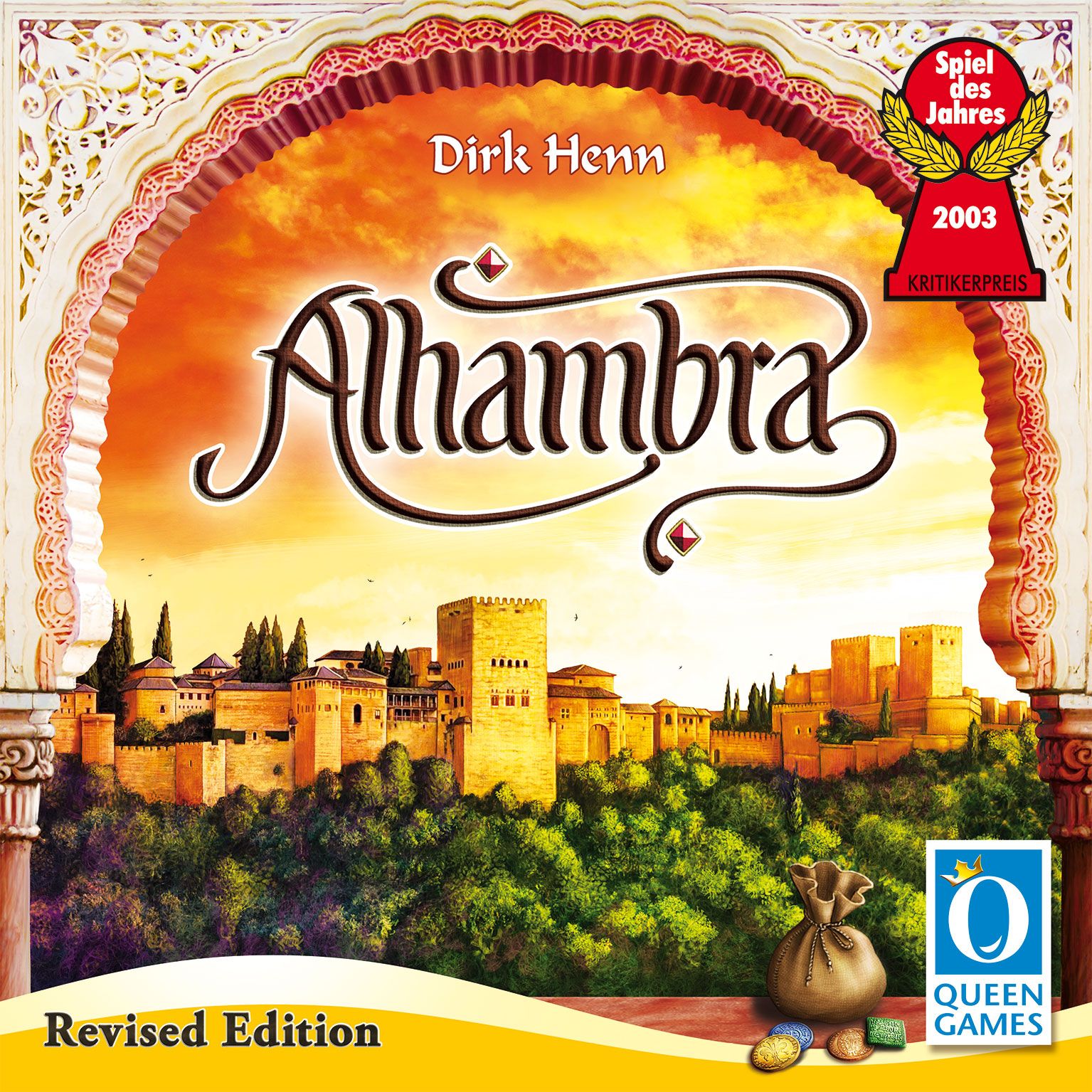
Manual published by the publisher · for rules reference only. More about the game on BoardGameGeek and Ludopedia .