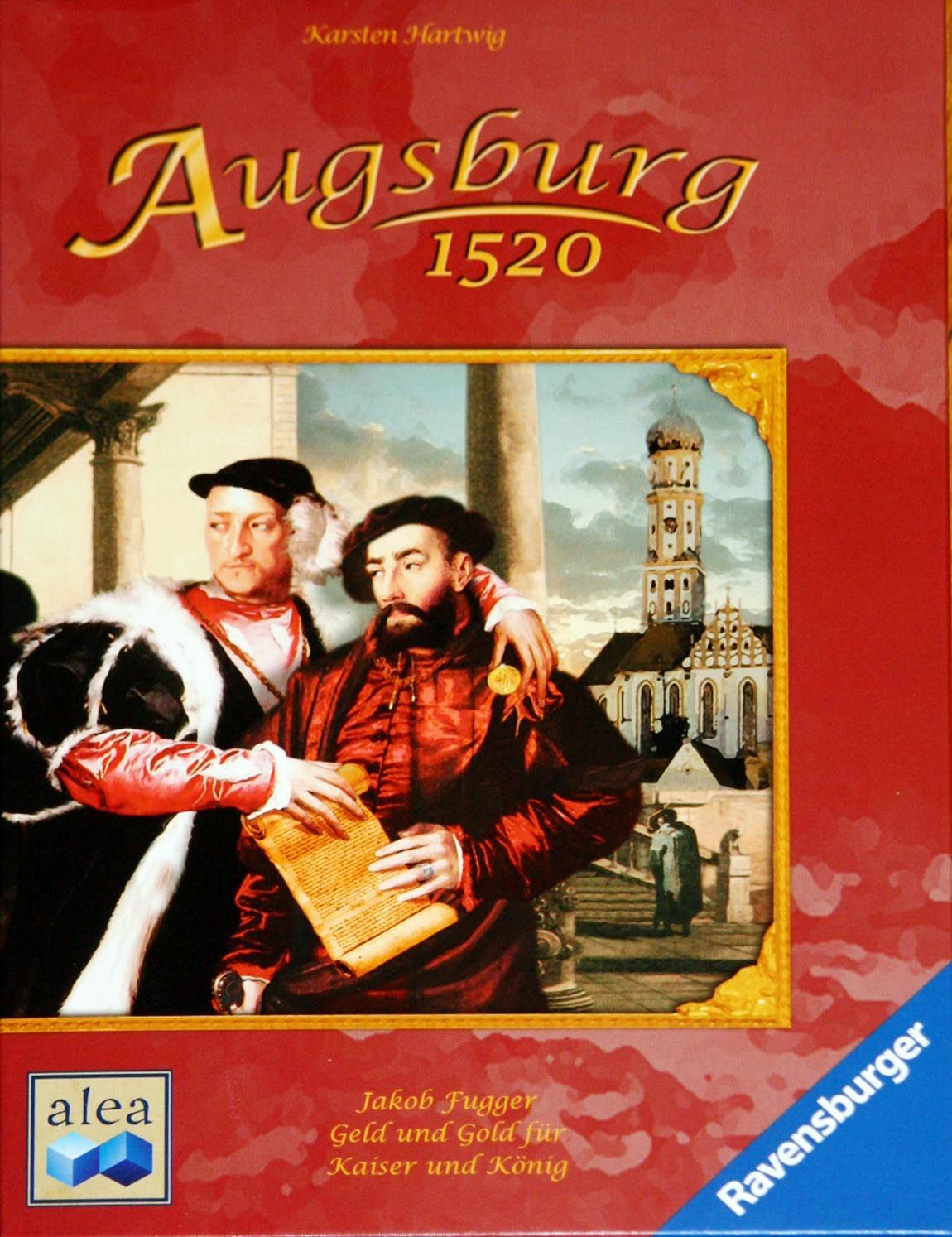
If you enjoy games with auctions and a historical economic flavor, Augsburg 1520 might be a great pick! It's straightforward and makes you think about every bid.
Rules manual not indexed yetUpload the PDF rulebook to ask questions about this game with AI.
info
About the game
What you do in a play session
In Augsburg 1520, you step into the shoes of a shrewd merchant in Renaissance Germany, trying your luck and business acumen in the city of Augsburg. Inspired by the historical figure Jakob Fugger, the wealthiest man of his time, the game puts you in the role of someone who lent money to kings and counts, gaining privileges and trade rights as collateral. The core mechanic revolves around auctions, where you and your opponents will bid for cards of varying values. Each round features a series of five auctions, and with each bid, you can increase the offer, pay to secure the item, or simply withdraw from the contest. The auction winner gains the right to perform actions that can boost their abilities and, more importantly, their victory points. It's a straightforward game with easy-to-grasp rules, but it demands cunning to plan your bids and maximize your gains. The playtime varies depending on the number of players, but it generally falls between 25 and 75 minutes. With components like the main board, individual player boards, cards, and chits, Augsburg 1520 offers an economic experience with a historical touch, ideal for those who enjoy a good auction and the pressure of making the right bid at the right time. It's the third title in the Alea Medium Box series, promising a balanced challenge for players aged 12 and up.
photo_library
Gallery
Box and component photos
11 photos · from the community
01 / 11
Tap any photo to open fullscreen. Photos submitted by the community or publisher.
Cities: Augsburg (Bavaria, Germany)Series: Alea Medium Box
businessPublisheralea, Ravensburger AG, Rio Grande Games
editDesignerKarsten Hartwig
paletteArtistCzarnè
groups_2
Community
Data from BoardGameGeek
2,218owners
168wishlist
44want to play
quiz
Frequently Asked Questions
Quick answers before you buy
7 questions
What is the average playtime for Augsburg 1520? expand_more
The playtime ranges from 25 to 75 minutes, depending on the number of players and how quickly the auction rounds proceed.
How many players can participate? expand_more
The game is designed for 2 to 5 players, offering different dynamics with each player count.
What is the game's complexity? Is it hard to learn? expand_more
The complexity is considered moderate. The rules are simple and focused on the auction mechanic, making it easy to learn but with room for strategic depth.
Is the game heavily language-dependent? expand_more
No, the language dependency is minimal. There is little text on the cards and components, which is easy to memorize or translate, allowing players of different nationalities to play together.
Who would you recommend Augsburg 1520 to? expand_more
We recommend it for those who enjoy games with auction mechanics, economic or medieval themes, and prefer games with more straightforward rules and a reasonable playtime.
What are the main components of the game? expand_more
The game includes a main board, individual player boards, various cards with different values, and chits to represent resources or points.
Is Augsburg 1520 more about luck or strategy? expand_more
It's a balance between the two. Luck comes into play with the values of the auctioned cards and the actions you can choose, but strategy lies in how you manage your bids, decide when to fold, and which actions to prioritize.