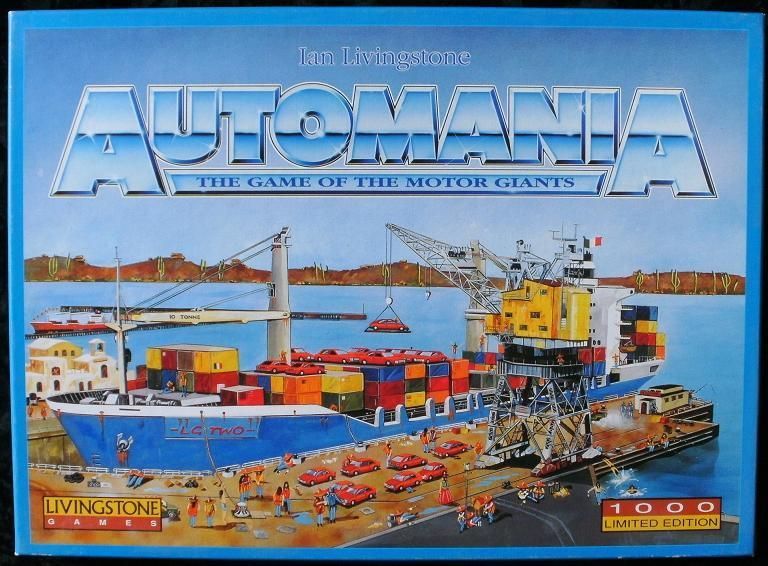
Automobile — Prices
Mayfair Games, Warfrog Games, 999 Games · Board game · 2009
3–5 · best 5
120 min
Weight 3.5/5
Buy · from US$ 149.87
7.8
rating
Ludopedia
7.3
rating
BGG
Our Verdict
FOR GENRE FANS
Perfect for those who love dense economic games and enjoy feeling the market pressure. The highlight is the realistic simulation of industrial obsolescence.
Highlights
- Deep and rewarding economic simulation
- Very clever obsolescence mechanic
- Well-integrated historical theme
- Competitive interaction via market share
Keep in mind
- Very steep learning curve
- Long games, potentially tiring for newbies
Rules manual not indexed yet
Upload the PDF rulebook to ask questions about this game with AI.
About the game
What you do in a play session
If you enjoy Martin Wallace's style, Automobile is the kind of challenge that makes you feel the weight of being an automotive tycoon in the early 20th century. You're not just 'making cars'; you're managing an industrial empire in the US, starting with the primitive 1893 models and evolving as technology progresses. The heart of the game lies in the balance between market demand and your production capacity. You must decide whether to focus on low-end, mid-range, or luxury vehicles, but be careful: demand shifts every round and information is partial. Overproducing leads to 'inefficiency cubes', which act as anchors dragging down your progress.
Strategy extends beyond the factory walls. You can invest in distributors to expand your reach, but if you fail to supply them with cars, your investment goes bankrupt. There's also a battle for market share, where dropping prices can give you an edge, though it comes at a cost. To get an extra boost, there are special action spaces inspired by real figures like Ford and Durant, granting powerful temporary abilities. The biggest dilemma is obsolescence: old factories become inefficient over time, forcing you to shut down outdated operations and open new ones with cutting-edge technology. It's a game of rigorous financial management where every cent counts and efficiency is the key to victory. Whoever best navigates the demand crises and modernizes their industrial park the fastest will end the game with the deepest pockets and the title of king of the road.
Strategy extends beyond the factory walls. You can invest in distributors to expand your reach, but if you fail to supply them with cars, your investment goes bankrupt. There's also a battle for market share, where dropping prices can give you an edge, though it comes at a cost. To get an extra boost, there are special action spaces inspired by real figures like Ford and Durant, granting powerful temporary abilities. The biggest dilemma is obsolescence: old factories become inefficient over time, forcing you to shut down outdated operations and open new ones with cutting-edge technology. It's a game of rigorous financial management where every cent counts and efficiency is the key to victory. Whoever best navigates the demand crises and modernizes their industrial park the fastest will end the game with the deepest pockets and the title of king of the road.
Gallery
Box and component photos
Tap any photo to open fullscreen. Photos submitted by the community or publisher.
Rules videos
Learn by watching before you open the box
In English


Best player count
BGG community vote
3
REC
4
REC
5
BEST
Soundtrack
Ambience suggested by Melodice
Loading playlist...
Where to Buy
Prices monitored daily
Finding best prices...
Prices unavailable at this time.
Price history — last 6 months (lowest new offer)
Alert enabled!
Join the BoardGamesBot deals group
Get the best board game deals every day — without message spam.
Join the WhatsApp groupGame details
Mechanics, categories, families and credits
Mechanics
Categories
Families
Publisher
Mayfair Games, Warfrog Games, 999 Games, IELLO, Lookout Games, Phalanx Games Polska, Treefrog Games, Wargames Club Publishing
Designer
Martin Wallace
Artist
Czarnè, Klemens Franz, Mike Atkinson, Peter Dennis
Community
Data from BoardGameGeek
5,572owners
1,376wishlist
343want to play
Frequently Asked Questions
Quick answers before you buy
Is the game too complex?
Yes, it's designed for experienced gamers (weight 3.5). If you've never played a heavy economic 'euro', be prepared to study the rulebook carefully.
How long does a game take?
Expect to spend about 2 hours, though it may vary depending on the group's experience and player count.
How many people can play?
3 to 5 players. With more players, the battle for market share becomes much more intense.
Do I need to know about automotive history to play?
No, but knowing figures like Ford and Durant makes the experience more immersive and enjoyable.
Is the game language dependent?
No, most components use icons or simple terms, making language dependency minimal.
Other Games You'll Like
Based on mechanics and theme