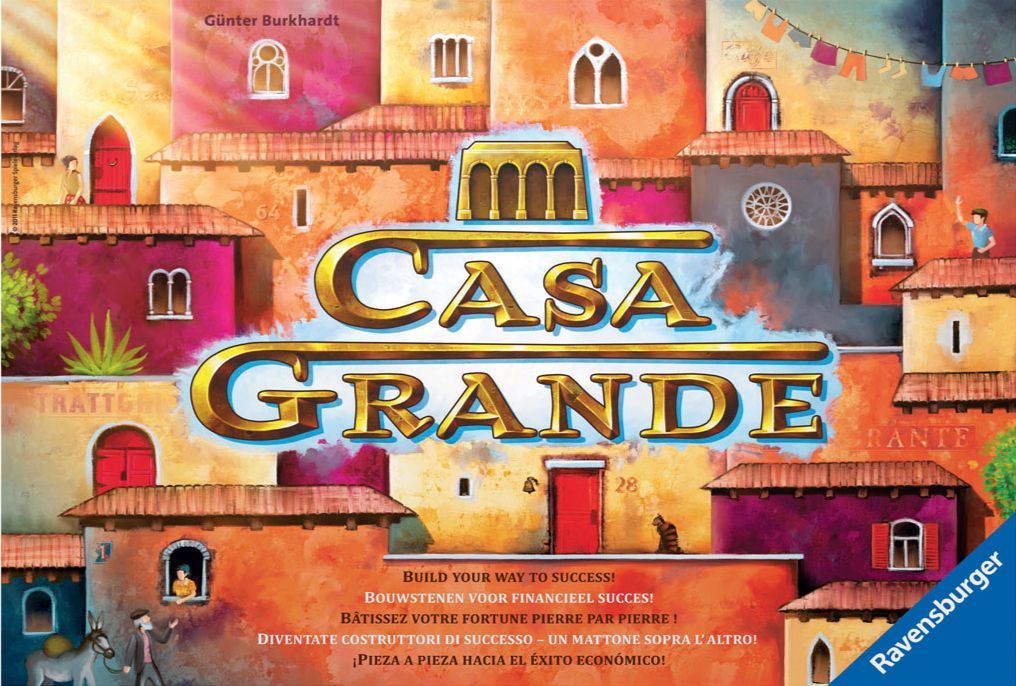
Casa Grande — Prices
Ravensburger AG · Board game · 2011
2–4 · best 4
30–45 min
Weight 2.1/5
Buy · from US$ 27.99
7.6
rating
Ludopedia
6.4
rating
BGG
Our Verdict
RECOMMENDED
A dynamic and fun vertical construction game for those who love watching the board grow!
Highlights
- Satisfying vertical building
- Direct player interaction
- Quick and light gameplay
- Great for families
Keep in mind
- Relies on die rolls
- Can cause competitive frustration
Rules manual not indexed yet
Upload the PDF rulebook to ask questions about this game with AI.
About the game
What you do in a play session
Ever imagined trying to build the tallest building in the neighborhood, knowing your neighbors might use your own foundation to continue their work? In Casa Grande, that's exactly what happens! The goal is simple to grasp but requires a keen eye: you need to develop strategic lots to erect increasingly imposing and profitable structures. The game takes place on a board that combines a construction grid with a movement track around the edge.
On your turn, luck enters the fray with a die. You roll the die and move your pawn along the track. If you want an extra boost to reach a better position, you can spend your bonus points. Where your pawn lands on the track determines which row or column you can place a building block in. If you already have enough blocks to support a platform, you can stack it, increasing your building's height and securing a nice amount of Casa Grande Lire. The secret is vertical growth: the taller and more complex the building, the more money it generates.
But don't think it's just about your own project. The game features delightful (and sometimes frustrating!) interaction with other players. If someone decides to build on top of a platform you've already placed, congratulations! You earn bonus points. These points are valuable as they can be converted into money, but be careful not to accumulate too many without converting them. The game ends when the last building block is placed on the board, and whoever has accumulated the most Lire wins. It's a game of resource management, moderate luck, and, above all, great spatial awareness to ensure your neighbors don't take all the credit for your foundation!
On your turn, luck enters the fray with a die. You roll the die and move your pawn along the track. If you want an extra boost to reach a better position, you can spend your bonus points. Where your pawn lands on the track determines which row or column you can place a building block in. If you already have enough blocks to support a platform, you can stack it, increasing your building's height and securing a nice amount of Casa Grande Lire. The secret is vertical growth: the taller and more complex the building, the more money it generates.
But don't think it's just about your own project. The game features delightful (and sometimes frustrating!) interaction with other players. If someone decides to build on top of a platform you've already placed, congratulations! You earn bonus points. These points are valuable as they can be converted into money, but be careful not to accumulate too many without converting them. The game ends when the last building block is placed on the board, and whoever has accumulated the most Lire wins. It's a game of resource management, moderate luck, and, above all, great spatial awareness to ensure your neighbors don't take all the credit for your foundation!
Gallery
Box and component photos
Tap any photo to open fullscreen. Photos submitted by the community or publisher.
Best player count
BGG community vote
2
OK
3
REC
4
BEST
Soundtrack
Ambience suggested by Melodice
Loading playlist...
Where to Buy
Prices monitored daily
Finding best prices...
Prices unavailable at this time.
Price history — last 6 months (lowest new offer)
Alert enabled!
Join the BoardGamesBot deals group
Get the best board game deals every day — without message spam.
Join the WhatsApp groupGame details
Mechanics, categories, families and credits
Mechanics
Categories
Families
Publisher
Ravensburger AG
Designer
Günter Burkhardt
Artist
Franz Vohwinkel
Community
Data from BoardGameGeek
742owners
91wishlist
23want to play
Frequently Asked Questions
Quick answers before you buy
How long does a game last?
Typically between 30 to 45 minutes, making it perfect for a quick session.
How complex is the game?
It's a light and easy-to-learn game, perfect for board game beginners.
Is the game very luck-dependent?
There is a luck element due to the die, but the strategy of where to build and how to use bonuses is what wins the game.
How many players is it recommended for?
It works great for 2 to 4 players.
Does the game have interesting components?
Yes! The highlight is the 3D construction, where pieces are stacked on top of each other.
Other Games You'll Like
Based on mechanics and theme