—
rating
Ludopedia
7.9
rating
BGG
Our Verdict
HIGHLY RECOMMENDED
If you enjoy a pure and direct abstract duel, Slither is a sure bet! It's a connection game with a movement twist that makes you think about every move.
Highlights
- Genius strategic connection
- Simple rules, tactical depth
- Unique piece movement
- Fast and intense matches
Keep in mind
- Total absence of luck
- Requires abstract reasoning
- Not much thematic variation
Rules manual not indexed yet
Upload the PDF rulebook to ask questions about this game with AI.
About the game
What you do in a play session
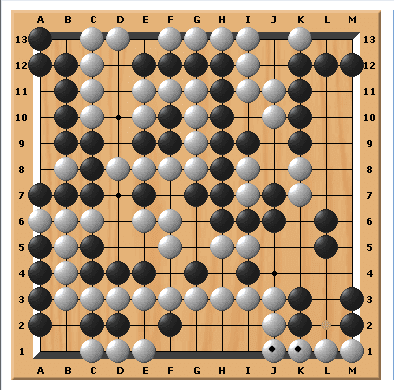
Slither is a super straightforward and elegant abstract game for two players, where the goal is to connect opposite sides of the board. Think of a classic connection game, but with a twist!
The objective is simple: one player tries to link the left and right sides of the board with their stones, while the other tries to connect the top and bottom sides. The catch is that on each turn, you can either add a new stone to the board or move a stone already placed. This extra mobility adds a special flavor to strategic decisions. But beware: no two stones of the same color can be diagonally adjacent unless they are orthogonally connected by a like-colored stone. This rule forces you to think about how your actions affect the opponent's space and possibilities.
There's a variant called "Advanced Slither" that adds a condition for moving stones: they can only move if they are part of a contiguous group of stones of both colors. This makes the game a bit slower and more tactical, but it can be interesting for those seeking a greater challenge and wanting to explore the game's strategies more deeply.
With rules that fit on a napkin and quick games, Slither is perfect for those who enjoy abstract games with strategic depth, without any fuss. It's the kind of game you learn in 5 minutes but can challenge you for years. Ideal for those who like a direct mental duel with no luck involved.
The objective is simple: one player tries to link the left and right sides of the board with their stones, while the other tries to connect the top and bottom sides. The catch is that on each turn, you can either add a new stone to the board or move a stone already placed. This extra mobility adds a special flavor to strategic decisions. But beware: no two stones of the same color can be diagonally adjacent unless they are orthogonally connected by a like-colored stone. This rule forces you to think about how your actions affect the opponent's space and possibilities.
There's a variant called "Advanced Slither" that adds a condition for moving stones: they can only move if they are part of a contiguous group of stones of both colors. This makes the game a bit slower and more tactical, but it can be interesting for those seeking a greater challenge and wanting to explore the game's strategies more deeply.
With rules that fit on a napkin and quick games, Slither is perfect for those who enjoy abstract games with strategic depth, without any fuss. It's the kind of game you learn in 5 minutes but can challenge you for years. Ideal for those who like a direct mental duel with no luck involved.
Gallery
Box and component photos
Tap any photo to open fullscreen. Photos submitted by the community or publisher.
Best player count
BGG community vote
2
BEST
Soundtrack
Ambience suggested by Melodice
Loading playlist...
Where to Buy
Prices monitored daily
Finding best prices...
Prices unavailable at this time.
Price history — last 6 months (lowest new offer)
As an Amazon Associate I earn from qualifying purchases. Prices and availability subject to change.
Alert enabled!
Join the BoardGamesBot deals group
Get the best board game deals every day — without message spam.
Join the WhatsApp groupGame details
Mechanics, categories, families and credits
Mechanics
Categories
Families
Publisher
(Web published)
Designer
Corey Clark
Community
Data from BoardGameGeek
90owners
86wishlist
8want to play
Frequently Asked Questions
Quick answers before you buy
How many players does Slither support?
Slither is strictly a two-player game.
What is the average playtime for a game of Slither?
Games are quite fast, usually lasting around 40 minutes.
Does the game involve a lot of luck?
No, Slither is a purely strategy game with no luck elements.
What components do I need to play?
You only need a board (any square size will do) and stones of two different colors.
Is Slither difficult to learn?
The rules are very simple and quick to learn, but the strategy can be quite deep.
Are there any variants of the game?
Yes, there is the "Advanced Slither" variant which adds a movement rule for the pieces, making the game more tactical.
Other Games You'll Like
Based on mechanics and theme