Otrio
(Self-Published), Competo / Marektoy, Korea Boardgames · Board game · 2015
2–4 · best 4
20–30 min
Weight 1.3/5
Buy · from US$ 20.43
6.7
rating
Ludopedia
6.1
rating
BGG
Our Verdict
RECOMMENDED
Perfect for those who love quick logical challenges and want something deeper than Tic-Tac-Toe.
Highlights
- Simple and intuitive rules
- Fast and dynamic gameplay
- Elegant wooden components
- High competitive tension
Keep in mind
- Can become repetitive over time
- Limited scenario variety
Rules manual not indexed yet
Upload the PDF rulebook to ask questions about this game with AI.
About the game
What you do in a play session
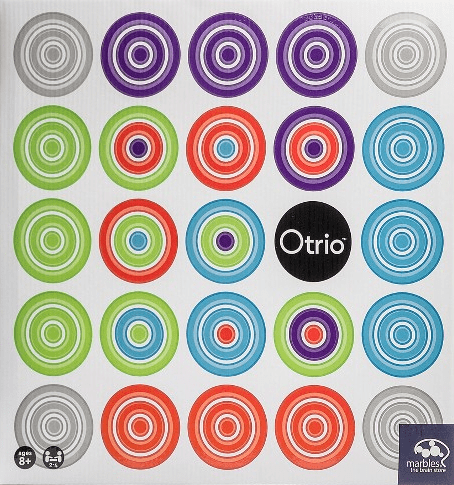
You know that classic 'three-in-a-row' concept? Otrio takes that idea and adds a layer of mental strategy that makes everything far more intriguing. Forget the simplicity of Tic-Tac-Toe; this is a much more cerebral experience. You and your opponents fight for space on a wooden board, trying to position circles of different sizes to secure the win. The real twist is that there are three distinct paths to victory, forcing you to keep an eye not only on your own plan but also on what your opponent is plotting.
First, you can go for the classic sequence: three pieces of your color in a row, but they must be in ascending or descending order of size. Alternatively, if you manage to align three pieces of the same size, you win! Then there's the 'Tetris-style' move: if you can stack three concentric pieces (one inside the other) in the same space, the victory is yours instantly. This dynamic creates a constant tug-of-war, where you try to block your opponent while setting up your own trap.
It's the perfect kind of game for those who enjoy a quick challenge that demands total focus. The simplicity of the components hides a nice tactical depth, as every piece placed can either pave your way or hand the victory to the other player on a silver platter. It's minimalist, elegant, and extremely competitive. If you love games where luck has no place and everything depends on your ability to predict your opponent's moves, Otrio is the right choice for your table.
First, you can go for the classic sequence: three pieces of your color in a row, but they must be in ascending or descending order of size. Alternatively, if you manage to align three pieces of the same size, you win! Then there's the 'Tetris-style' move: if you can stack three concentric pieces (one inside the other) in the same space, the victory is yours instantly. This dynamic creates a constant tug-of-war, where you try to block your opponent while setting up your own trap.
It's the perfect kind of game for those who enjoy a quick challenge that demands total focus. The simplicity of the components hides a nice tactical depth, as every piece placed can either pave your way or hand the victory to the other player on a silver platter. It's minimalist, elegant, and extremely competitive. If you love games where luck has no place and everything depends on your ability to predict your opponent's moves, Otrio is the right choice for your table.
Gallery
Box and component photos
Tap any photo to open fullscreen. Photos submitted by the community or publisher.
Rules videos
Learn by watching before you open the box
In English


Best player count
BGG community vote
2
OK
3
REC
4
BEST
Soundtrack
Ambience suggested by Melodice
Loading playlist...
Where to Buy
Prices monitored daily
Finding best prices...
Prices unavailable at this time.
Price history — last 6 months (lowest new offer)
As an Amazon Associate I earn from qualifying purchases. Prices and availability subject to change.
Alert enabled!
Join the BoardGamesBot deals group
Get the best board game deals every day — without message spam.
Join the WhatsApp groupGame details
Mechanics, categories, families and credits
Mechanics
Categories
Families
Publisher
(Self-Published), Competo / Marektoy, Korea Boardgames, Marbles: The Brain Store, Spin Master Ltd.
Designer
Brady Peterson
Community
Data from BoardGameGeek
1,887owners
119wishlist
9want to play
Frequently Asked Questions
Quick answers before you buy
Is it hard to learn?
Not at all! The rules are super simple, and anyone can start playing in just a few minutes.
How long does a game last?
It's very quick, usually between 20 and 30 minutes, making it an ideal filler between larger games.
How many players is it for?
The game works for 2 to 4 players, but the tension peaks in a 1v1 duel.
Is it suitable for children?
Yes, it's great for stimulating logical reasoning and spatial perception in kids.
Does the game depend on luck?
Zero luck. It's pure strategy and observation; the one who plans better wins.
Other Games You'll Like
Based on mechanics and theme