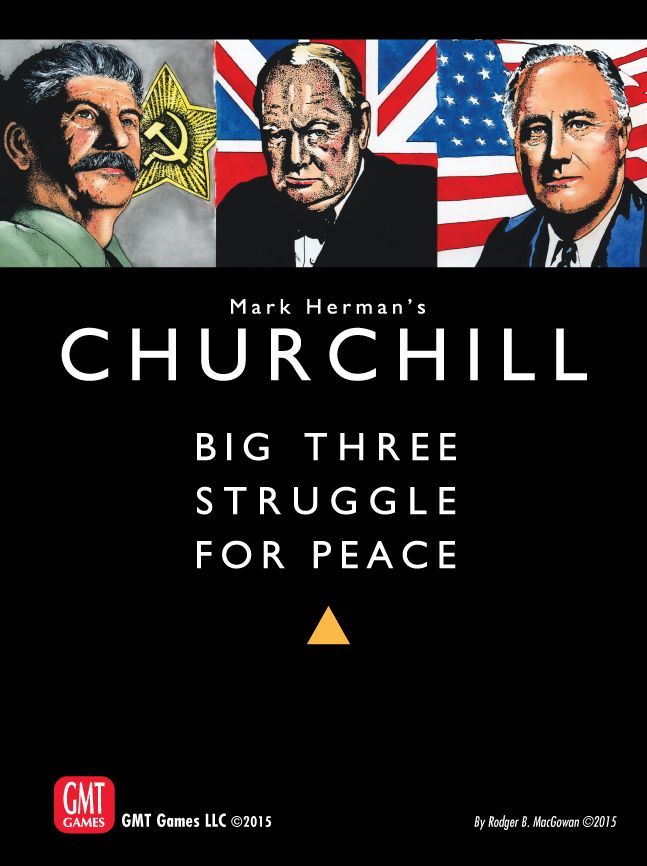
Churchill
GMT Games, Devir, Ergo Ludo Editions · Board game · 2015
1–3 · best 3
Solo
60–300 min
Weight 3.4/5
Buy · from US$ 55.99
8.6
rating
Ludopedia
7.7
rating
BGG
Our Verdict
FOR GENRE FANS
Perfect for history buffs who prefer diplomacy over pure combat; the political tension is the highlight.
Highlights
- Fascinating and immersive political simulation
- Innovative tug-of-war mechanic
- Historical figures with real stakes
Keep in mind
- Very high language dependency
- Learning curve for beginners
Rules manual not indexed yet
Upload the PDF rulebook to ask questions about this game with AI.
About the game
What you do in a play session
Forget the idea that Churchill is just another wargame about moving tanks. In reality, it's a game of political intrigue and power struggles disguised as a military conflict. You take on the role of Churchill, Roosevelt, or Stalin, and your goal isn't just to defeat the Axis, but to ensure the post-war peace is shaped according to your interests. The game revolves around 10 historical conferences where leaders decide everything: who leads the Allied forces, where offensives are deployed, and production priorities.
The dynamics take place around a circular conference table. You use staff cards featuring historical figures to 'pull' conference issues toward your side of the table, similar to a political tug-of-war. Winning the most issues grants you global leverage, but be careful: using your Head of State card provides a bonus but comes with risks. Roosevelt may pass away and be replaced by Truman, Churchill might suffer a heart attack, and Stalin's paranoia can trigger internal purges.
Once the conferences end, the decisions are implemented. This affects clandestine operations (establishing political networks in conquered countries) and military movements. The military portion is streamlined: fronts advance toward Germany, Italy, and Japan. If you can infiltrate political networks and control governments-in-exile while troops advance, you dominate the geopolitics. The game concludes at Potsdam, and victory is decided by who had the most control over the surrendered powers. It's an intense experience of forced cooperation and fierce competition, lasting about 3 hours, though shorter scenarios are available for those with limited time.
The dynamics take place around a circular conference table. You use staff cards featuring historical figures to 'pull' conference issues toward your side of the table, similar to a political tug-of-war. Winning the most issues grants you global leverage, but be careful: using your Head of State card provides a bonus but comes with risks. Roosevelt may pass away and be replaced by Truman, Churchill might suffer a heart attack, and Stalin's paranoia can trigger internal purges.
Once the conferences end, the decisions are implemented. This affects clandestine operations (establishing political networks in conquered countries) and military movements. The military portion is streamlined: fronts advance toward Germany, Italy, and Japan. If you can infiltrate political networks and control governments-in-exile while troops advance, you dominate the geopolitics. The game concludes at Potsdam, and victory is decided by who had the most control over the surrendered powers. It's an intense experience of forced cooperation and fierce competition, lasting about 3 hours, though shorter scenarios are available for those with limited time.
Gallery
Box and component photos
Tap any photo to open fullscreen. Photos submitted by the community or publisher.
Rules videos
Learn by watching before you open the box
In English


Best player count
BGG community vote
1
OK
2
OK
3
BEST
Soundtrack
Ambience suggested by Melodice
Loading playlist...
Where to Buy
Prices monitored daily
Finding best prices...
Prices unavailable at this time.
Price history — last 6 months (lowest new offer)
As an Amazon Associate I earn from qualifying purchases. Prices and availability subject to change.
Alert enabled!
Join the BoardGamesBot deals group
Get the best board game deals every day — without message spam.
Join the WhatsApp groupGame details
Mechanics, categories, families and credits
Mechanics
Categories
Families
Publisher
GMT Games, Devir, Ergo Ludo Editions, Fox in the Box, Rawstone
Designer
Mark Herman
Artist
Charles Kibler, Mark Simonitch, Rodger B. MacGowan
Community
Data from BoardGameGeek
5,996owners
1,751wishlist
266want to play
Frequently Asked Questions
Quick answers before you buy
Is it a complex wargame?
No! The author emphasizes it's not a traditional wargame. The focus is on politics and influence; the military part is much simpler and more abstract.
How long does a game take?
A full game takes about 3 hours, but there are short and medium scenarios that last between 1 and 2 hours.
How many people can play?
The game is ideal for 3 players, but it supports 2 players and even has a solitaire mode.
Is it language dependent?
Yes, there is high language dependency. You'll need to be comfortable with the language to understand the cards and conference issues.
Who is this game recommended for?
For those who enjoy political strategy, WWII history, and love negotiating and fighting for influence against their friends.
Other Games You'll Like
Based on mechanics and theme