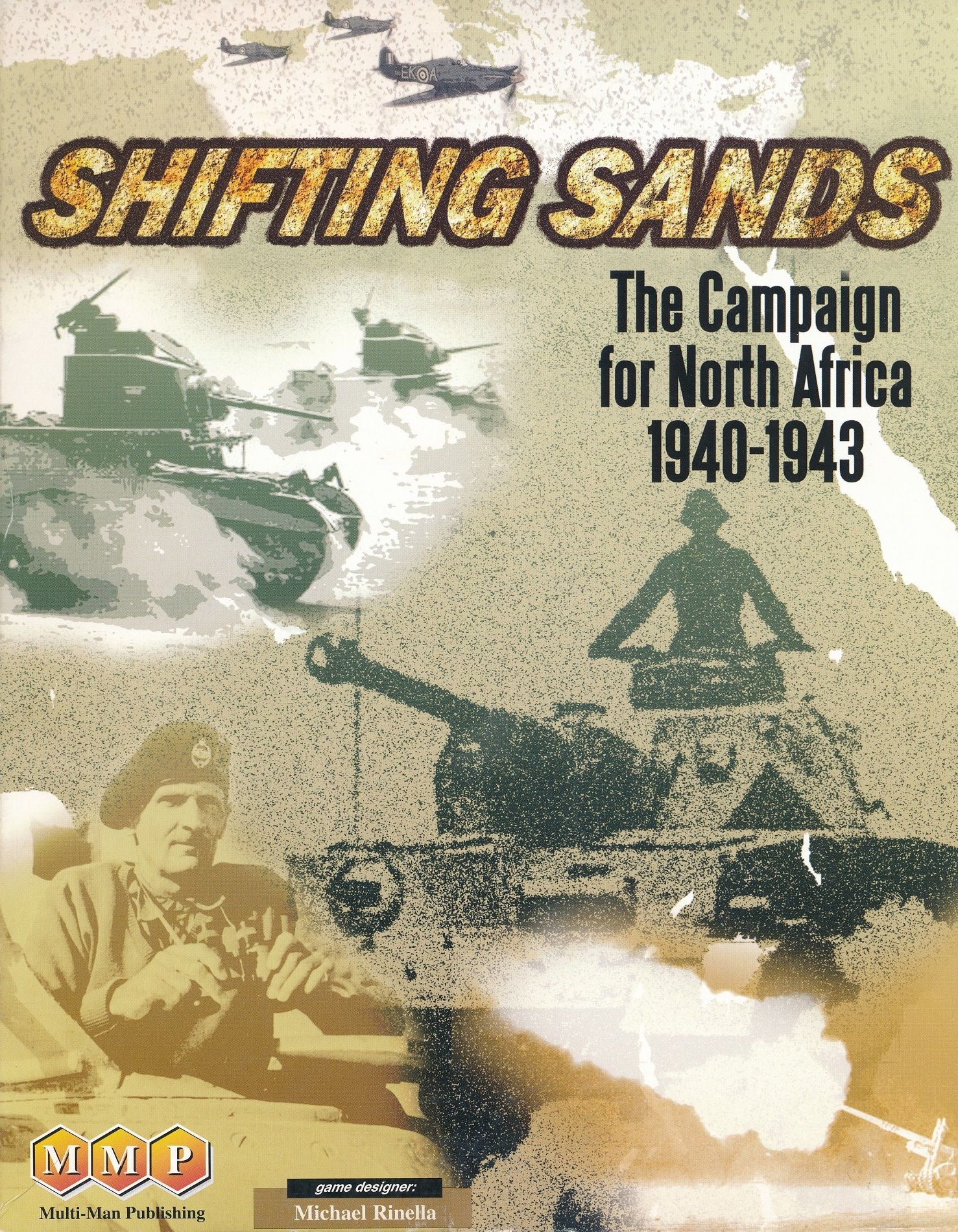
Shifting Sands: The Campaign for North Africa 1940-1943
Multi-Man Publishing · Board game · 2006
1–2 · best 2
Solo
240–300 min
Weight 3.2/5
Buy
—
rating
Ludopedia
7.3
rating
BGG
Our Verdict
FOR GENRE FANS
For history buffs who crave a gritty WWII campaign. This game nails the chaos and desperate logistics of the African theater.
Highlights
- Deep historical immersion
- Cards add unpredictable narrative
- Detailed map and hefty components
Keep in mind
- Rules demand patience to learn
- Long playtime (4h+)
- Limited scenario variety
Rules manual not indexed yet
Upload the PDF rulebook to ask questions about this game with AI.
About the game
What you do in a play session
Shifting Sands is a card-driven wargame diving into the North African campaign of World War II (1940-1943). You’ll command Allied or Axis forces, vying for control over a point-to-point map while wrestling with unpredictable events—because, just like the generals of the era, your plans will constantly be derailed by crises elsewhere. The game uses cards to drive actions, dice rolls to resolve clashes, and tight hand management to balance scarce resources. Brace for hours of intense strategy: the massive map (22”x32”), nearly 400 counters, and two thematic decks ensure deep immersion. Pro tip: clear a big table and brew strong coffee.
Gallery
Box and component photos
Tap any photo to open fullscreen. Photos submitted by the community or publisher.
Best player count
BGG community vote
1
OK
2
BEST
Soundtrack
Ambience suggested by Melodice
Loading playlist...
Where to Buy
Prices monitored daily
Finding best prices...
Prices unavailable at this time.
Price history — last 6 months (lowest new offer)
Alert enabled!
Join the BoardGamesBot deals group
Get the best board game deals every day — without message spam.
Join the WhatsApp groupGame details
Mechanics, categories, families and credits
Mechanics
Categories
Families
Publisher
Multi-Man Publishing
Designer
Michael Rinella
Artist
Dean Essig, Ken Smith
Community
Data from BoardGameGeek
1,120owners
292wishlist
84want to play
Frequently Asked Questions
Quick answers before you buy
How long does a game take?
Around 4-5 hours, depending on the scenario and players’ experience.
Does it need a lot of table space?
Absolutely! The map alone is 22”x32”, plus cards, counters, and player aids.
Is it beginner-friendly?
Not really. The BGG weight of 3.18/5 means crunchy rules—best for seasoned wargamers.
Can it be played solo?
Officially 2-player, though fans have made solo variants. Don’t expect a polished solo mode.
How many scenarios are included?
Multiple, covering different phases of the campaign (1940-1943), but all in the same theater.
Other Games You'll Like
Based on mechanics and theme