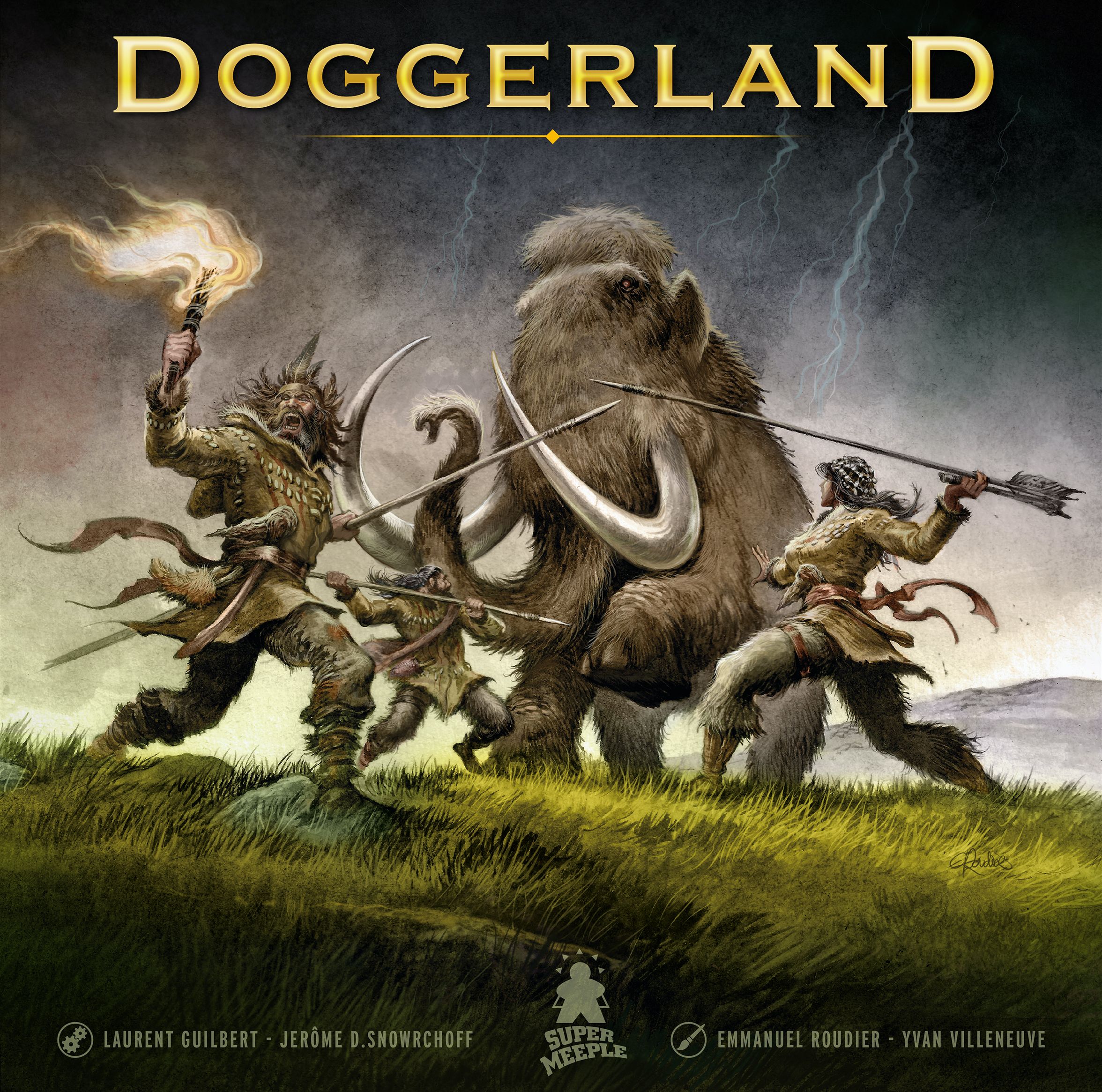
Doggerland
Super Meeple, Eclipse Editorial, Elznir Games · Board game · 2023
1–4 · best 3
Solo
30–120 min
Weight 3.3/5
Buy · from US$ 58.80
8.7
rating
Ludopedia
7.7
rating
BGG
Our Verdict
RECOMMENDED
If you enjoy deep strategy games with a prehistoric theme and a touch of programming, Doggerland is a dig worth exploring!
Highlights
- Deep strategy
- Immersive theme
- Modular components
- Action programming
- Different worker types
Keep in mind
- Learning curve
- Can be long
- Indirect interaction
Rules manual not indexed yet
Upload the PDF rulebook to ask questions about this game with AI.
About the game
What you do in a play session
In Doggerland, you are transported to around 15,000 BCE, taking control of a human clan on the ancient landmass that connected Great Britain to mainland Europe, now submerged under the North Sea. Your main goal is to ensure the survival and expansion of your clan, leaving a lasting legacy for future generations. To do this, you'll need to manage your population, develop crafts, record your history in cave murals, and erect imposing megaliths in honor of the gods, all while facing the challenges imposed by the seasons.
Each round, exploration is key, and the territory unfolds modularly, ensuring a different experience every game. You will program your actions in advance, executing them in sequence, which requires careful planning and the ability to adapt to other players' choices. Resources are finite and the environment is dynamic, so as time progresses and resources deplete, migration becomes a necessity for your clan's survival and development.
Each clan has a leader who offers valuable bonuses and a shaman, who, with their knowledge and magic, allows powerful and unique actions. After 6 to 8 seasons, the clan that has accumulated the most legacy points will be the grand winner, proving their ability to thrive and leave their mark on prehistory. Get ready for a journey of strategy, adaptation, and survival in a wild and fascinating world!
Each round, exploration is key, and the territory unfolds modularly, ensuring a different experience every game. You will program your actions in advance, executing them in sequence, which requires careful planning and the ability to adapt to other players' choices. Resources are finite and the environment is dynamic, so as time progresses and resources deplete, migration becomes a necessity for your clan's survival and development.
Each clan has a leader who offers valuable bonuses and a shaman, who, with their knowledge and magic, allows powerful and unique actions. After 6 to 8 seasons, the clan that has accumulated the most legacy points will be the grand winner, proving their ability to thrive and leave their mark on prehistory. Get ready for a journey of strategy, adaptation, and survival in a wild and fascinating world!
Gallery
Box and component photos
Tap any photo to open fullscreen. Photos submitted by the community or publisher.
Rules videos
Learn by watching before you open the box
Best player count
BGG community vote
1
REC
2
REC
3
BEST
4
REC
Soundtrack
Ambience suggested by Melodice
Loading playlist...
Where to Buy
Prices monitored daily
Finding best prices...
Prices unavailable at this time.
Price history — last 6 months (lowest new offer)
Alert enabled!
Join the BoardGamesBot deals group
Get the best board game deals every day — without message spam.
Join the WhatsApp groupGame details
Mechanics, categories, families and credits
Mechanics
Categories
Families
Publisher
Super Meeple, Eclipse Editorial, Elznir Games, Geronimo Games, Hachette Boardgames UK, Zvezda
Designer
Jérôme Daniel Snowrchoff, Laurent Guilbert
Artist
Emmanuel Roudier, Yvan "Gawain" Villeneuve
Community
Data from BoardGameGeek
1,772owners
743wishlist
94want to play
Frequently Asked Questions
Quick answers before you buy
How many players does Doggerland support?
Doggerland can be played by 1 to 4 players, making it great for both solo sessions and small groups.
What is the average playtime?
A game of Doggerland typically lasts between 30 and 120 minutes, depending on the number of players and familiarity with the rules.
What is the game's complexity?
With a BGG weight of 3.3019/5, Doggerland is considered a medium-heavy complexity game. It offers plenty of strategic depth for those seeking a challenge.
What are the main mechanics of Doggerland?
The core mechanics include Programmed Movement, Tile Placement, and Worker Placement, with different worker types adding layers of strategy.
Who is Doggerland recommended for?
It's perfect for players who enjoy strategic euros, with long-term planning, resource management, and a well-integrated prehistoric theme. If you like games that make you think ahead, you'll enjoy this one!
Is the game language dependent?
Not heavily. The text on components is minimal and easily memorized, so language dependency is low, making it accessible even for non-English speakers.
Other Games You'll Like
Based on mechanics and theme