6.0
rating
Ludopedia
7.0
rating
BGG
Our Verdict
RECOMMENDED
If you enjoy train games with an economic and strategic twist, Dual Gauge might just become your new favorite! The stock market dynamic and route building across varied maps add a special flavor.
Highlights
- Engaging network building
- Dynamic stock market
- Unique challenge maps
- Clever track system
Keep in mind
- Steep initial learning curve
- Interaction can be tense
Rules manual not indexed yet
Upload the PDF rulebook to ask questions about this game with AI.
About the game
What you do in a play session
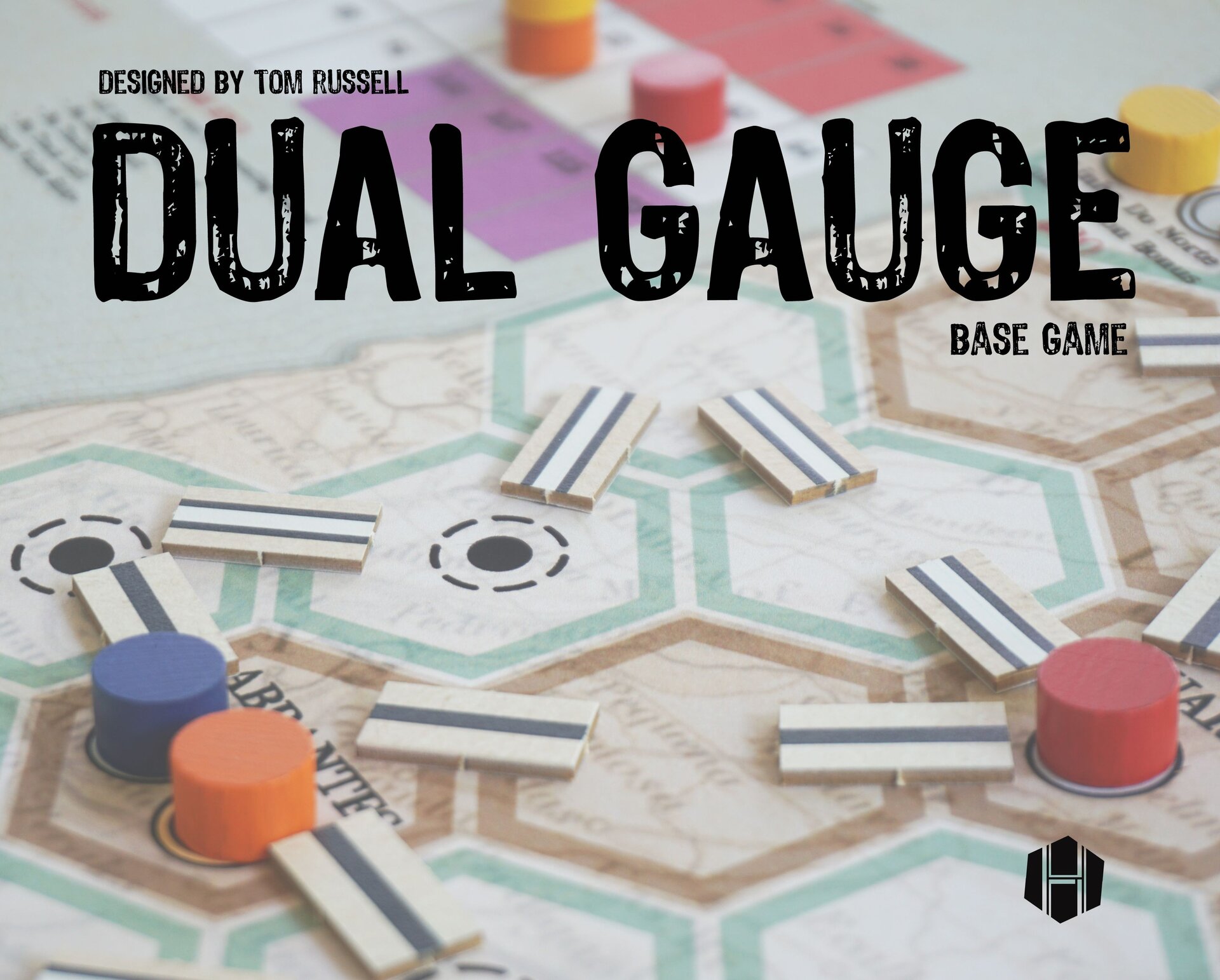
In Dual Gauge, you'll dive into the world of railroads, but with a special twist: two types of track gauges! We have the standard gauge, more expensive and efficient, and the narrow gauge, cheaper but less productive. These rectangular track tiles are laid across adjacent hex sides, and the cool part is that everyone can use the shared track network, as long as they are connected to it. Each track type naturally calls for a different type of train. Stock purchases inject funds directly into the company's coffers, which then uses this money to build tracks. Trains, on the other hand, are paid for with the stock value itself. And watch out, because newer trains can 'rust' older ones! Companies can also 'token' station spaces on the map, expanding their routes while potentially blocking rivals. This also comes at a cost, decreasing the stock value by an entire row in the game's somewhat capricious two-dimensional stock market. But Dual Gauge isn't just one game; it's a system playable on multiple maps! Each map brings its own unique twists and companies with asymmetric abilities. The base set comes with two maps to get you started: Portugal, intended as an introduction to the system, but featuring the challenge of difficult mountainous terrain; and the challenging Detroit map, which has you taking on debt to keep underfunded railroads afloat, all with an eye toward reaching Chicago and its double-route bonus. Get ready for a strategic and engaging experience!
Gallery
Box and component photos
Tap any photo to open fullscreen. Photos submitted by the community or publisher.
Rules videos
Learn by watching before you open the box
Best player count
BGG community vote
3
REC
4
BEST
5
REC
Soundtrack
Ambience suggested by Melodice
Loading playlist...
Where to Buy
Prices monitored daily
Finding best prices...
Prices unavailable at this time.
Price history — last 6 months (lowest new offer)
Alert enabled!
Join the BoardGamesBot deals group
Get the best board game deals every day — without message spam.
Join the WhatsApp groupGame details
Mechanics, categories, families and credits
Mechanics
Categories
Families
Publisher
Hollandspiele
Designer
Amabel Holland
Artist
Ilya Kudriashov
Community
Data from BoardGameGeek
Frequently Asked Questions
Quick answers before you buy
Is Dual Gauge a game for beginners or experienced players?
It has a medium weight (2.8/5 on BGG), so it might be a bit challenging for absolute beginners, but it's great for those with some experience looking for something more strategic. The Portugal map serves as a good starting point.
How long does a game of Dual Gauge take?
Games typically last between 60 to 90 minutes, which is a very reasonable time for a game with this level of depth.
Is the game very similar to other train games?
It shares classic train game elements like route building, but the stock market mechanic and the management of two track types give it a very unique identity.
How many players does the game support?
Dual Gauge is designed for 3 to 5 players. It plays well at different counts, but the interaction in the market and route building becomes more intense with more people at the table.
Are there expansions for Dual Gauge?
Yes, the base game comes with two maps (Portugal and Detroit), and there are expansions that add more maps and companies with unique abilities, further expanding the possibilities.
What does 'dual gauge' mean in the game?
It means there are two types of tracks: standard gauge (more expensive and efficient) and narrow gauge (cheaper and less efficient). You need to manage which to use and how they interact.
Is the stock market complicated to understand?
It has its own dynamic and might seem a bit intimidating at first, but once you get the hang of it, it adds a very interesting strategic layer to your railroad building.
Other Games You'll Like
Based on mechanics and theme