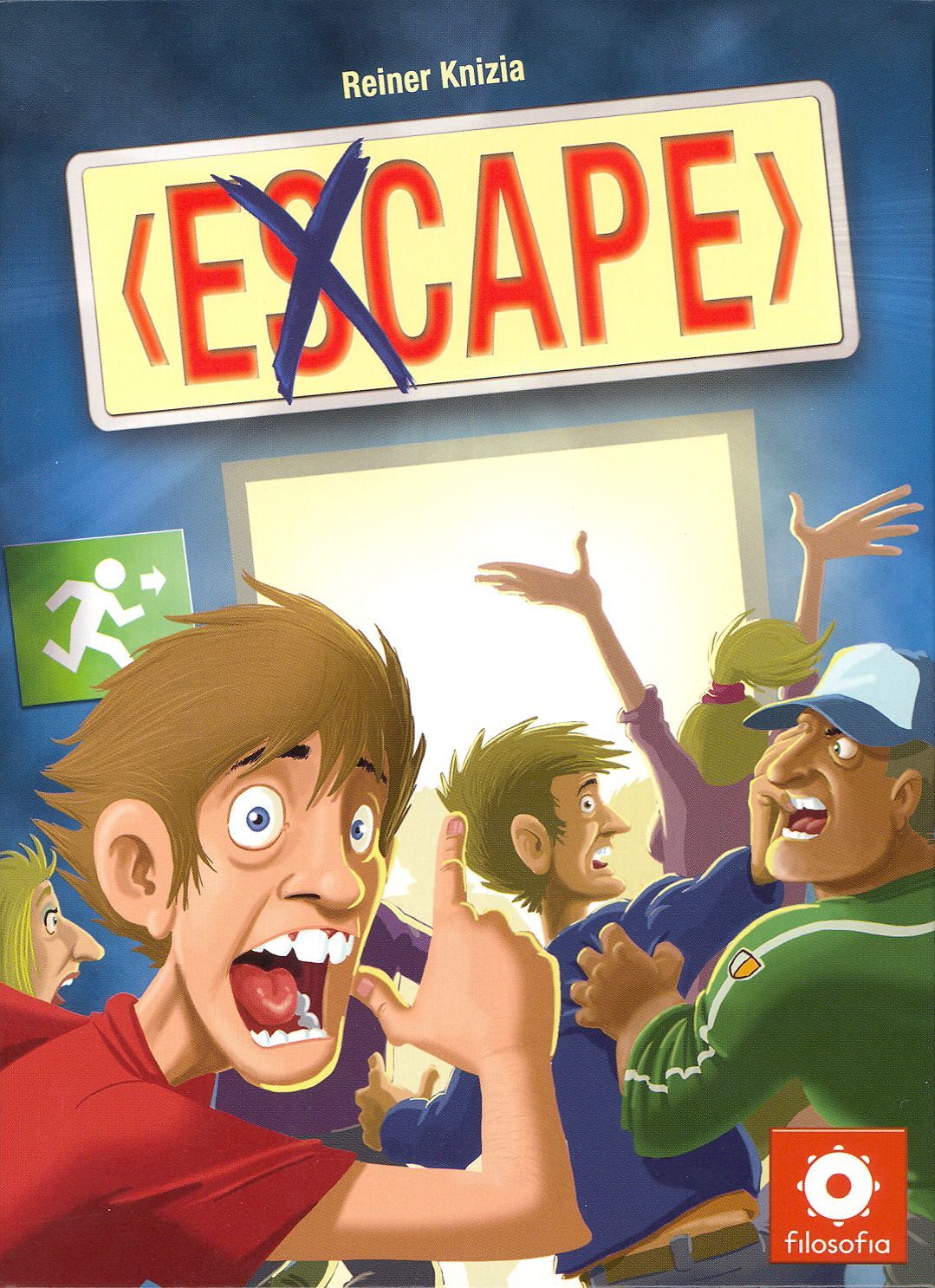
Excape
AMIGO, Filosofia Éditions, Game Factory · Board game · 1998
2–6 · best 5
30 min
Weight 1.1/5
Buy · from US$ 18.99
6.8
rating
Ludopedia
6.5
rating
BGG
Our Verdict
RECOMMENDED
If you love fast dice games and enjoy weighing risk versus reward, Excape will hook you instantly.
Highlights
- Constant risk decisions
- Short, intense rounds
- Easy to learn
Keep in mind
- Heavy luck dependence
- Potential for repetition
Rules manual not indexed yet
Upload the PDF rulebook to ask questions about this game with AI.
About the game
What you do in a play session
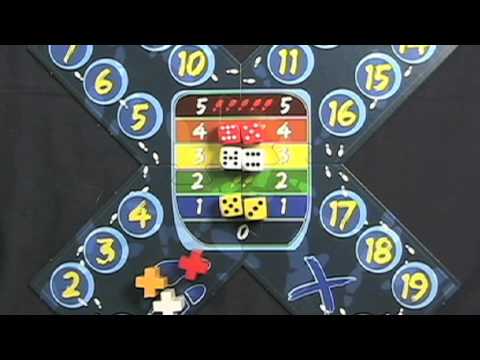
Excape (also known as Exxtra or Rapido) is a dice‑driven race game that blends luck and risk‑management on a compact board. Designed for 2‑6 players, a typical playtime is about 30 minutes, making it ideal for a quick yet tension‑filled session. At the start of your turn you may move your pawn 0‑5 spaces, provided your two dice are still on the ranking chart – a small track with six slots numbered 0 to 5. Then you roll the two special dice: one shows 1‑2‑3‑4‑7‑X and the other 1‑2‑3‑5‑6‑X, where X counts as zero. If the first roll is a double, you advance 1, 2 or 3 spaces depending on the number rolled. After that, the two results become a two‑digit number (e.g., 31, 22 or 70, with X = 0). You can stop and place that pair on an empty space of the ranking chart, or you can risk another roll. Each subsequent roll may give you more movement, but rolling an X (or two Xs) ends your turn and forces you to move back one or two spaces.
When you place your dice on the chart, you may bump an opponent’s dice that sit on a higher‑numbered slot, as long as your two‑digit number is equal to or larger than theirs. Bumped dice stay off the chart, meaning the opponent can’t move at the start of their next turn. This creates a tug‑of‑war for the higher slots: the higher you go, the greater the chance you’ll be knocked off before your next turn, so every placement is a calculated risk.
For two‑player games there’s a variant: each player controls two pairs of dice but still only one pawn. When both pairs sit on the chart, you sum the values of the occupied slots and move that total before rolling again. This keeps the tension alive even with just two participants. In short, Excape mixes dice rolling, push‑your‑luck, and a race mechanic on a minimalist board, delivering short, twist‑filled games that appeal to both newcomers and seasoned dice fans.
When you place your dice on the chart, you may bump an opponent’s dice that sit on a higher‑numbered slot, as long as your two‑digit number is equal to or larger than theirs. Bumped dice stay off the chart, meaning the opponent can’t move at the start of their next turn. This creates a tug‑of‑war for the higher slots: the higher you go, the greater the chance you’ll be knocked off before your next turn, so every placement is a calculated risk.
For two‑player games there’s a variant: each player controls two pairs of dice but still only one pawn. When both pairs sit on the chart, you sum the values of the occupied slots and move that total before rolling again. This keeps the tension alive even with just two participants. In short, Excape mixes dice rolling, push‑your‑luck, and a race mechanic on a minimalist board, delivering short, twist‑filled games that appeal to both newcomers and seasoned dice fans.
Gallery
Box and component photos
Tap any photo to open fullscreen. Photos submitted by the community or publisher.
Rules videos
Learn by watching before you open the box

Best player count
BGG community vote
2
OK
3
REC
4
REC
5
BEST
6
REC
Soundtrack
Ambience suggested by Melodice
Loading playlist...
Where to Buy
Prices monitored daily
Finding best prices...
Prices unavailable at this time.
Price history — last 6 months (lowest new offer)
As an Amazon Associate I earn from qualifying purchases. Prices and availability subject to change.
Alert enabled!
Join the BoardGamesBot deals group
Get the best board game deals every day — without message spam.
Join the WhatsApp groupGame details
Mechanics, categories, families and credits
Mechanics
Categories
Families
Publisher
AMIGO, Filosofia Éditions, Game Factory, Giochi Uniti
Designer
Reiner Knizia
Artist
Franz Vohwinkel, Melanie Friedli, Olivier Fagnère
Community
Data from BoardGameGeek
2,501owners
747wishlist
289want to play
Frequently Asked Questions
Quick answers before you buy
How many players can play?
2 to 6 players.
How long does a game take?
About 30 minutes.
What is the game’s complexity?
Very low, perfect for beginners.
What components are included?
A board with a track and ranking chart, two special dice, colored pawns and position markers.
Who is the game aimed at?
Fans of dice games, quick races, and risk‑taking decisions.
Is there a two‑player variant?
Yes, each player uses two pairs of dice and follows special rules for movement.
Does it require a lot of table space?
No, the board is compact and fits on any dining table.
Other Games You'll Like
Based on mechanics and theme