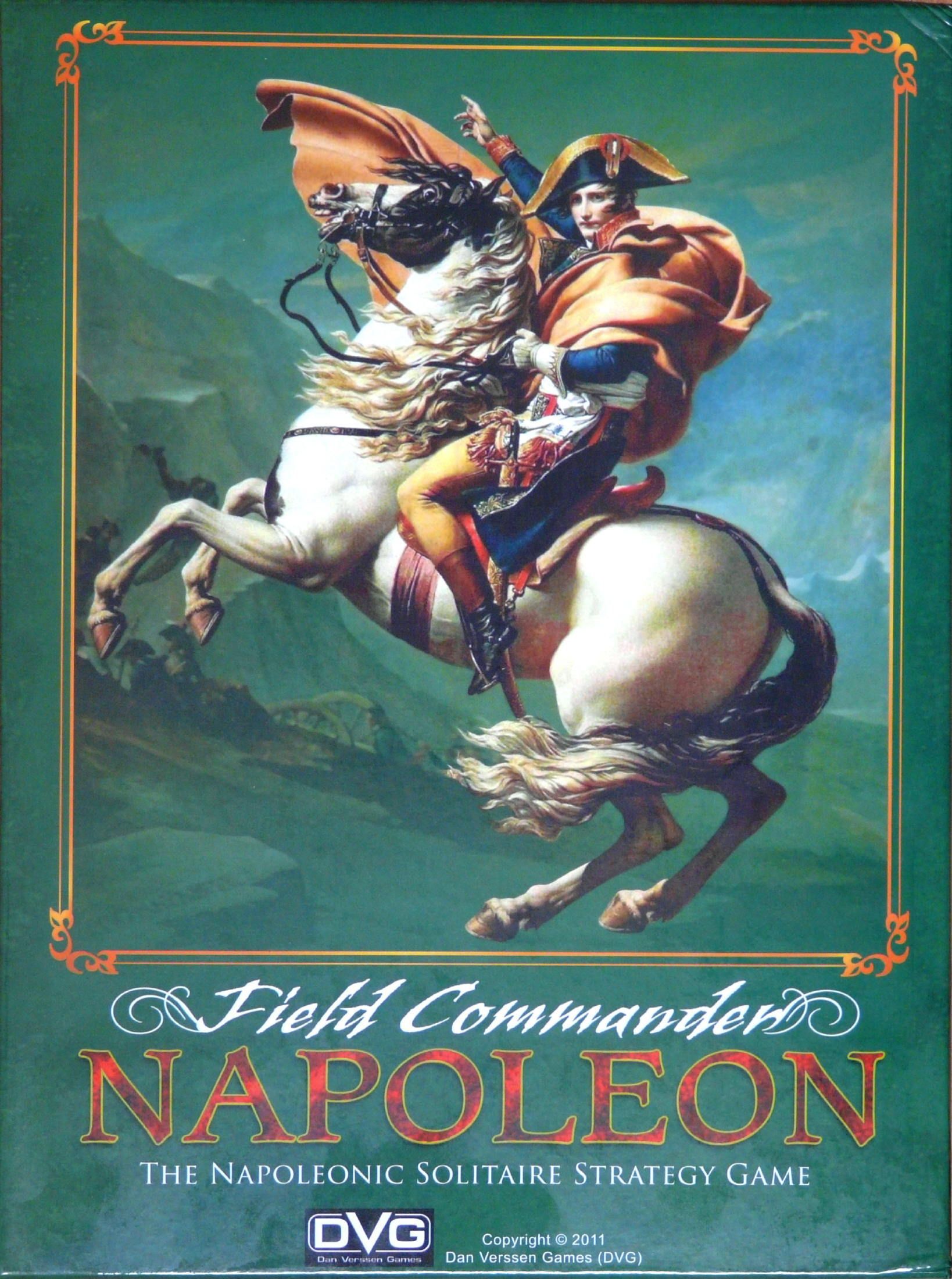
Field Commander: Napoleon
Dan Verssen Games (DVG) · Board game · 2011If you're into the Napoleonic era and want a deep, tactical solo experience, Field Commander: Napoleon is a sure bet. It's a game that challenges you to think like a general, with campaigns that take you through history.
- Faithful Napoleonic simulation
- Varied and lengthy campaigns
- Immersive solo experience
- Accessible tactical depth
- Requires dedication and time
- Dice roll luck dependency
- Exclusive solo focus
About the game
What you do in a play session
The system is designed to be accessible without sacrificing the tactical depth and simulation of a conflict of this magnitude. Here, you make all the crucial decisions: troop movements, resource management, and even army morale, which is as vital as logistics – after all, "an army travels on its stomach." The game simulates Napoleon's strong personality, where political and military acumen are key to raising France to power. Success brings public adulation and troop support, paving the way for victory.
With 11 distinct campaigns, including the Egyptian Campaign, the invasion of Russia, and the 100 Days, you can play each one separately or link matches to experience the rise and fall of the Empire. Each campaign features a unique map and force setup, detailing divisions and corps with rectangular counters that facilitate tactical formations. Troops vary in quality, from Elites to Recruits, adding an extra tactical layer. It's a solo game that challenges you to think like a general, with the rules dictating enemy actions and the luck of the dice adding that spice of unpredictability. Minimal text on the board means quick rule memorization, but deep strategy.
Gallery
Box and component photos
Tap any photo to open fullscreen. Photos submitted by the community or publisher.
Rules videos
Learn by watching before you open the box
In English
-
 FC Napoleon : Late Night Play Through Round 1 part 1
-
 FC Napoleon : Late Night Introduction and Set Up
-
 FC Napoleon : Late Night Play Through Round 1 part 2
-
 FC Napoleon : Late Night Play Through Round 2
-
 FC Napoleon : Late Night Play Through Round 3
-
 FC Napoleon : Late Night Play Through Round 6 & 7
-
 FC Napoleon : Late Night Play Through Episode 4
-
 FC Napoleon : Late Night Play Through Episode 5
-
 FC Napoleon: How to Play Compellation Video
-
 How to Play Field Commander: Napoleon - Enemy Turn
-
 How to Play Field Commander: Napoleon - Introduction & Overview
-
 How to Play Field Commander: Napoleon - Sequence of Play
Best player count
BGG community vote
Soundtrack
Ambience suggested by Melodice
Where to Buy
Prices monitored daily
Price history — last 6 months (lowest new offer)
As an Amazon Associate I earn from qualifying purchases. Prices and availability subject to change.
Alert enabled!
Join the BoardGamesBot deals group
Get the best board game deals every day — without message spam.
Join the WhatsApp groupGame details
Mechanics, categories, families and credits
Mechanics
Categories
Families
Community
Data from BoardGameGeek
Frequently Asked Questions
Quick answers before you buy
How many people can play Field Commander: Napoleon?
How long does a game session last?
Is the game very complicated to learn?
What are the main components of the game?
Who would you recommend this game to?
Can I play the campaigns in order?
Other Games You'll Like
Based on mechanics and theme