Go-Moku — Price & soundtrack
(Public Domain), (Unknown), ABRA · Board game · 700
2 · best 2
5 min
Weight 1.8/5
Buy · from US$ 55.78
7.5
rating
Ludopedia
6.0
rating
BGG
Our Verdict
HIGHLY RECOMMENDED
A giant logic duel, ideal for fans of pure pattern and strategy.
Highlights
- Strategic challenge
- Fast gameplay
- No luck
- Compact size
Keep in mind
- Two‑player only
- Susceptible to ties on smaller boards
- Requires practice to avoid mistakes
Rules manual not indexed yet
Upload the PDF rulebook to ask questions about this game with AI.
About the game
What you do in a play session
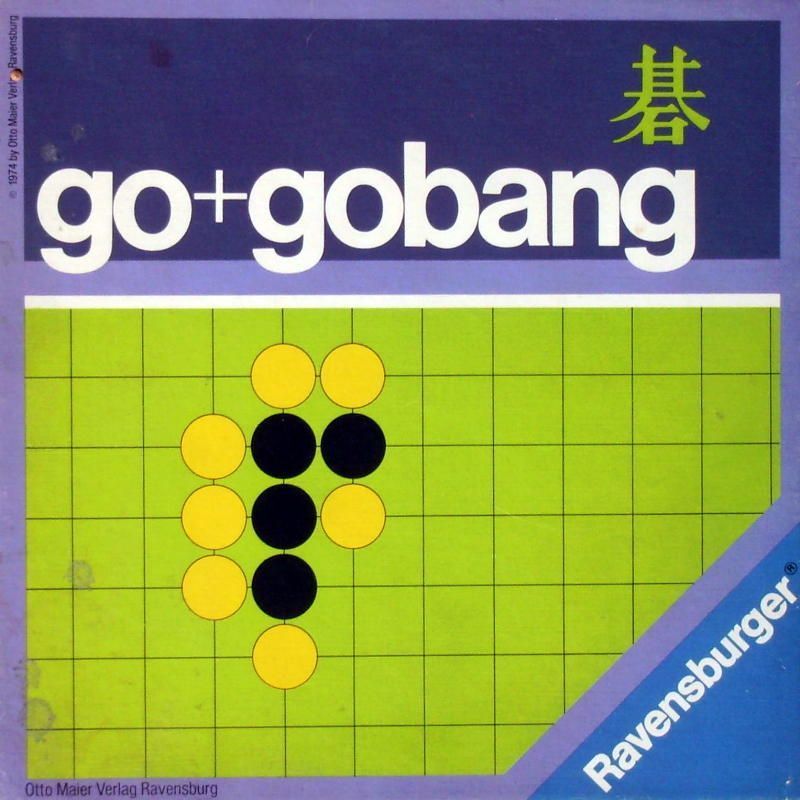
Go‑Moku, also known as Gomoku or wuziqi, is a classic abstract strategy game that evolved from the traditional game of Go. The board is usually 19×19, but smaller 15×15 or even 10×10 grids are common. The goal is simple: place five consecutive stones in a horizontal, vertical or diagonal line before your opponent does. Although it looks like a giant version of tic‑tac‑toe, the strategic depth explodes. The first player, using the black stones, has a natural advantage, but a well‑known opening called swap‑2 balances the game: the second player chooses whether to keep the white stones, accepts the black ones and passes, or places additional stones and leaves the final choice to the first. This way both sides start on equal footing. The game has no dice or cards; everything depends on spatial vision and anticipation of moves. A skilled player typically controls the center of the board, creates multiple simultaneous threats, and exploits the opponent’s mistakes. Rapid matches usually last between five and ten minutes, making it ideal for practice sessions or as a quick game at gatherings. For those who enjoy logic challenges, Go‑Moku offers an accessible learning curve but with deep rewards as technique matures. Moreover, the game allows rule variations that increase complexity, such as Renju’s restrictions on certain five‑in‑a‑row patterns. Digital versions on platforms like Board Game Arena, Tabletopia and Yucata let you play against online opponents or AI at different difficulty levels. The Go‑Moku community also produces training resources, such as game analyses and opening guides. If you already know Go or other grid games, Go‑Moku will feel like a natural extension, offering a long‑term planning challenge in a compact format. On the flip side, if you prefer games with heavy social interaction or narrative themes, you might find it a bit solitary. In short, Go‑Moku is an excellent example of pure strategy, perfect for those who appreciate patterns, logic and balanced competition.
Gallery
Box and component photos
Tap any photo to open fullscreen. Photos submitted by the community or publisher.
Rules videos
Learn by watching before you open the box


Best player count
BGG community vote
2
BEST
Soundtrack
Ambience suggested by Melodice
Loading playlist...
Where to Buy
Prices monitored daily
Finding best prices...
Prices unavailable at this time.
Price history — last 6 months (lowest new offer)
Alert enabled!
Join the BoardGamesBot deals group
Get the best board game deals every day — without message spam.
Join the WhatsApp groupGame details
Mechanics, categories, families and credits
Mechanics
Categories
Families
Publisher
(Public Domain), (Unknown), ABRA, Alga, Arxon, ASS Altenburger Spielkarten, Copp Clark Publishing Company, Duàn De Lǐ (段的理), Grubbe Media GmbH, IQ Products, Jian Lun (剑伦), John Jaques of London, John W. Hill & Co., Jumbo, L. P. Septímio, Otto Maier Verlag, Palet spil, Schmidt International, Shuāng Hóu (双猴), Spear's Games, Watilliaux, Werner & Schumann, Το Καλό Παιχνίδι Α.Ε.
Designer
(Uncredited)
Artist
Manfred Burggraf
Community
Data from BoardGameGeek
725owners
63wishlist
5want to play
Frequently Asked Questions
Quick answers before you buy
How many players can play?
Only two players.
How long does a typical game last?
Between 5 and 10 minutes, depending on skill level.
What components are required?
A 19×19 (or 15×15) board and black and white stones.
Do I need to know Go to play Go‑Moku?
No, but knowledge helps; the game stands alone.
How does the swap‑2 opening work?
The second player chooses to keep the white stones, accepts the black stones and passes, or places extra stones and leaves the final choice to the first.
Is there a digital version?
Yes, on platforms like Board Game Arena, Tabletopia and Yucata.
Can the game end in a draw?
On smaller boards, yes; on 19×19, a win is guaranteed.
Other Games You'll Like
Based on mechanics and theme