Good Cop Bad Cop — Prices
Overworld Games, Broadway Toys LTD, Fullcap Games · Board game · 2014
4–8 · best 8
10–20 min
Weight 1.3/5
Buy · from US$ 14.99
7.0
rating
Ludopedia
6.5
rating
BGG
Our Verdict
FOR GENRE FANS
Perfect for those who love party games filled with betrayal and laughter. The highlight is the constant tension of deduction.
Highlights
- Fast and dynamic gameplay
- High player interaction
- Thrilling hidden identity tension
- Easy to learn and teach
Keep in mind
- Player elimination can be frustrating
- Heavily dependent on group dynamics
Rules manual not indexed yet
Upload the PDF rulebook to ask questions about this game with AI.
About the game
What you do in a play session
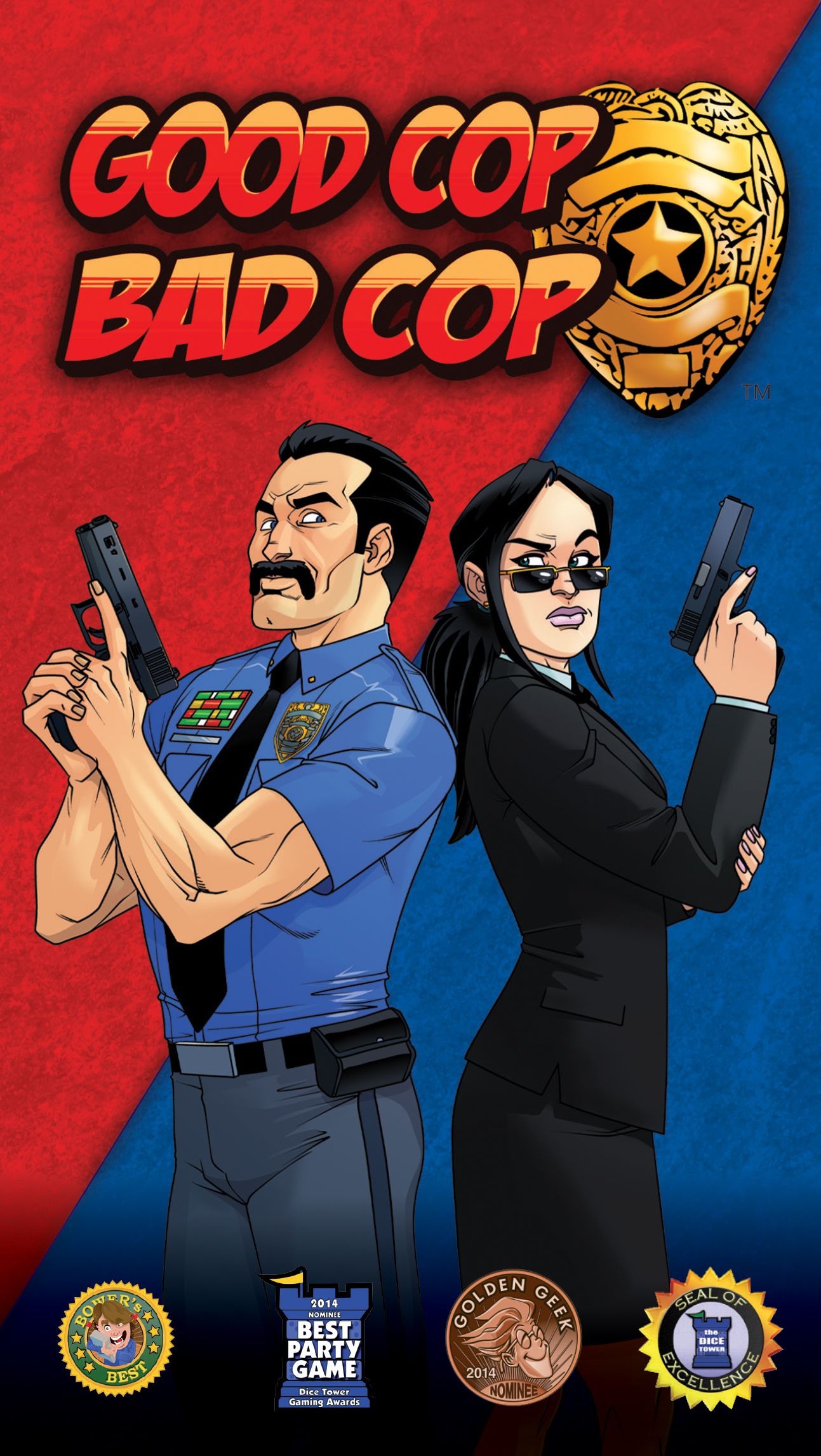
Imagine you're a police officer in a district where corruption isn't the exception, but the rule. In Good Cop Bad Cop, you enter this dangerous game of cat and mouse where nobody is who they claim to be. The goal seems simple: figure out who your allies are, grab one of the few guns available on the table, and take down the opposing group's leader. But, as in any good police thriller, trust is a luxury you can't afford.
The game employs a hidden identity system, meaning you'll spend most of your time trying to deduce who is on your team and who is just pretending to lead you into a trap. Tension rises as you manage your cards and try to read your friends' body language. Will you play the 'good cop', gaining everyone's trust, or go for the 'bad cop' approach, intimidating and eliminating the competition?
With fast-paced matches lasting between 10 to 20 minutes, it's the perfect icebreaker or the ideal choice for groups that love bluffing and deduction games. The 'Take That' dynamics ensure that no one stays comfortable for long, as player elimination is part of the experience. It's a high-interaction game where memory and the ability to lie (or spot a lie) are your best tools. If you enjoy the 'who is the traitor?' vibe and don't mind seeing your friends get knocked out while you laugh, this is the game for you. Get your badge ready, keep your guard up, and above all, trust no one!
The game employs a hidden identity system, meaning you'll spend most of your time trying to deduce who is on your team and who is just pretending to lead you into a trap. Tension rises as you manage your cards and try to read your friends' body language. Will you play the 'good cop', gaining everyone's trust, or go for the 'bad cop' approach, intimidating and eliminating the competition?
With fast-paced matches lasting between 10 to 20 minutes, it's the perfect icebreaker or the ideal choice for groups that love bluffing and deduction games. The 'Take That' dynamics ensure that no one stays comfortable for long, as player elimination is part of the experience. It's a high-interaction game where memory and the ability to lie (or spot a lie) are your best tools. If you enjoy the 'who is the traitor?' vibe and don't mind seeing your friends get knocked out while you laugh, this is the game for you. Get your badge ready, keep your guard up, and above all, trust no one!
Gallery
Box and component photos
Tap any photo to open fullscreen. Photos submitted by the community or publisher.
Rules videos
Learn by watching before you open the box
In English
-
 How to Play
-
 Just a Bunch of Nerds: Good Cop, Bad Cop
-
 Just the Basics: Good Cop Bad Cop - Part 4 (Tuck Box Organization)
-
 jPlay previews Good Cop Bad Cop
-
 Just the Basics: Good Cop Bad Cop - Part 2
-
 Just the Basics: Good Cop Bad Cop - Part 1
-
 Just the Basics: Good Cop Bad Cop - Part 3
-
 Advanced Concepts: Good Cop Bad Cop - Equipment Cards
-
 Overly Critical Gamers - Good Cop Bad Cop - Instructional/Gameplay/Review
Best player count
BGG community vote
4
REC
5
REC
6
BEST
7
REC
8
BEST
Soundtrack
Ambience suggested by Melodice
Loading playlist...
Where to Buy
Prices monitored daily
Finding best prices...
Prices unavailable at this time.
Price history — last 6 months (lowest new offer)
As an Amazon Associate I earn from qualifying purchases. Prices and availability subject to change.
Alert enabled!
Join the BoardGamesBot deals group
Get the best board game deals every day — without message spam.
Join the WhatsApp groupGame details
Mechanics, categories, families and credits
Mechanics
Categories
Families
Publisher
Overworld Games, Broadway Toys LTD, Fullcap Games, Magellan, Mandala Jogos, Primigenio
Designer
Brian Henk, Clayton Skancke
Artist
Dwayne Biddix
Community
Data from BoardGameGeek
5,255owners
603wishlist
75want to play
Frequently Asked Questions
Quick answers before you buy
Is the game complex to learn?
Not at all! The rules are very simple and the game flows quickly, making it great for those who don't play many board games.
How many people can play?
The game shines with groups of 4 to 8 people, making it ideal for parties and social gatherings.
How long does a match last?
It's very fast, usually between 10 to 20 minutes, which allows for multiple rounds in one sitting.
Is there a lot of reading or language dependency?
Almost none. There is very little text and it's easy to memorize, so the language barrier is minimal.
What happens if I get eliminated?
Since there is player elimination, you might be out before the end, but the matches are so short that you'll be back in another one soon.
Other Games You'll Like
Based on mechanics and theme