Hex — Soundtrack
Kanare_Abstract, (Web published), 3M · Board game · 1942
2 · best 2
20 min
Weight 3.0/5
Buy
6.8
rating
Ludopedia
6.7
rating
BGG
Our Verdict
FOR GENRE FANS
Perfect for those who love pure logical challenges and intense mental duels. Its strength lies in the elegance of simple rules with infinite depth.
Highlights
- Extremely simple rules to learn
- Mathematical impossibility of a draw
- Pure and tense strategic duel
- Versatile (paper, wood, or digital)
Keep in mind
- Can be intimidating for beginners
- Lack of theme for those seeking immersion
Rules manual not indexed yet
Upload the PDF rulebook to ask questions about this game with AI.
About the game
What you do in a play session
If you enjoy the kind of game where luck has no place and everything depends on your ability to predict your opponent's moves, Hex is for you. Created by mathematician Piet Hein in 1942 and later independently rediscovered by John Nash (yes, the one from 'A Beautiful Mind'), the game is the definition of 'elegant simplicity'. The rules are so straightforward that you can learn them in a minute, but the strategic depth is a bottomless pit.
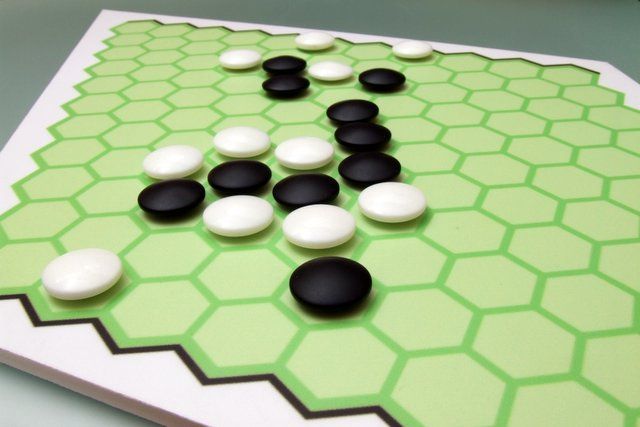
The goal is simple: you and your opponent fight to connect opposite edges of the hexagonal board with your own pieces. While you try to build your bridge, you must simultaneously block the other person's path. The board traditionally takes the shape of a rhombus, and although various dimensions exist (such as 11x11 or 13x13), the struggle is always intense. Nash, in fact, argued that the 14x14 size was the ideal balance point.
A crucial detail is the 'swap rule' (also known as the pie rule), which serves to neutralize the inherent advantage of the first player. Basically, the first player places the first piece, and the second player decides whether they want to keep that color or swap places with the opponent. This forces the first player to be fair with their opening move, otherwise, they simply hand over the advantage.
Hex is fascinating because, mathematically, a draw is impossible. Someone always wins. Whether playing with wooden pieces, Go stones, or even just pencil and paper, the experience remains the same: a pure mental duel. It's the perfect game for fans of Chess or Go who want something with a different flow and a unique spatial connection dynamic. Get ready to burn some neurons trying to seal your opponent's route while building your own!
The goal is simple: you and your opponent fight to connect opposite edges of the hexagonal board with your own pieces. While you try to build your bridge, you must simultaneously block the other person's path. The board traditionally takes the shape of a rhombus, and although various dimensions exist (such as 11x11 or 13x13), the struggle is always intense. Nash, in fact, argued that the 14x14 size was the ideal balance point.
A crucial detail is the 'swap rule' (also known as the pie rule), which serves to neutralize the inherent advantage of the first player. Basically, the first player places the first piece, and the second player decides whether they want to keep that color or swap places with the opponent. This forces the first player to be fair with their opening move, otherwise, they simply hand over the advantage.
Hex is fascinating because, mathematically, a draw is impossible. Someone always wins. Whether playing with wooden pieces, Go stones, or even just pencil and paper, the experience remains the same: a pure mental duel. It's the perfect game for fans of Chess or Go who want something with a different flow and a unique spatial connection dynamic. Get ready to burn some neurons trying to seal your opponent's route while building your own!
Gallery
Box and component photos
Tap any photo to open fullscreen. Photos submitted by the community or publisher.
Rules videos
Learn by watching before you open the box
In English
-
 How to play Hex
-
 Not a curse! Hex is a world-class abstract strategy game created over 80 years ago
-
 Hex! One of the greatest games of the 20th century!
-
 How to play Hex
-
 How to play the game of Hex
-
 How to play Hex... on a Chinese Checkers board.
-
 How to play Hex... on a Chinese Checker board (second attempt)
-
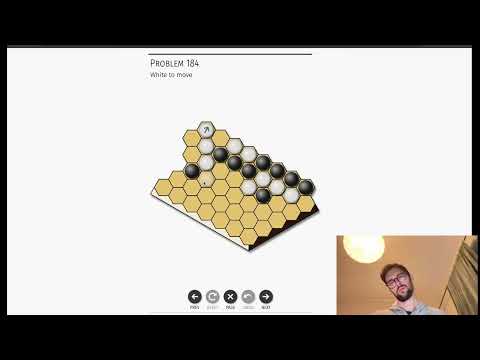 Solving 500 Hex Puzzles - part 3
-
 Solving 500 Hex puzzles - part 2
-
 Solving 500 Hex puzzles - part 4
-
 Solving 500 Hex puzzles - part 5
-
 Solving 500 Hex puzzles - part 6 (very hard)
Best player count
BGG community vote
2
BEST
Soundtrack
Ambience suggested by Melodice
Loading playlist...
Where to Buy
Prices monitored daily
Finding best prices...
Prices unavailable at this time.
Price history — last 6 months (lowest new offer)
Alert enabled!
Join the BoardGamesBot deals group
Get the best board game deals every day — without message spam.
Join the WhatsApp groupGame details
Mechanics, categories, families and credits
Mechanics
Categories
Families
Publisher
Kanare_Abstract, (Web published), 3M, ABRA, Brybelly, Challenge Master Game Co Ltd, EfcéFac, Four Generations, Fratelli Fabbri Editori (Fabbri Editore), The Game Crafter, LLC, Hasbro, Henning Bang, L. P. Septímio, Il Leccio, Let's Play Games! LLC, LuduScience, Mitra, nestorgames, NewVenture Games, Oficina do Aprendiz, Oliphante, Parker Brothers, Piet Hein & Skjøde, Piet Hein A/S, Skjøde Skjern
Designer
John Nash, Piet Hein
Artist
Jonatan Rydh, Kanare Kato, Néstor Romeral Andrés, Rich Carlson
Community
Data from BoardGameGeek
740owners
273wishlist
26want to play
Frequently Asked Questions
Quick answers before you buy
How many people can play?
Hex is strictly for 2 players. It's a direct duel!
Is it a hard game to learn?
Not at all! The rules are very simple: connect your edges. The difficulty lies in the strategy, not the rules.
How long does a game last?
It usually takes about 20 minutes, depending on the board size and the players' experience.
Do I need an official board to play?
Not necessarily. You can use Go stones, make your own paper board, or use digital versions.
What is the 'pie rule'?
It's the swap rule that allows the second player to choose the color of the first piece, preventing the first player from having an unfair advantage.
Is a draw possible?
No. The game's geometry guarantees that someone will always complete the connection first.
Other Games You'll Like
Based on mechanics and theme