
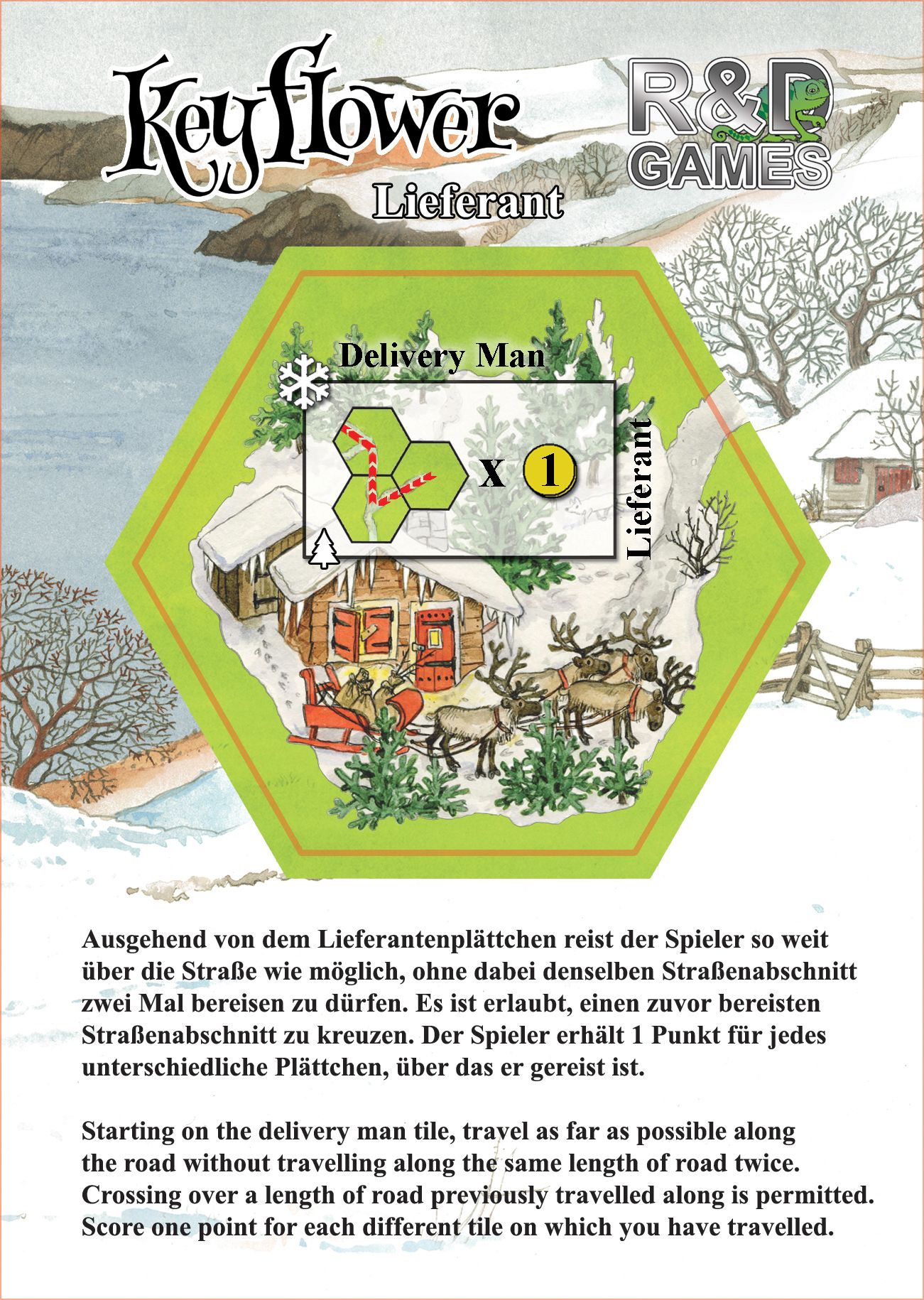
Keyflower: Delivery Man — Price & soundtrack
Dice Realm, Ediciones MasQueOca, Frosted Games · Board game · 2018
2–6
90–120 min
Buy · from US$ 3.93
—
rating
Ludopedia
7.7
rating
BGG
Our Verdict
HIGHLY RECOMMENDED
If you love city‑building games with deep strategy and a nostalgic vibe, Keyflower: Delivery Man is your next pick.
Highlights
- Engaging city building
- Fun auction mechanics
- Creative delivery system
- High‑quality components
- Smooth gameplay experience
Keep in mind
- Requires attention to detail
- Average game length
- Moderate complexity
Rules manual not indexed yet
Upload the PDF rulebook to ask questions about this game with AI.
About the game
What you do in a play session
Keyflower: Delivery Man brings the Renaissance charm to your table, but with a splash of modern fun. You run a small delivery company in a growing city, where each street you conquer brings new challenges and profit opportunities. The game blends city building, resource gathering, and auction mechanics, all wrapped in a modular board that changes each play, ensuring no two games are the same.
At the start, you place workers in various locations: you can choose to build new streets, add buildings that generate resources, or participate in auctions to secure special cards. Each action costs resources, so managing your wood, stone, and gold stock is crucial. When you build a street, the route network expands, allowing your couriers to travel longer distances and reach farther customers. These routes are the heart of the pickup-and-delivery mechanic: the longer the route, the more points you earn, but beware—each road segment can only be used once per game.
Auctions are the icing on the cake. You can bid on cards that grant production bonuses, access to secret routes, or even the ability to collect items more efficiently. Memory comes into play when you need to remember which streets have already been used to avoid penalties and maximize gains. Balancing building, bidding, and delivering requires long‑term strategic thinking, as each decision affects resource flow and route availability in subsequent turns.
The visual design is simple yet elegant, with high‑quality pieces reminiscent of medieval city miniatures. The learning curve is moderate: players need to understand how the mechanics interconnect, but there are no overly complex rules. The game supports 2‑6 players and lasts 90‑120 minutes, making it ideal for family game nights or gatherings with friends seeking a more strategic alternative to a simple card game.
If you enjoy games that combine urban planning, economics, and a touch of competition, Keyflower: Delivery Man is a worthwhile option to try. Its balance of strategy and fun ensures each game is unique, and the modular expansion keeps the game fresh for a long time.
At the start, you place workers in various locations: you can choose to build new streets, add buildings that generate resources, or participate in auctions to secure special cards. Each action costs resources, so managing your wood, stone, and gold stock is crucial. When you build a street, the route network expands, allowing your couriers to travel longer distances and reach farther customers. These routes are the heart of the pickup-and-delivery mechanic: the longer the route, the more points you earn, but beware—each road segment can only be used once per game.
Auctions are the icing on the cake. You can bid on cards that grant production bonuses, access to secret routes, or even the ability to collect items more efficiently. Memory comes into play when you need to remember which streets have already been used to avoid penalties and maximize gains. Balancing building, bidding, and delivering requires long‑term strategic thinking, as each decision affects resource flow and route availability in subsequent turns.
The visual design is simple yet elegant, with high‑quality pieces reminiscent of medieval city miniatures. The learning curve is moderate: players need to understand how the mechanics interconnect, but there are no overly complex rules. The game supports 2‑6 players and lasts 90‑120 minutes, making it ideal for family game nights or gatherings with friends seeking a more strategic alternative to a simple card game.
If you enjoy games that combine urban planning, economics, and a touch of competition, Keyflower: Delivery Man is a worthwhile option to try. Its balance of strategy and fun ensures each game is unique, and the modular expansion keeps the game fresh for a long time.
Expansion for
Published additional content
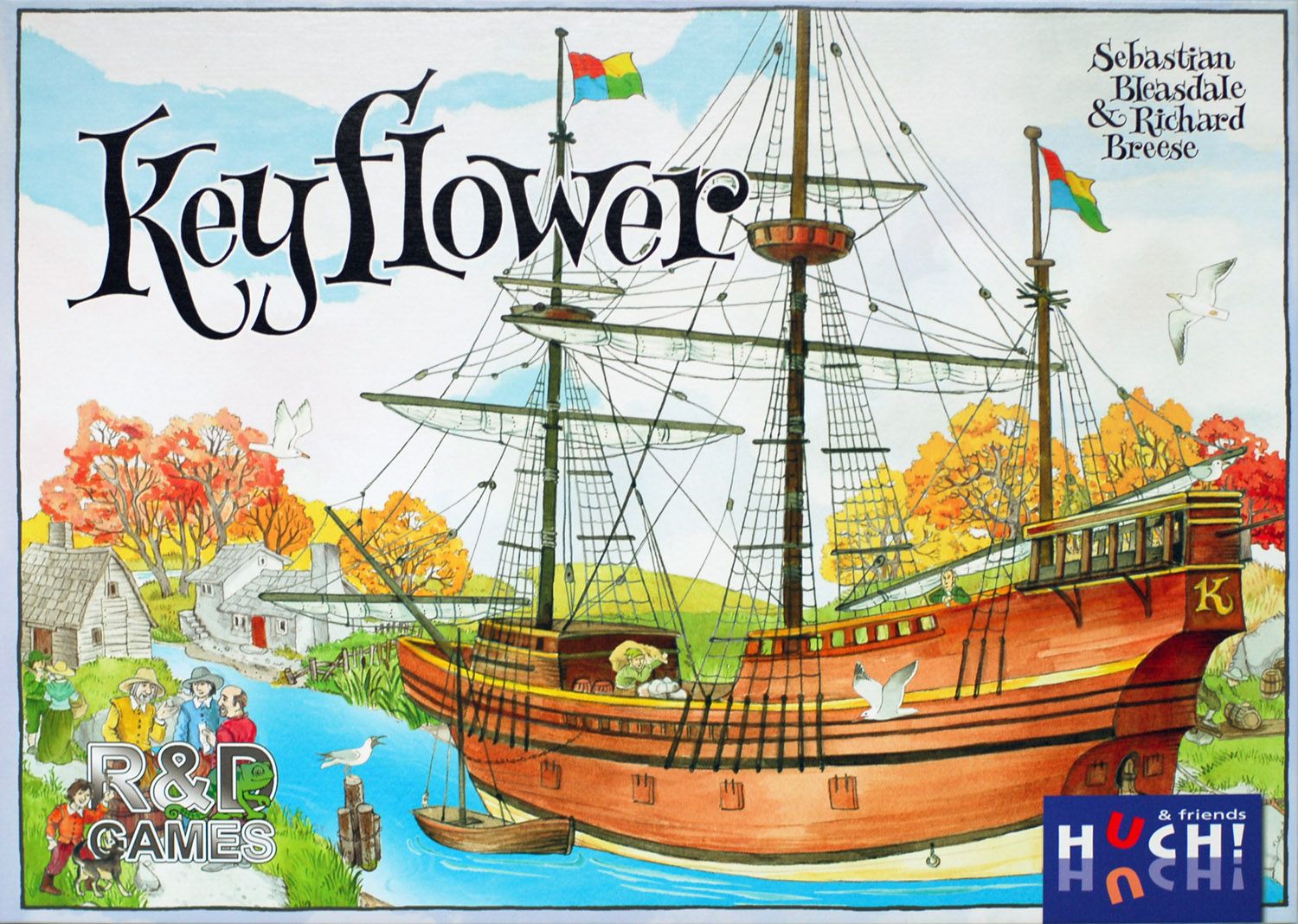
Gallery
Box and component photos
Tap any photo to open fullscreen. Photos submitted by the community or publisher.
Best player count
BGG community vote
2
OK
3
OK
4
OK
5
OK
6
OK
Soundtrack
Ambience suggested by Melodice
Loading playlist...
Where to Buy
Prices monitored daily
Finding best prices...
Prices unavailable at this time.
Price history — last 6 months (lowest new offer)
Alert enabled!
Join the BoardGamesBot deals group
Get the best board game deals every day — without message spam.
Join the WhatsApp groupGame details
Mechanics, categories, families and credits
Mechanics
Categories
Families
Publisher
Dice Realm, Ediciones MasQueOca, Frosted Games, R&D Games
Designer
Richard Breese, Sebastian Bleasdale
Artist
Gemma Tegelaers, J Breese, Juliet Breese
Community
Data from BoardGameGeek
985owners
130wishlist
69want to play
Frequently Asked Questions
Quick answers before you buy
How many players is the game recommended for?
The game works best with 2 to 6 players, but the most balanced experience is usually 3 to 5.
What is the average playtime?
Each game lasts between 90 and 120 minutes, depending on player count and decision speed.
How complex is the game?
The complexity is moderate: you need to understand how building, auction, and delivery mechanics interact, but there are no overly complicated rules.
What components come with the game?
The game includes a modular board, resource tokens (wood, stone, gold), auction cards, street tiles, buildings, workers, and a rulebook.
Who is this game for?
Ideal for fans of urban strategy, economics, and auction mechanics looking for a deeper experience than a simple card game.
How does the auction mechanic work?
Players bid on cards that grant bonuses or advantages; the highest bidder wins the card, paying the bid amount in resources.
Is there a solo or cooperative mode?
There is no official solo mode, but the auction and delivery mechanics can be adapted for cooperative play with house rules.
