
Keyflower: Sorcerer — Soundtrack
Dice Realm, Ediciones MasQueOca, R&D Games · Board game · 2018
2–6 · best 4
60–120 min
Weight 3.0/5
Buy
—
rating
Ludopedia
7.8
rating
BGG
Our Verdict
FOR GENRE FANS
Perfect for those who already master Keyflower and want more tactical versatility. A single tile that shifts the allocation dynamic.
Highlights
- Adds versatility to actions
- Increases player interaction
- Powerful and rewarding upgrade
Keep in mind
- Requires base game to function
- Extremely limited content (one tile)
Rules manual not indexed yet
Upload the PDF rulebook to ask questions about this game with AI.
About the game
What you do in a play session
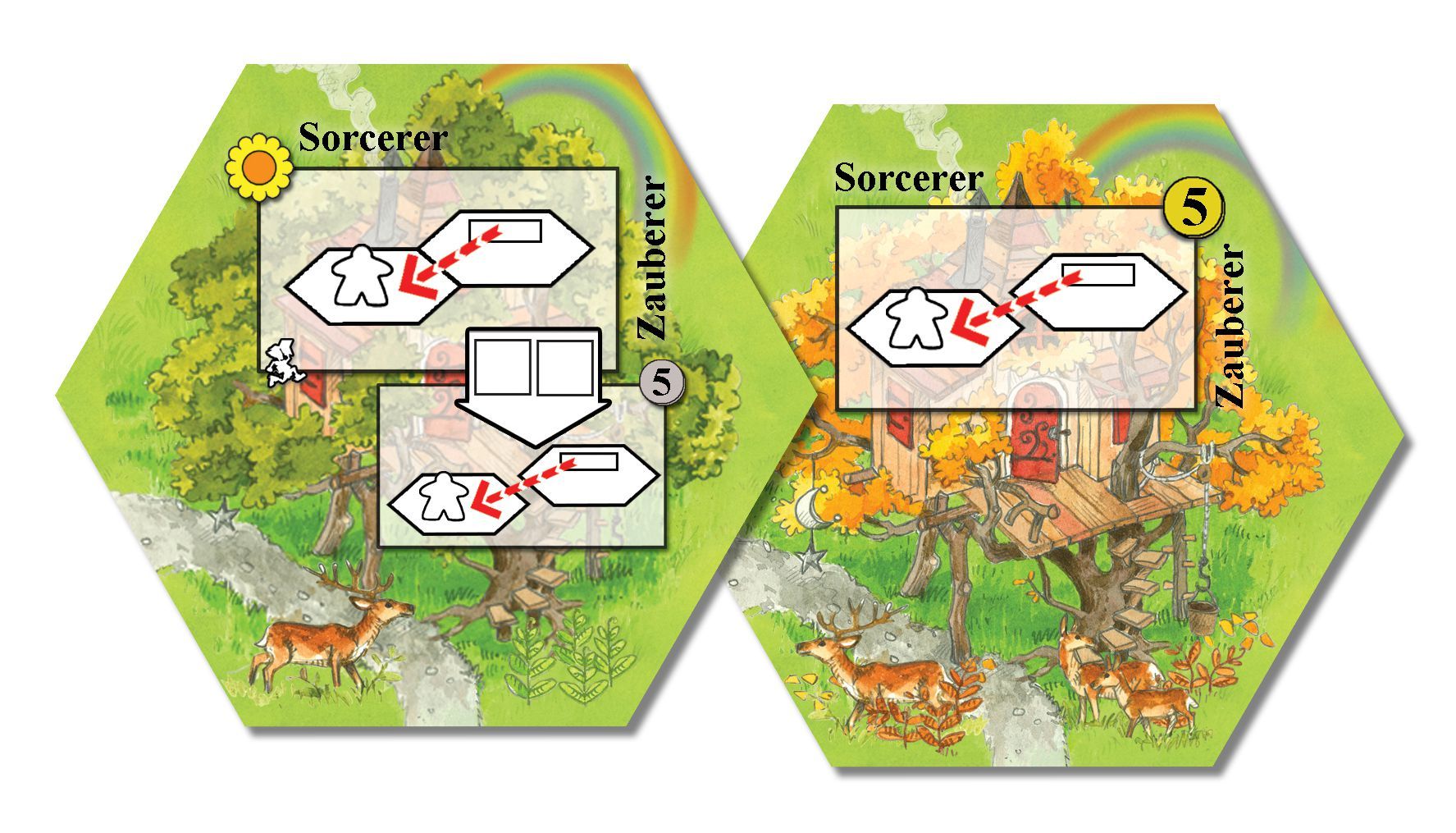
Ever felt your village was missing a touch of magic? Keyflower: Sorcerer provides exactly that! This small but potent expansion consists of a single terrain tile: the Sorcerer. At first glance, it seems simple, but the dynamic it introduces alters how you plan your worker allocation.
The mechanics are quite clever: when you place your workers on the Sorcerer tile, you don't execute the tile's own action. Instead, you trigger the action of any adjacent tile within the owner's village. Think of the Sorcerer as a 'shortcut' or an energy channeler. If you're strategic enough to upgrade the Sorcerer, the power increases: you can then activate the action of ANY other tile in the owner's village, regardless of proximity. This opens up a massive range of strategic possibilities, allowing you to exploit the best capabilities of an opponent's village with much more flexibility.
One important detail to avoid table arguments: while the Sorcerer tile is being bid for, no workers can be placed on it. Since the tile isn't adjacent to anything yet, the 'channeling' action would have no effect, so the rule prevents the move to keep the game flow smooth. It's a minimalist component, but it adds a layer of interaction and versatility that fans of the base game will love. If you're looking for ways to optimize your engine and disrupt your opponents' plans, the Sorcerer is the right guy for the job.
The mechanics are quite clever: when you place your workers on the Sorcerer tile, you don't execute the tile's own action. Instead, you trigger the action of any adjacent tile within the owner's village. Think of the Sorcerer as a 'shortcut' or an energy channeler. If you're strategic enough to upgrade the Sorcerer, the power increases: you can then activate the action of ANY other tile in the owner's village, regardless of proximity. This opens up a massive range of strategic possibilities, allowing you to exploit the best capabilities of an opponent's village with much more flexibility.
One important detail to avoid table arguments: while the Sorcerer tile is being bid for, no workers can be placed on it. Since the tile isn't adjacent to anything yet, the 'channeling' action would have no effect, so the rule prevents the move to keep the game flow smooth. It's a minimalist component, but it adds a layer of interaction and versatility that fans of the base game will love. If you're looking for ways to optimize your engine and disrupt your opponents' plans, the Sorcerer is the right guy for the job.
Expansion for
Published additional content
Gallery
Box and component photos
Tap any photo to open fullscreen. Photos submitted by the community or publisher.
Best player count
BGG community vote
2
REC
3
REC
4
BEST
5
REC
6
REC
Soundtrack
Ambience suggested by Melodice
Loading playlist...
Where to Buy
Prices monitored daily
Finding best prices...
Prices unavailable at this time.
Price history — last 6 months (lowest new offer)
Alert enabled!
Join the BoardGamesBot deals group
Get the best board game deals every day — without message spam.
Join the WhatsApp groupGame details
Mechanics, categories, families and credits
Mechanics
Categories
Families
Publisher
Dice Realm, Ediciones MasQueOca, R&D Games
Designer
Richard Breese, Sebastian Bleasdale
Artist
Juliet Breese
Community
Data from BoardGameGeek
1,323owners
106wishlist
40want to play
Frequently Asked Questions
Quick answers before you buy
What's in the box?
Just a single Sorcerer tile and the specific rules for it.
Do I need the base game to play?
Yes, absolutely. This is an additional component for Keyflower.
How does the Sorcerer's action work?
It allows you to use the action of a neighboring tile (or any tile in the village if upgraded).
Can I place workers on it during the auction?
No. While the tile is being bid for, it cannot accept workers.
Does it make the game more complex?
It doesn't increase rule complexity, but it adds more strategic options for the players.
How many players is it for?
The same as the base game (2 to 6 players).
