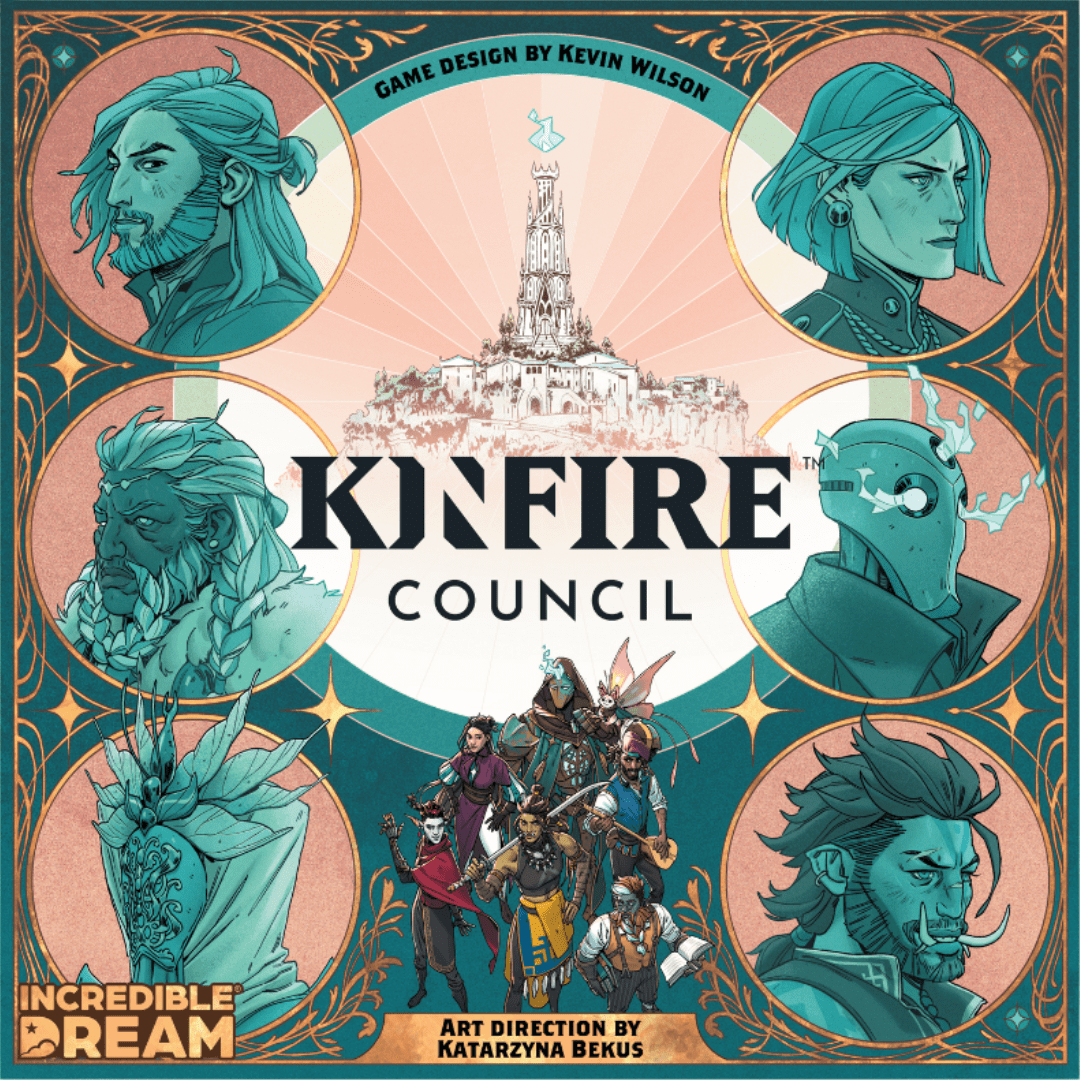
Kinfire Council — Prices
Incredible Dream Studios · Board game · 2025Perfect for those who love political games with betrayal and worker placement. The highlight is the constant tension between cooperating or betraying.
- Engaging political tension
- Intriguing traitor mechanic
- Varied worker placement
- Immersive dark theme
- High language dependency
- Moderate learning curve
About the game
What you do in a play session
The heart of the game beats during the voting on public policies and the management of your Seekers, who must neutralize looming threats. But here's the twist: while you strive to be the most influential leader, there might be a traitor among you. If the Cult of Altan achieves its goals, the Cult Conspirator claims victory, regardless of who built the most structures. This creates a dynamic of constant suspicion: is your fellow council member actually helping the city, or are they just paving the way for chaos?
You'll have to decide whether to play as a benevolent leader, cooperating to ensure civilization survives, or embrace your darker instincts to climb the Council's hierarchy. With specialized worker placement and moral dilemmas, every decision impacts not only your progress but the very survival of Din'Lux. Can you balance urban reconstruction with hunting cultists before the darkness consumes everything?
Expansions
Published additional content
Gallery
Box and component photos
Tap any photo to open fullscreen. Photos submitted by the community or publisher.
Rules videos
Learn by watching before you open the box
In English
-
 Kinfire Council | How to Play | Learn to Play in 17 Minutes!
-
 Kinfire Council - Tutorial & Playthrough
-
 Why Keep 4 Kinfire Council Boxes… When 2 Will Do?
-
 Rahdo Learns How to Play►►► Kinfire Council
-
 Kinfire Council Play Through | The Brothers Murph
-
 Kinfire Council Play Through | The Brothers Murph + Getting Games!
-
 All the Games with Steph: Kinfire Coucil - Teach
-
 Solo Playthrough
-
 Gameplay Overview | Kinfire Council & Winds of Change Expansion
Best player count
BGG community vote
Soundtrack
Ambience suggested by Melodice
Where to Buy
Prices monitored daily
Price history — last 6 months (lowest new offer)
As an Amazon Associate I earn from qualifying purchases. Prices and availability subject to change.
Alert enabled!
Join the BoardGamesBot deals group
Get the best board game deals every day — without message spam.
Join the WhatsApp groupGame details
Mechanics, categories, families and credits
Mechanics
Categories
Families
Community
Data from BoardGameGeek
Frequently Asked Questions
Quick answers before you buy
Is the game very complex?
Do I need a translation to play?
How many people can play?
How long does a game last?
What makes this different from other worker placement games?
Other Games You'll Like
Based on mechanics and theme