—
rating
Ludopedia
6.3
rating
BGG
Our Verdict
RECOMMENDED
If you enjoy counting colored coins and swapping resources like a mini‑market, Kombi‑Kolor will keep you hooked.
Highlights
- Strategic hand management
- Fun coin‑exchange mechanic
- Easy to learn
Keep in mind
- Long play time
- Dice luck factor
Rules manual not indexed yet
Upload the PDF rulebook to ask questions about this game with AI.
About the game
What you do in a play session
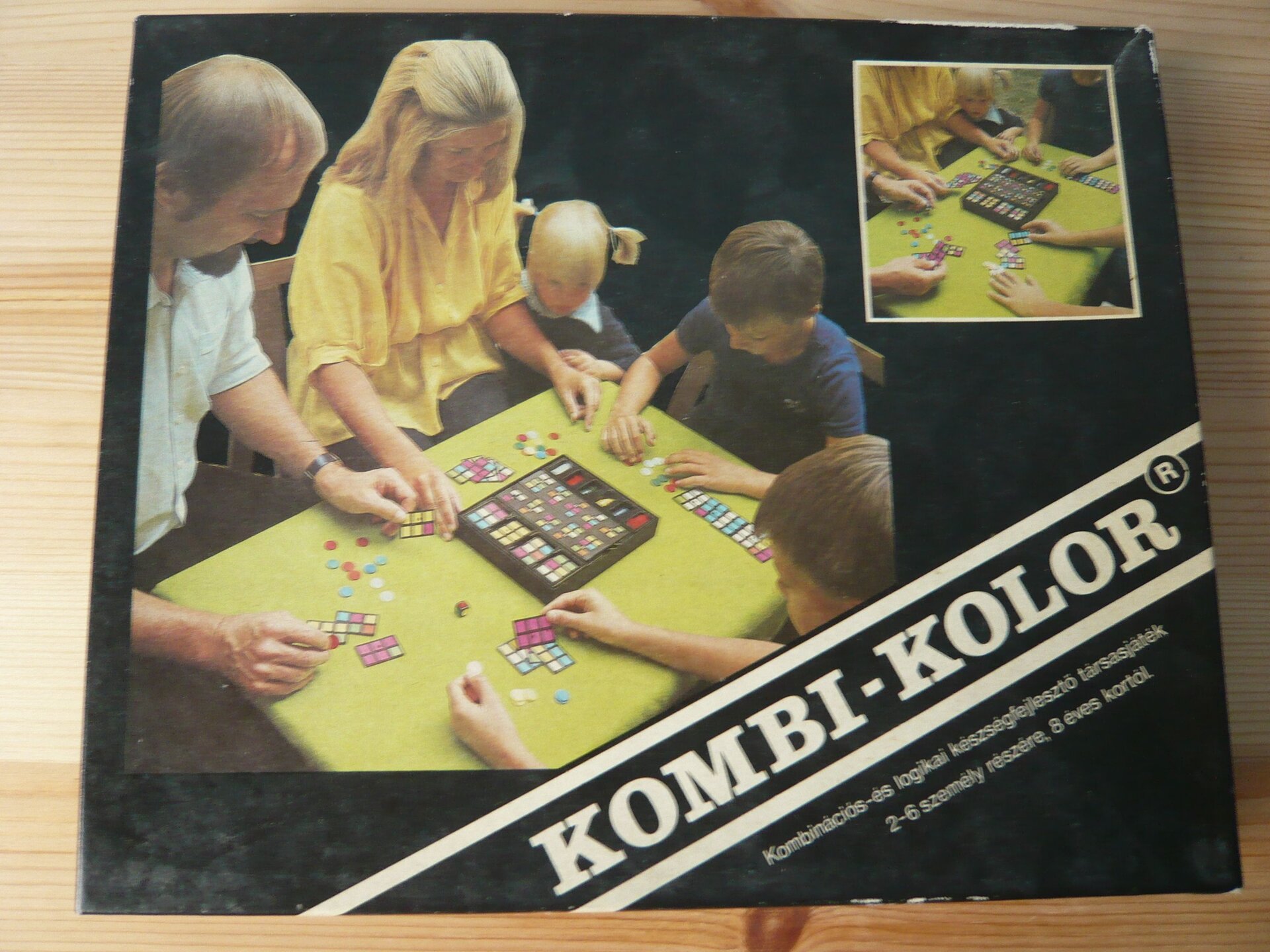
Kombi‑Kolor, released in 1986, is an abstract strategy gem that blends math and a dash of education. Instead of a board, the game uses four piles of cards, each showing six different colors on the top card. Those colors act as the card’s “price”: paying with matching colored coins earns you points, which depend on how many coins you still hold in hand.
The core action is rolling the colorful dice. Each die displays a hue and gives the player a coin of that color. But there’s more: exchange‑rate cards let you trade sets of coins – for instance, swapping a yellow and a green for three blues and a red. This creates a tiny internal market where hand management becomes key.
The goal is straightforward: collect more points than your opponents by the time all cards are exhausted. As cards are revealed gradually, the game maintains a constant sense of discovery, and the choice of which trades to make can swing the score in an instant. Set collection shows up when players aim to assemble color combos that maximize point returns.
With a playing time of roughly 105 minutes and support for 2‑6 players, Kombi‑Kolor offers a blend of luck (dice rolls) and strategy (coin exchanges). Its light weight (2/5) makes it approachable for newcomers to calculation games, yet deep enough for math‑game enthusiasts. If you enjoy counting challenges, clever trades, and a friendly competitive vibe, this title deserves a spot on your shelf.
The core action is rolling the colorful dice. Each die displays a hue and gives the player a coin of that color. But there’s more: exchange‑rate cards let you trade sets of coins – for instance, swapping a yellow and a green for three blues and a red. This creates a tiny internal market where hand management becomes key.
The goal is straightforward: collect more points than your opponents by the time all cards are exhausted. As cards are revealed gradually, the game maintains a constant sense of discovery, and the choice of which trades to make can swing the score in an instant. Set collection shows up when players aim to assemble color combos that maximize point returns.
With a playing time of roughly 105 minutes and support for 2‑6 players, Kombi‑Kolor offers a blend of luck (dice rolls) and strategy (coin exchanges). Its light weight (2/5) makes it approachable for newcomers to calculation games, yet deep enough for math‑game enthusiasts. If you enjoy counting challenges, clever trades, and a friendly competitive vibe, this title deserves a spot on your shelf.
Gallery
Box and component photos
Tap any photo to open fullscreen. Photos submitted by the community or publisher.
Best player count
BGG community vote
2
OK
3
OK
4
OK
5
OK
6
OK
Soundtrack
Ambience suggested by Melodice
Loading playlist...
Where to Buy
Prices monitored daily
Finding best prices...
Prices unavailable at this time.
Price history — last 6 months (lowest new offer)
As an Amazon Associate I earn from qualifying purchases. Prices and availability subject to change.
Alert enabled!
Join the BoardGamesBot deals group
Get the best board game deals every day — without message spam.
Join the WhatsApp groupGame details
Mechanics, categories, families and credits
Mechanics
Categories
Families
Publisher
Metalloplast
Designer
(Uncredited)
Community
Data from BoardGameGeek
18owners
3wishlist
Frequently Asked Questions
Quick answers before you buy
How many players can join?
Supports 2 to 6 players, great for small to medium groups.
What’s the typical playing time?
About 105 minutes, varying with player count.
How complex is the game?
Rated 2/5, it’s easy to pick up but offers strategic depth.
What components are included?
Four decks of cards, colored dice, colored coins, and exchange‑rate cards.
Who should buy this game?
Fans of counting, resource swapping, abstract strategy, and families looking for a fun math‑based experience.
Other Games You'll Like
Based on mechanics and theme