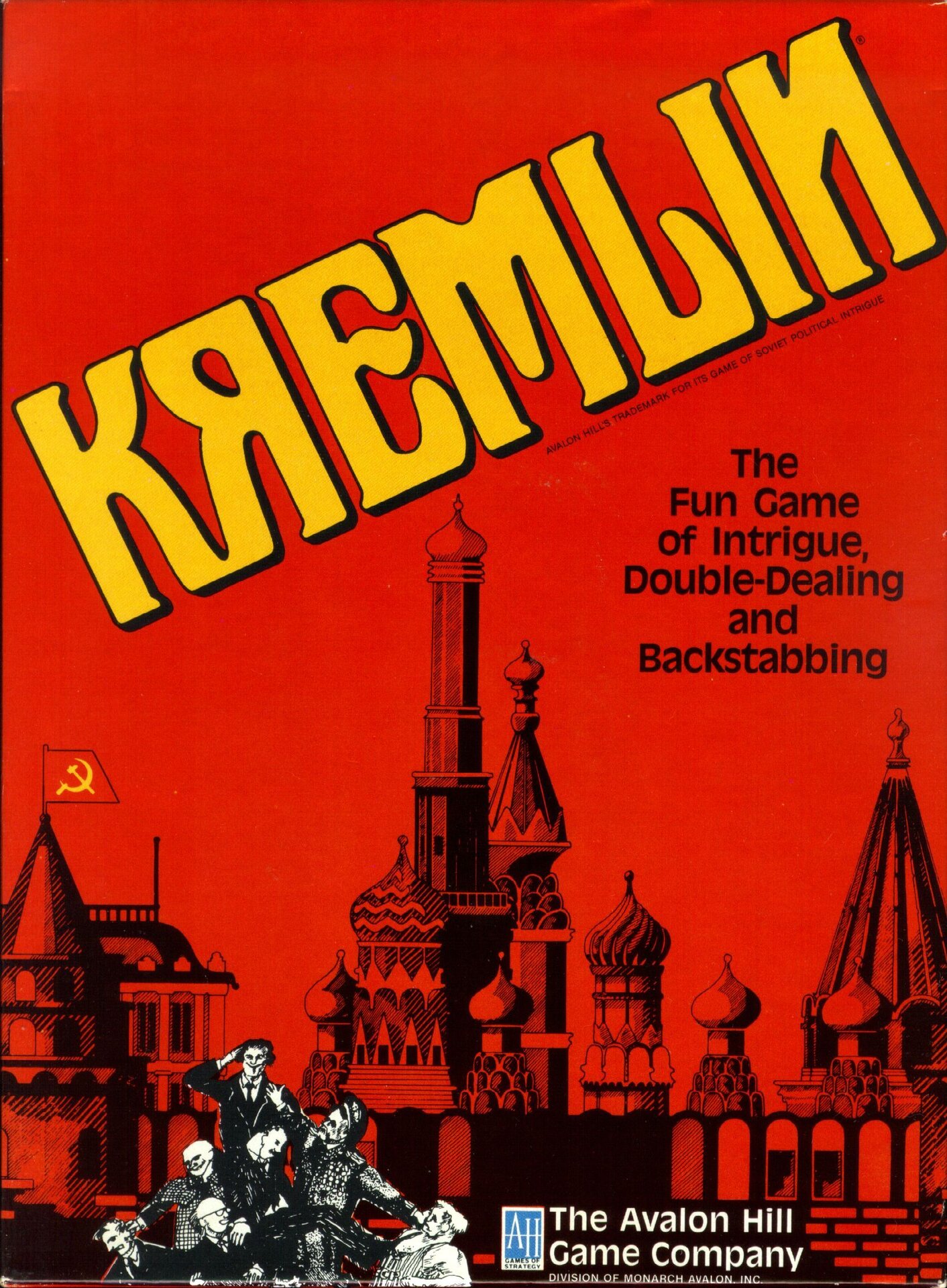
Kremlin
The Avalon Hill Game Co, Fata Morgana Spiele, New Games Order, LLC · Board game · 1986
3–6 · best 6
75 min
Weight 2.9/5
Buy · from US$ 28.10
7.9
rating
Ludopedia
7.0
rating
BGG
Our Verdict
RECOMMENDED
Perfect for those who love betrayal and political games, featuring constant tension and a sharp, acidic tone.
Highlights
- Genius secret influence dynamics
- Immersive and satirical theme
- Direct and aggressive player interaction
- High replayability with different versions
Keep in mind
- Health check luck can be frustrating
- Initial learning curve for newcomers
Rules manual not indexed yet
Upload the PDF rulebook to ask questions about this game with AI.
About the game
What you do in a play session
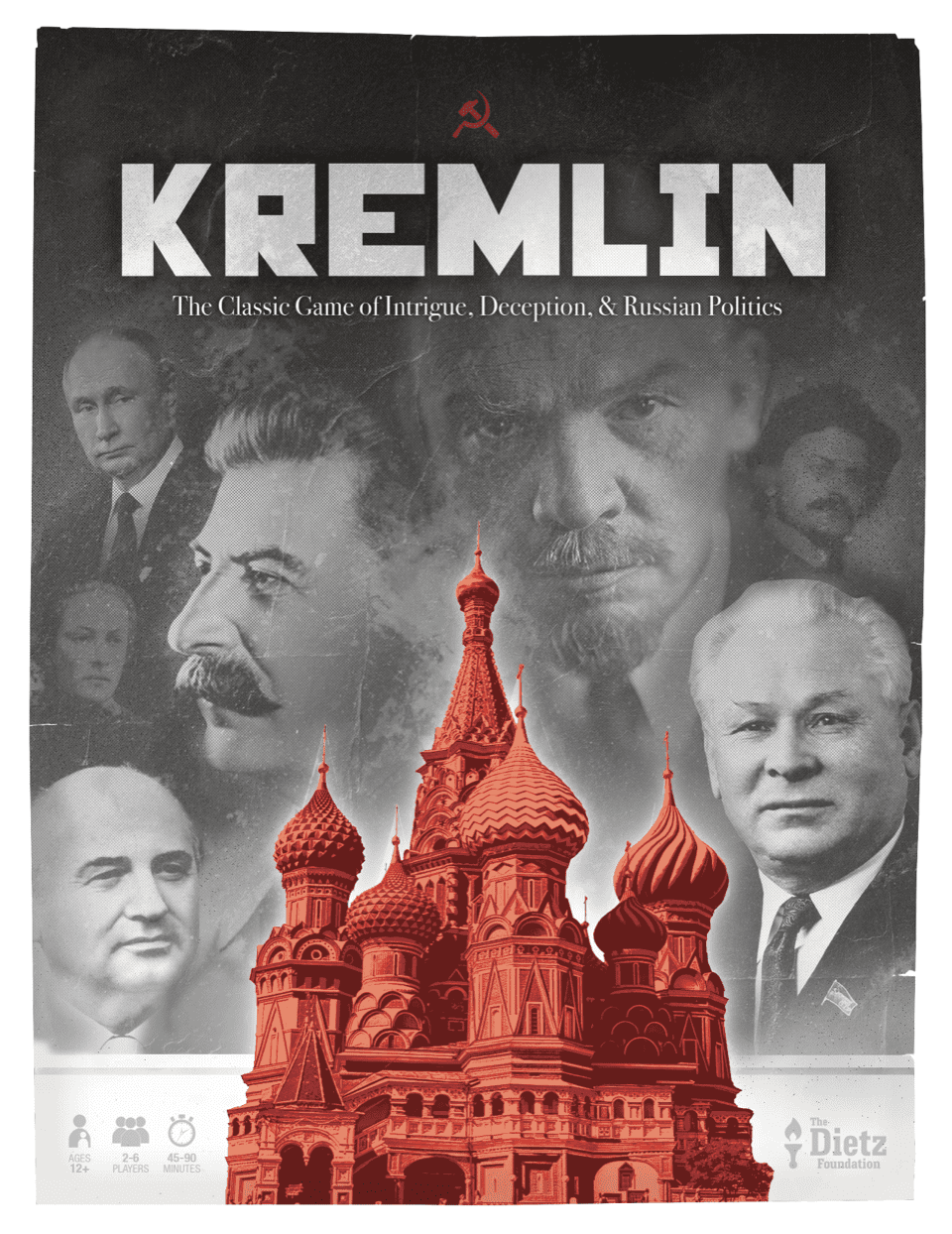
Imagine yourself as a puppet master in the corridors of the Soviet Politburo. In Kremlin, the goal isn't just to govern, but to survive a sadistic game of political intrigue where loyalty is a foreign concept. You and your opponents fight for control of the Party, and your primary tool is secret influence. At the start, you discreetly assign power levels to each politician; the higher the number, the more likely you are to call the shots when that character is activated.
The dynamics are fascinating: gameplay doesn't follow the traditional clockwise order. Instead, it proceeds in phases, and whoever holds the most influence over the current politician decides the action. Want to promote your ally? Great. Want to exile a rival to Siberia or orchestrate a bloody purge? Just do it. But beware, power takes its toll. Every action causes the politician to age, and the older they get, the higher the chance they'll fall ill or simply kick the bucket during a health check. It's a constant cycle of rise and fall.
To win, you must control the Party Chief and ensure they are healthy enough to wave to the crowd at the October parade. Succeeding at this three times secures your victory. Depending on the edition you play, the experience shifts: from satirical versions with absurd names and rules suggesting vodka toasts at funerals, to historical versions that are far more violent, where the KGB doesn't send people to Siberia, but straight to a firing squad. It's a game of bluffing, risk management, and political malice, perfect for those who enjoy watching chaos unfold while trying to keep their own head on their shoulders.
The dynamics are fascinating: gameplay doesn't follow the traditional clockwise order. Instead, it proceeds in phases, and whoever holds the most influence over the current politician decides the action. Want to promote your ally? Great. Want to exile a rival to Siberia or orchestrate a bloody purge? Just do it. But beware, power takes its toll. Every action causes the politician to age, and the older they get, the higher the chance they'll fall ill or simply kick the bucket during a health check. It's a constant cycle of rise and fall.
To win, you must control the Party Chief and ensure they are healthy enough to wave to the crowd at the October parade. Succeeding at this three times secures your victory. Depending on the edition you play, the experience shifts: from satirical versions with absurd names and rules suggesting vodka toasts at funerals, to historical versions that are far more violent, where the KGB doesn't send people to Siberia, but straight to a firing squad. It's a game of bluffing, risk management, and political malice, perfect for those who enjoy watching chaos unfold while trying to keep their own head on their shoulders.
Gallery
Box and component photos
Tap any photo to open fullscreen. Photos submitted by the community or publisher.
Rules videos
Learn by watching before you open the box


Best player count
BGG community vote
3
OK
4
REC
5
BEST
6
BEST
Soundtrack
Ambience suggested by Melodice
Loading playlist...
Where to Buy
Prices monitored daily
Finding best prices...
Prices unavailable at this time.
Price history — last 6 months (lowest new offer)
As an Amazon Associate I earn from qualifying purchases. Prices and availability subject to change.
Alert enabled!
Join the BoardGamesBot deals group
Get the best board game deals every day — without message spam.
Join the WhatsApp groupGame details
Mechanics, categories, families and credits
Mechanics
Categories
Families
Publisher
The Avalon Hill Game Co, Fata Morgana Spiele, New Games Order, LLC
Designer
Urs Hostettler
Artist
Charles Kibler, George I. Parrish, Jr., Rasenjin Hayami, Res Brandenberger
Community
Data from BoardGameGeek
4,302owners
557wishlist
158want to play
Frequently Asked Questions
Quick answers before you buy
Is the game too complex?
It's considered an 'expert' game, but the complexity lies more in the cunning and strategy than in impossible rules. With a basic explanation, most players pick it up quickly.
How many people can play?
From 3 to 6 players. The more people, the more chaos and betrayal, which makes the experience even better.
How long does a game take?
Usually around 75 minutes, but it can vary depending on how much time you spend negotiating and arguing over purges.
Is it recommended for people who dislike conflict?
Probably not. Kremlin is all about bringing others down, exiling friends, and betraying allies. If you prefer cooperative games, this isn't for you!
Do I need to know USSR history to play?
Nope! The game works whether you use the satirical version (with fictional names) or the historical one. The focus is on the power mechanics, not a history test.
Other Games You'll Like
Based on mechanics and theme