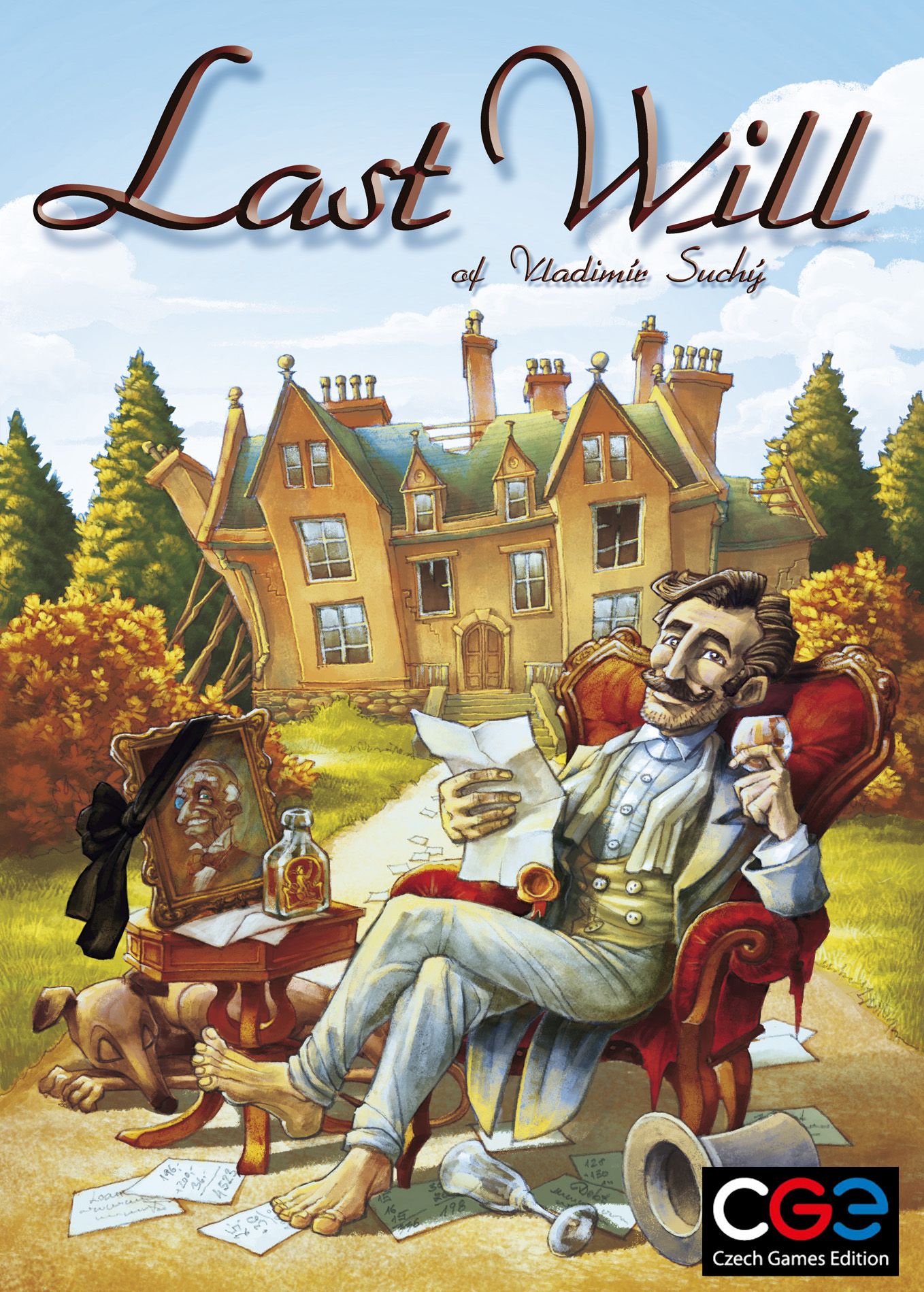
How to Play Last Will
Czech Games Edition (CGE), Arclight Games, GaGa Games · Board game · 2011What do you want to do now
Ask anything about Last Will: rules, setup, components, complexity, price, or whether it fits your group.
Video: How to Play
Start here, then follow the written guide
Step by step
Objective of the Game
Alright, gather 'round, you spendthrifts! Your eccentric uncle has kicked the bucket, and guess what? He's left a hefty sum to his relatives, but with a twist! He wants to leave his entire fortune to the one who can prove they know how to truly *enjoy* money. That means you've got to spend it all, and fast!
The objective of Last Will is to be the first player to successfully get rid of all your money and properties. The player who manages to go completely broke and property-less first, and accumulates the most debt, wins the game and the uncle's entire inheritance!
Preparation (Setup)
Let's get this spending spree started! Here's how to set up your game of Last Will:
- Lay out the Boards: Place the main Game Board and the Planning Board in the center of your play area.
- Card Distribution: For the first two rounds, draw one Property card for each space on the Card Drawing Board. From round 3 onwards, draw Event cards for these spaces. The icons on the board indicate which type of card to draw for each space. Some spaces always get the same type of card, while others change as the game progresses.
- Initial Hand: After the initial card draw, each player keeps only two cards from their hand and discards the rest face down.
- Player Boards: Each player takes a Player Board and places it in front of them.
- Messenger Pawns: Each player also receives their set of Messenger Pawns.
- Money: Distribute the starting money to each player (the manual doesn't specify an amount, but this is a standard step in most money-based games).
- Property Value Tokens: Have the Property Value Tokens ready near the Property cards.
The Game Turn
A game of Last Will lasts a maximum of 7 rounds. Each round consists of 5 phases, so let's break them down:
1. Preparation Phase
This is where you survey your options. You'll draw cards to fill the spaces on the Card Drawing Board, as described in the Setup. Remember, the type of card drawn can change after the first two rounds!
2. Planning Phase
The manual provides a "Planning" phase, but the details are not explicitly described beyond drawing cards. We can infer this is where players strategize based on the available cards.
3. Messenger Phase
Time to send out your Messengers to secure the best deals! Starting with the player furthest to the left on the Planning Board, players take turns placing one of their Messenger Pawns on an available option and immediately performing that action. You cannot choose an option already occupied by another pawn.
Once all players have placed their first Messenger Pawn, they then place their second pawn in the same order, following the same rules. However, some planning spaces only have one messenger icon, meaning players who choose these spaces skip the second messenger placement phase.
Here are the Messenger Options:
- Take a Card: Take the card associated with the space where you placed your Messenger Pawn. For 2-3 player games, some spaces have three cards. The first player to place a messenger there chooses one of the three, the second chooses from the remaining two, and the third card cannot be taken.
- Player Board Expansion: Take one of the available Expansion Boards and attach it to the right side of your Player Board. This grants you an additional card slot for the rest of the game. You can use multiple expansion boards!
- Modify Property Prices: (Example given) You can modify the market value of properties, increasing or decreasing their price.
- Other Actions: (Example given) Some spaces might allow you to take a Companion Joker card or spend money directly, like sending a messenger to the opera to spend 2 pounds.
4. Actions Phase
This is where the real spending happens! You'll be playing cards from your hand or activating cards on your Player Board to burn through your cash.
Card Usage
Cards are grouped by their back, but their front side dictates their use. Let's look at the different types:
- White-bordered Cards (Events): These represent experiences like dinners, theatre visits, or boat trips. They are one-time use and are discarded after playing.
- To play a white-bordered card, you spend the indicated number of actions (shown next to the coin icon) and pay the money amount on the coin.
- Longer Experiences: Some white-bordered cards offer multiple options for spending actions and money, allowing you to spend more for a grander experience. Choose one option, spend the actions, and pay the corresponding amount.
- Using Companions: You can bring Companions (blue-bordered cards) to events to spend even more! If an event allows for companions, playing a matching companion card along with the event lets you spend an additional amount indicated on the companion's coin icon. You can use multiple companions if the event allows. All played event and companion cards are discarded.
- Black-bordered Cards (Expenses & Helpers): These cards are played onto empty slots on your Player Board. If you don't have an empty slot, you can discard a previously played black-bordered card (except properties) to make space. Discarding a card is not an action.
- Playing a Black-bordered Card: It always costs at least 1 action to play a black-bordered card to your board. Some cards might require an additional action as indicated in their top-left corner. You also pay the cost shown in the top-left corner.
- Activating a Black-bordered Card: Once on your board, these cards can be activated during your action phase, even if played in the current round. A card can only be activated once per round. To mark it as activated, slide the card down to reveal the checkmark icon.
- Expenses: Similar to events, but reusable each round. When activated, you perform the instructions in the top-right corner. Some cost actions, others are free. Some expenses allow you to assign Companion Tokens to them (from blue-bordered cards) to spend even more money.
- Helpers: These cards have two parts. The top part works like an expense, allowing you to activate it (by sliding it down) and pay an amount. The bottom part provides a unique benefit that can be used at any time, whether the card is activated or not, and is not mandatory.
- Properties (Special Black-bordered Cards): Properties are unique black-bordered cards. You cannot discard them to make space; they can only be sold on the Property Market. Crucially, you cannot declare bankruptcy (and win!) while you own any properties.
- Buying a Property: Costs 1 action and the top banknote amount in the top-left corner, adjusted by the Property Market Modifier. Place it on your board. If it's not a Farm, place a Property Value Token on the top banknote icon, which is its current value.
- Maintaining a Property: Works like activating an expense. You spend the actions and money indicated in the top-right corner. Maintaining a property prevents it from losing value this round. Some properties allow you to assign Companion Tokens to spend more on maintenance.
- Selling a Property: Costs 1 action. Discard the card and take its value from the bank. The value is indicated by the Property Value Token (or the single banknote for Farms), adjusted by the Property Market Modifier. If the adjusted value is 0 or less, you get nothing.
- Property Value: Properties lose value each round if not maintained. Their value never increases, only decreases. Farms do not lose value naturally.
- Blue-bordered Cards (Companions): These are Cooks, Girlfriends, Dogs, and Horses. They cannot be played on their own but are used in conjunction with white-bordered or black-bordered cards.
- With White-bordered Cards: As mentioned, they allow you to spend more money and are discarded after use.
- With Black-bordered Cards (Companion Tokens): If a black-bordered card has multiple options and companion icons in its top-right corner, you can assign Companion Tokens to it. To do this, you must have the black-bordered card on your player board. Spend 1 action, discard the matching blue-bordered companion card, and place the corresponding colored Companion Token on the topmost empty space next to the companion icon (following the arrow order). These tokens are permanent and remain on the black card until it's discarded.
- Special Cards (Crown Backed): These can function as either white or black-bordered cards and are generally more powerful.
- Companion Joker Card: Can substitute for any companion card. If not used during the action phase, it returns to the Card Drawing Board at the end of the round.
Spending Money
You can spend money freely as long as you have it. However, if you own a property, you cannot go into negative funds. This means you can't use a card effect that would make you spend more money than you have. You must sell your properties first before going broke.
Once you have no properties, you can declare bankruptcy! If you're about to spend an amount that would reduce your balance to zero or below, you must declare bankruptcy to your fellow players. You can even spend remaining cards and actions to go further into debt!
5. End of Round Phase
The manual doesn't explicitly detail the "End of Round" phase beyond the game end condition. However, a common element in games with property value is that properties might lose value here if not maintained.
End of Game and Scoring
Congratulations, you're broke! Here's how the game concludes:
- The game ends immediately when a player has no money and no properties, and declares bankruptcy. The current round is played to completion, and then it's the final round.
- If no one declares bankruptcy by the end of the sixth round, the seventh round will be the final round.
Winning Condition:
The winner is the player who has accumulated the most debt! (This means having the lowest negative money value). If no one has any debt, the player with the least money and properties wins. To determine this:
- Property Value: Current value + 5 pounds.
- Important: Helper cards and Property Market modifiers do not count towards this final valuation.
In case of a tie, the player who chose the leftmost planning space in the final round wins.
Tips for Winning
Becoming a master of bankruptcy isn't as easy as it sounds! Here are a couple of pointers to help you on your way:
- Prioritize Property Management (or lack thereof!): Properties are a double-edged sword. While they can be expensive to buy and maintain, they also prevent you from going broke. If you're looking to win, you'll need to figure out how to get rid of them efficiently. Don't be afraid to let them depreciate in value by not maintaining them, and then sell them off for a pittance (or nothing!) when the time is right.
- Leverage Companions for Maximum Spending: Those blue-bordered Companion cards aren't just for show! Use them strategically with your white-bordered Event cards and black-bordered Expense cards to dramatically increase the amount of money you spend in a single action. The more companions you bring along, the deeper into debt you'll dive, and the closer you'll get to that sweet inheritance!
More videos
More rules explanations from the community
In English
-
 Nights Around a Table - How to Play Last Will
-
 How to play Last Will
-
 How to Play Last WIll of Vladimir Suchy
-
 Hans Solo: Last Will
-
 Last Will - How to Play
-
 Last Will ... Setup and Rules by the Crabby Dice
-
 Last Will Board Game Rules
-
 Last Will Gamesplained - Introduction
-
 Last Will Gamesplained - Part 1
-
 Last Will Gamesplained - Part 2
-
 See what's in the box
Rules manual
Official PDF file
Frequently Asked Questions
Quick answers about the rules
What is the objective of Last Will?
How do you set up Last Will?
How does Last Will end, and how do you score?
What are some tips for winning Last Will?
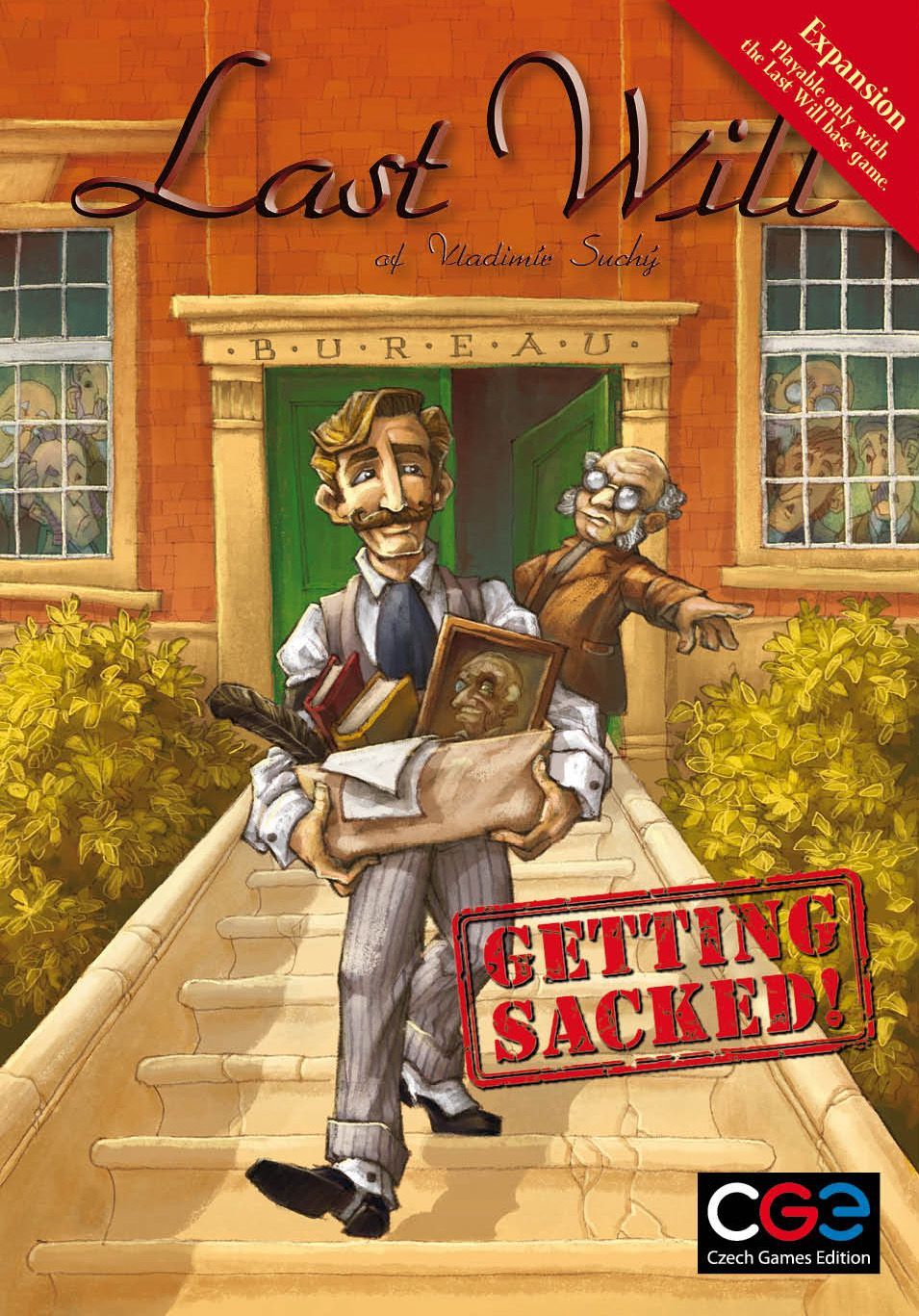
Expansions
Published additional content


Other Games You'll Like
Based on mechanics and theme