Lost Ruins of Arnak: Twisted Paths — Prices

Czech Games Edition (CGE), Cranio Creations, Devir · Board game · 2025
8.8 Ludopedia 8.7 BGG 1–4 · best 3 Solo 30–120 min Weight 3.4/5
Buy · from US$ 28.55
8.8 rating Ludopedia
8.7 rating BGG

What do you want to do now

Ask questions about the game

Ask anything about Lost Ruins of Arnak: Twisted Paths: rules, setup, components, complexity, price, or whether it fits your group.

New conversation 0/1200
Example questions
Our Verdict
HIGHLY RECOMMENDED

If you love diving into mysterious ruins, Twisted Paths expands everything with two sides and fresh research tracks.

Highlights
  • Impressive double‑sided board
  • New thematic research tracks
  • Robust solo content
Keep in mind
  • Steeper learning curve
  • More components to manage
Learn How to Play Step by Step Check out our complete step-by-step rules guide.
Access Rules Guide

About the game

What you do in a play session

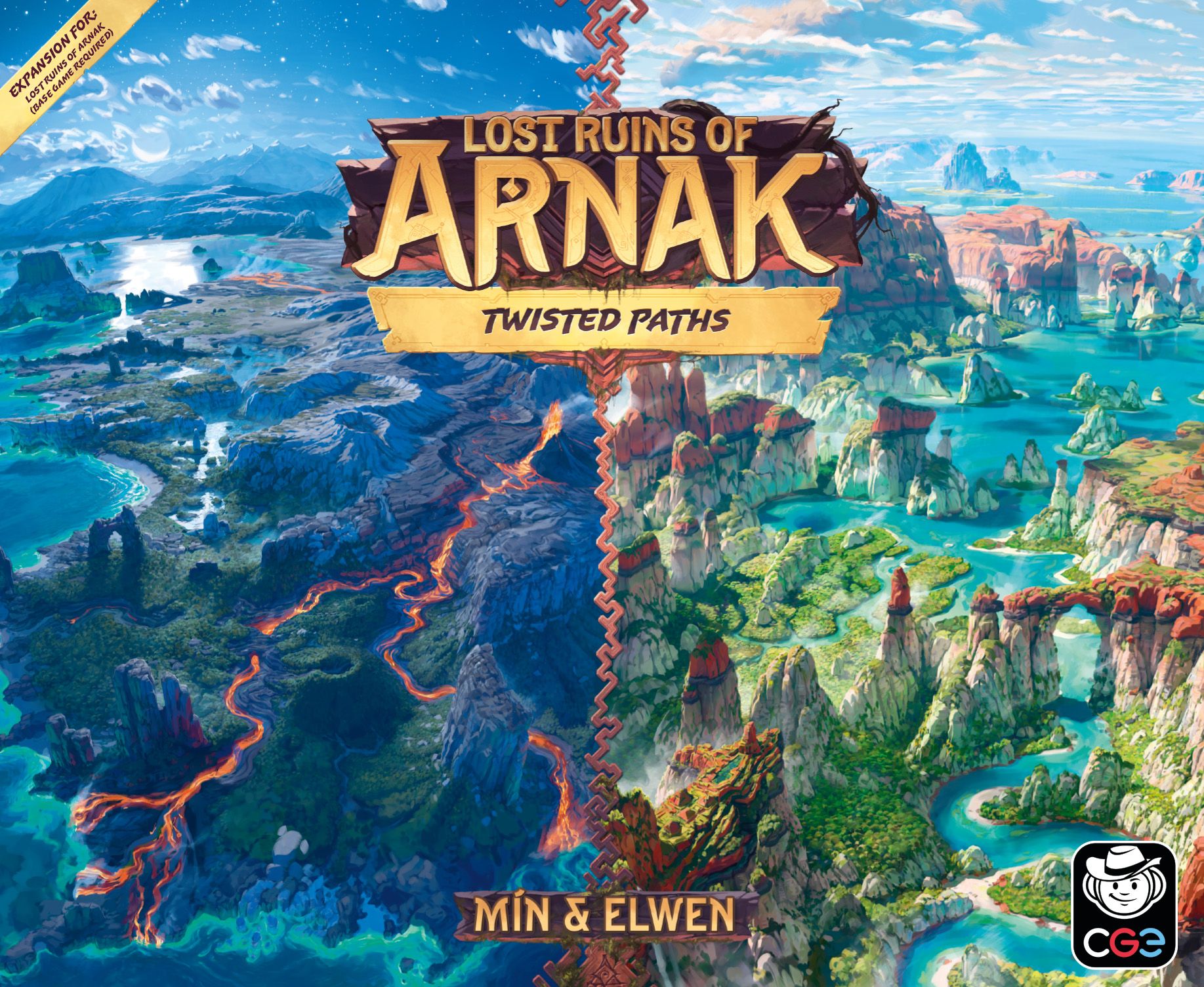
Lost Ruins of Arnak: Twisted Paths arrives as the final major upgrade to the Arnak universe, featuring a double‑sided board larger than the original. Each side hosts a brand‑new research track: the daytime Owl Temple lets you climb the white stone and use fresh temple tiles that can be combined into extra idol slots, plus a third research token, the lantern, which yields even stronger rewards. At night, the Spider Temple plunges players into dark caverns where the newly introduced dark tablets are spent to invoke mysterious altars and place artifacts directly onto the research track – though overuse may cost you points. The expansion also adds new guardians, sites, and assistants, expanding strategic choices. Solo enthusiasts get rival tiles for the new maps, as well as the previously released Purple Rival and Rival Objectives mini‑expansions in print‑and‑play form. Initially, all this content was part of the Adventure Chest, a limited‑edition box with a CGE‑designed insert. Mechanically, Twisted Paths retains deck construction, worker placement, and open drafting, while introducing pool‑building with dark tablets and the ability to merge temple tiles for extra idol slots. The result is a deeper experience offering two thematic routes—light or shadow—each with distinct risks and rewards. Fans of the base game will find enough new material to refresh many sessions, though newcomers might feel the learning curve steep due to the abundance of new options.

Expansion for

Published additional content
1 items

Rules videos

Learn by watching before you open the box

4 videos

Rules manual

Official PDF file

Rules manual — Lost Ruins of Arnak: Twisted Paths English · PDF
Download Manual

Best player count

BGG community vote

1–4 players
1 BEST
2 BEST
3 BEST
4 REC

Where to Buy

Prices monitored daily

Finding best prices...

Game details

Mechanics, categories, families and credits

Families

Game: Lost Ruins of Arnak Theme: Archaeology / Paleontology Versions & Editions: Big Box Versions of Individual Games
Publisher Czech Games Edition (CGE), Cranio Creations, Devir, DiceTree Games, Gémklub, HeidelBÄR Games, Hobby Japan, IELLO, Lord of Boards, MINDOK, Rebel Sp. z o.o., White Goblin Games
Designer Elwen, Mín
Artist Jakub Politzer, Jiří Kůs, Ondřej Hrdina

Community

Data from BoardGameGeek

10,300owners
1,426wishlist
186want to play

Frequently Asked Questions

Quick answers before you buy

7 questions
How many players can play?
1 to 4 players, including a solo mode.
What is the typical playtime?
Between 30 and 120 minutes, depending on player count and familiarity with the new mechanics.
Do I need the base game?
Yes, Twisted Paths is an expansion and requires the Lost Ruins of Arnak base game.
What are the main mechanical additions?
A double‑sided board, two new research tracks, dark tablets that form a resource pool, and the ability to combine temple tiles for extra idol slots.
Is the solo content worthwhile?
With rival tiles and the Purple Rival and Rival Objectives mini‑expansions, the solo experience becomes richer and more challenging.
Is it suitable for beginners?
The expansion adds considerable complexity; newcomers might want to master the base game first.
How many components are included?
Besides the double‑sided board, there are new temple tiles, guardians, assistants, research tokens, dark tablets, and rival cards.