Maharaja: The Game of Palace Building in India
Phalanx Games B.V., Phalanx Games Deutschland, asmodee · Board game · 2004
2–5 · best 5
90 min
Weight 3.2/5
Buy · from US$ 28.53
7.8
rating
Ludopedia
7.1
rating
BGG
Our Verdict
RECOMMENDED
If you love city building and simultaneous decision‑making, Maharaja will hook you from the first round.
Highlights
- Unique blend of mechanics
- Distinct architect powers
- Thematic Indian map
Keep in mind
- Moderate learning curve
- Potential action bottlenecks
Rules manual not indexed yet
Upload the PDF rulebook to ask questions about this game with AI.
About the game
What you do in a play session
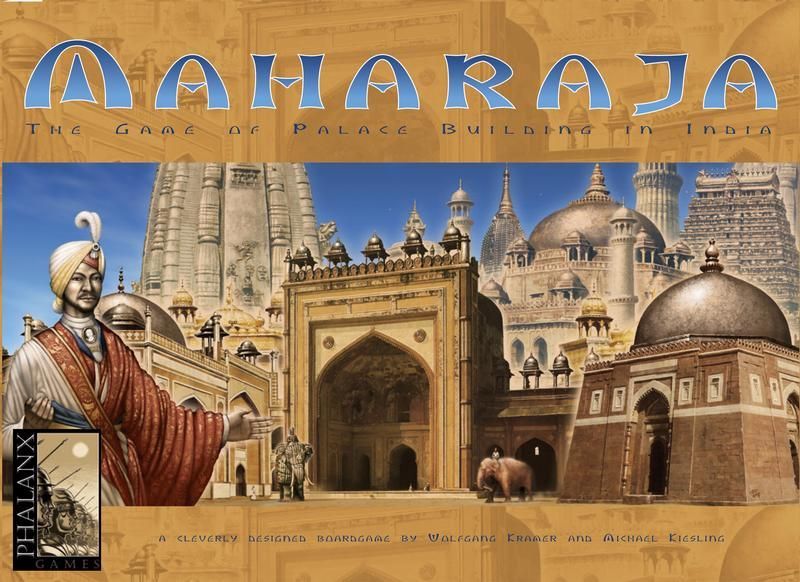
Maharaja: The Game of Palace Building in India is a strategy board game for 2 to 5 players that blends area control, network building, and simultaneous action selection. At the start of each game, players take on the role of architects traveling between Indian cities, trying to earn money in local markets and squares. Money is crucial because constructing houses and, especially, palaces for the Maharaja is costly. The win condition is to be the first to erect seven palaces, which requires balancing resource collection, expanding influence in cities, and choosing architects with unique powers. Each round, players secretly pick actions – generate income, build, move the Maharaja, or switch architects – then reveal them in turn order. The Maharaja scores the city he occupies at round's end, distributing money based on the number of buildings each player has there, before moving to a new city and shifting the game's focus. "Area Majority" mechanics reward whoever controls the most buildings in a city, while "Network and Route Building" lets players create connections that ease movement and influence. "Variable Player Powers" give each architect a distinct strategic identity, though the strongest powers appear later in the action order, creating a speed‑vs‑strength dilemma. Advanced rules add extra depth for players seeking a bigger challenge. With a playing time of about 90 minutes, high‑quality components (Indian map board, gem tokens, architect cards) and a moderate complexity level, Maharaja appeals to fans of city‑building games as well as those who enjoy simultaneous decision‑making and resource negotiation.
Gallery
Box and component photos
Tap any photo to open fullscreen. Photos submitted by the community or publisher.
Rules videos
Learn by watching before you open the box

Best player count
BGG community vote
2
OK
3
REC
4
BEST
5
BEST
Soundtrack
Ambience suggested by Melodice
Loading playlist...
Where to Buy
Prices monitored daily
Finding best prices...
Prices unavailable at this time.
Price history — last 6 months (lowest new offer)
As an Amazon Associate I earn from qualifying purchases. Prices and availability subject to change.
Alert enabled!
Join the BoardGamesBot deals group
Get the best board game deals every day — without message spam.
Join the WhatsApp groupGame details
Mechanics, categories, families and credits
Mechanics
Categories
Families
Publisher
Phalanx Games B.V., Phalanx Games Deutschland, asmodee, KDS Distribuzione (Italy), Mayfair Games
Designer
Michael Kiesling, Wolfgang Kramer
Artist
Franz Vohwinkel
Community
Data from BoardGameGeek
5,996owners
735wishlist
196want to play
Frequently Asked Questions
Quick answers before you buy
How many players can play?
2 to 5 players.
What is the typical playing time?
About 90 minutes.
How complex is the game?
Moderate complexity, with optional advanced rules for deeper play.
What components are included in the box?
Board with an Indian map, gem/crystal tokens, architect cards, money markers, and building pieces.
Do I need prior experience with area‑control games?
Not required, but it helps to grasp the area majority mechanics faster.
Are there any expansions or variants?
The rulebook contains two advanced variants for players seeking extra challenge.
Who is the game best suited for?
Fans of city‑building, simultaneous strategy, and historical themes.
Other Games You'll Like
Based on mechanics and theme