Murano
Lookout Games, Mayfair Games · Board game · 2014
2–4 · best 4
60–75 min
Weight 2.7/5
Buy · from US$ 43.62
7.9
rating
Ludopedia
7.2
rating
BGG
Our Verdict
RECOMMENDED
Who will love? Urban building game with gondolas and trade in Venice. Strong point? Strategic movement and tourist interaction.
Highlights
- Dynamic track movement
- Engaging rondel actions
- Venetian thematic design
- End‑game bonus cards
Keep in mind
- Moderate learning curve
- Delicate components may break
- Not ideal for very short sessions
Rules manual not indexed yet
Upload the PDF rulebook to ask questions about this game with AI.
About the game
What you do in a play session
Murano transports players to a cluster of seven islands just off the coast of Venice, where glassmaking is the lifeblood of the community. The board is a mosaic of building sites and walkways on each island, surrounded by a ring of action spaces. At the start of play, a handful of gondolas already occupy some of those spaces; each turn you pick one, slide it along the path in the direction of play, and, when it lands on an empty square, you perform the action shown there. Movement rules are strict: you cannot pass another gondola or finish on an occupied space, though you can pay a coin to move the gondola in front of the one you wish to move, or pay to move several at once if needed.
The core of the game is placing shops on the islands. Each shop has a distinct type, and when you claim one you gain the chance to attract tourists who, upon arrival, will shop at nearby stores, yielding victory points. There is also the option to build glassworks, which come into play on victory‑point cards, through tourist sales, and via an action space that lets you sell different types of glass for cash.
The ultimate goal is to amass as many victory‑point cards as possible, earned through strategic actions and end‑game bonuses. The blend of track movement, rondel action selection, and tile placement creates a tapestry of decisions that tests your planning sense and adaptability. Murano balances simplicity and depth, offering an engaging experience for fans of urban‑building and trade games.
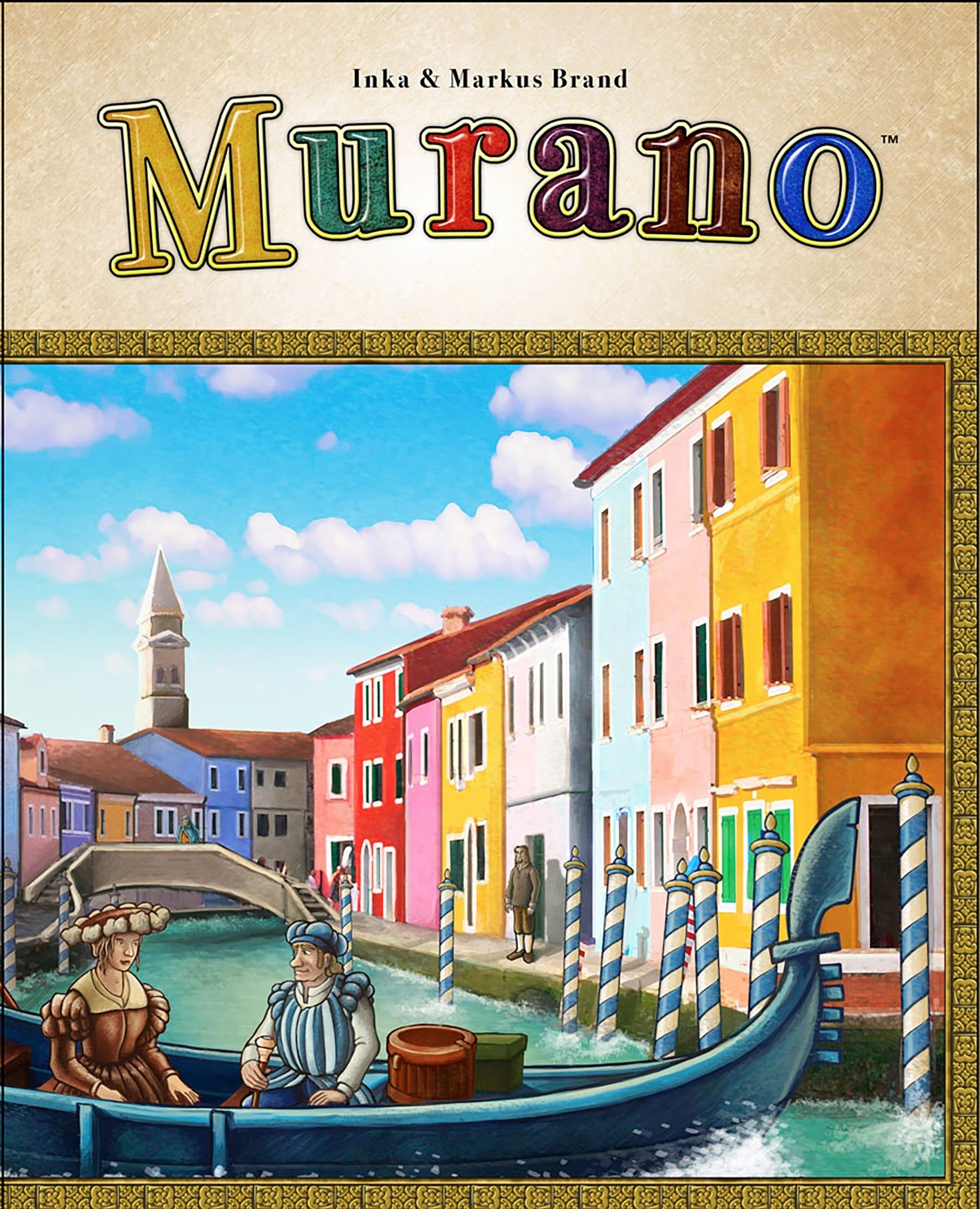
The components are well‑crafted: colored glass tiles, point cards, tourist tokens, and, of course, wooden gondolas representing the traditional transport. The visual aesthetic evokes Venetian canals with soft colors and delicate details that make the game stand out. The learning curve is moderate; newcomers can feel comfortable after the first game, while veterans will discover layers of strategy in the interactions between shops, tourist flow, and clever gondola use.
Additionally, the game offers rule variations that allow you to tweak duration and complexity, making it suitable for both quick sessions and marathon strategy nights. With a playtime of 60 to 75 minutes and a player count of 2 to 4, the pace stays dynamic and avoids long idle periods. If you love games that combine city‑building, commerce, and piece movement, Murano deserves a spot on your table.
The core of the game is placing shops on the islands. Each shop has a distinct type, and when you claim one you gain the chance to attract tourists who, upon arrival, will shop at nearby stores, yielding victory points. There is also the option to build glassworks, which come into play on victory‑point cards, through tourist sales, and via an action space that lets you sell different types of glass for cash.
The ultimate goal is to amass as many victory‑point cards as possible, earned through strategic actions and end‑game bonuses. The blend of track movement, rondel action selection, and tile placement creates a tapestry of decisions that tests your planning sense and adaptability. Murano balances simplicity and depth, offering an engaging experience for fans of urban‑building and trade games.
The components are well‑crafted: colored glass tiles, point cards, tourist tokens, and, of course, wooden gondolas representing the traditional transport. The visual aesthetic evokes Venetian canals with soft colors and delicate details that make the game stand out. The learning curve is moderate; newcomers can feel comfortable after the first game, while veterans will discover layers of strategy in the interactions between shops, tourist flow, and clever gondola use.
Additionally, the game offers rule variations that allow you to tweak duration and complexity, making it suitable for both quick sessions and marathon strategy nights. With a playtime of 60 to 75 minutes and a player count of 2 to 4, the pace stays dynamic and avoids long idle periods. If you love games that combine city‑building, commerce, and piece movement, Murano deserves a spot on your table.
Gallery
Box and component photos
Tap any photo to open fullscreen. Photos submitted by the community or publisher.
Rules videos
Learn by watching before you open the box
In English

Best player count
BGG community vote
2
REC
3
REC
4
BEST
Soundtrack
Ambience suggested by Melodice
Loading playlist...
Where to Buy
Prices monitored daily
Finding best prices...
Prices unavailable at this time.
Price history — last 6 months (lowest new offer)
As an Amazon Associate I earn from qualifying purchases. Prices and availability subject to change.
Alert enabled!
Join the BoardGamesBot deals group
Get the best board game deals every day — without message spam.
Join the WhatsApp groupGame details
Mechanics, categories, families and credits
Mechanics
Categories
Families
Publisher
Lookout Games, Mayfair Games
Designer
Inka Brand, Markus Brand
Artist
Klemens Franz
Community
Data from BoardGameGeek
3,047owners
733wishlist
167want to play
Frequently Asked Questions
Quick answers before you buy
How many players can play?
2 to 4 players.
What is the average playtime?
60 to 75 minutes.
How complex is the game?
Moderate; requires planning and attention to gondola movements.
What components are included?
Colored glass tiles, point cards, tourist tokens, gondola tokens, and a board with islands and action spaces.
Who is this game for?
Players who enjoy city building, trade, and piece movement; ideal for 2-4 players.
How does gondola movement work?
You pick a gondola, move it along the track in the direction of play, cannot pass another gondola or finish on an occupied space; you can pay coins to move the gondola in front of the one you want or move multiple at once.
Are there rule variations?
Yes, options exist to adjust duration and complexity, allowing for shorter or longer sessions.
Other Games You'll Like
Based on mechanics and theme