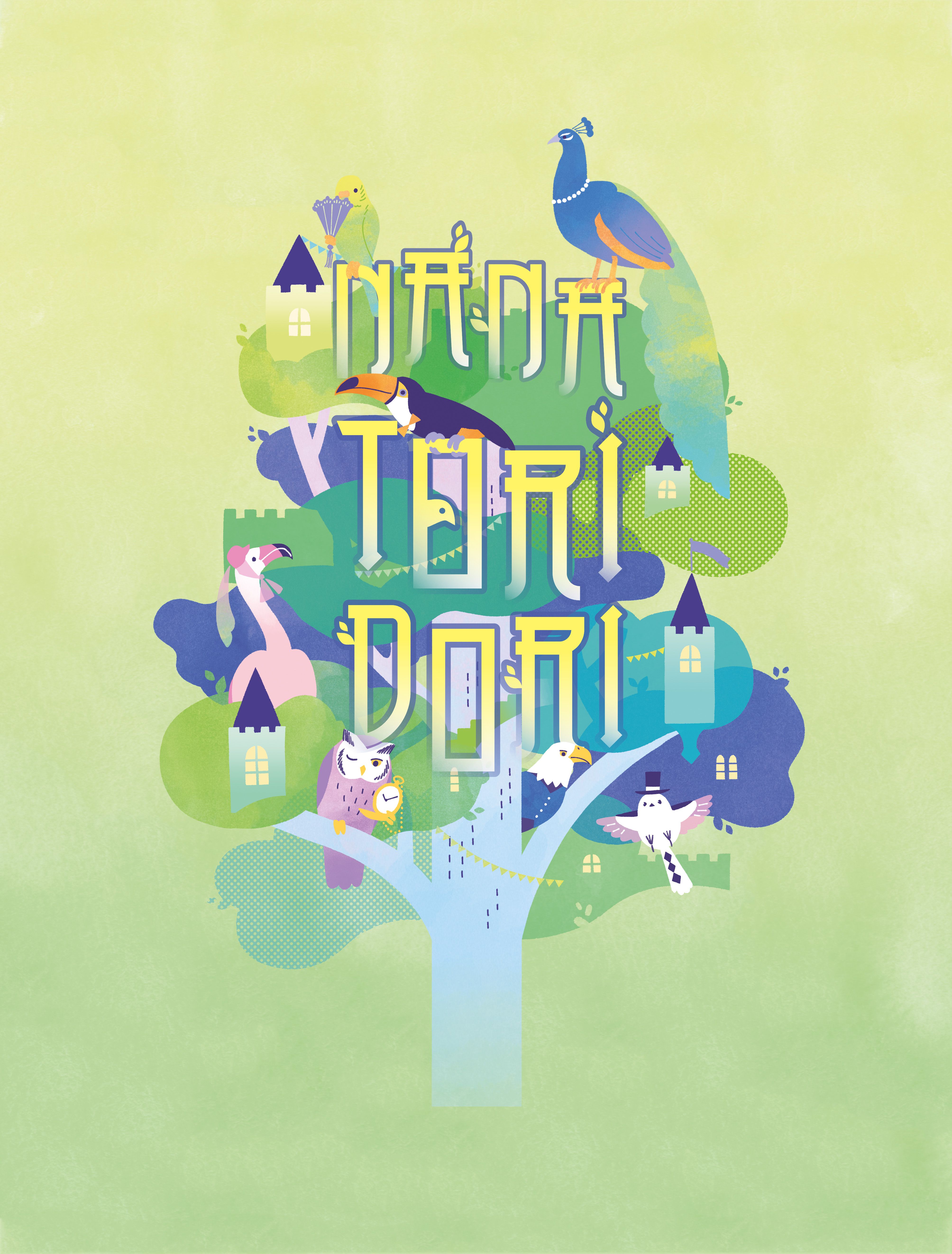
Nanatoridori — Price & soundtrack
Arclight Games, Ateam, GaGa Games · Board game · 2023
2–6 · best 4
10–20 min
Weight 1.2/5
Buy · from US$ 12.39
8.0
rating
Ludopedia
6.8
rating
BGG
Our Verdict
RECOMMENDED
Perfect for those who love fast-paced card games with a bit of mischief and positioning strategy.
Highlights
- Genial card insertion mechanic
- Quick and dynamic matches
- Simple rules with strategic depth
- Constant player interaction
Keep in mind
- Initial draw luck can impact
- Can be frustrating for those who hate losing
Rules manual not indexed yet
Upload the PDF rulebook to ask questions about this game with AI.
About the game
What you do in a play session
Imagine you are a guide at a castle where an epic bird party has just wrapped up. The catch? Now you have to help these birds find their way home! In Nanatoridori, the cards in your hand represent these birds, and your goal is straightforward: get rid of all of them before everyone else. However, it's not a simple race, because the order of your cards is everything. You cannot rearrange your hand, turning your hand management into a genuine tactical puzzle.
The gameplay follows a climbing mechanic. The starting player leads with a card or a set of cards of the same value. The twist is that you can only play multiple cards if they are adjacent in your hand. To follow, you must play the same number of cards but with a higher value. The hierarchy is interesting: the larger the set, the stronger the play. For instance, a trio of 2s beats a pair of 6s, which in turn beats a single 5.
The most engaging part is the interaction: when you overplay someone, you can choose to pick up the cards you beat and insert them anywhere in your hand (pure strategy!) or simply discard them. If you can't or choose not to play, you pass, draw a card from the deck, and decide where to slot it in. Once everyone passes, the table is cleared, and the last player to have played leads the next round. The tension is high because the last person left with cards in their hand loses a life (represented by a penguin meeple). Lose both lives, and it's game over—you are the sole loser while everyone else wins!
The gameplay follows a climbing mechanic. The starting player leads with a card or a set of cards of the same value. The twist is that you can only play multiple cards if they are adjacent in your hand. To follow, you must play the same number of cards but with a higher value. The hierarchy is interesting: the larger the set, the stronger the play. For instance, a trio of 2s beats a pair of 6s, which in turn beats a single 5.
The most engaging part is the interaction: when you overplay someone, you can choose to pick up the cards you beat and insert them anywhere in your hand (pure strategy!) or simply discard them. If you can't or choose not to play, you pass, draw a card from the deck, and decide where to slot it in. Once everyone passes, the table is cleared, and the last player to have played leads the next round. The tension is high because the last person left with cards in their hand loses a life (represented by a penguin meeple). Lose both lives, and it's game over—you are the sole loser while everyone else wins!
Gallery
Box and component photos
Tap any photo to open fullscreen. Photos submitted by the community or publisher.
Rules videos
Learn by watching before you open the box

Best player count
BGG community vote
2
OK
3
REC
4
BEST
5
REC
6
OK
Soundtrack
Ambience suggested by Melodice
Loading playlist...
Where to Buy
Prices monitored daily
Finding best prices...
Prices unavailable at this time.
Price history — last 6 months (lowest new offer)
Alert enabled!
Join the BoardGamesBot deals group
Get the best board game deals every day — without message spam.
Join the WhatsApp groupGame details
Mechanics, categories, families and credits
Mechanics
Categories
Families
Publisher
Arclight Games, Ateam, GaGa Games, Gameplay Publishing ApS, JJ Board Game, Korea Boardgames, KTBG, Maldito Games, MeepleBR
Designer
荒尾 俊樹 (Toshiki Arao)
Artist
ことり寧子 (Kotori Neiko)
Community
Data from BoardGameGeek
1,382owners
307wishlist
45want to play
Frequently Asked Questions
Quick answers before you buy
Is the game complex to learn?
Not at all! The rules are simple and intuitive, but the strategy of where to place cards in your hand is what makes it interesting.
How long does a match last?
It's very quick, between 10 and 20 minutes, making it an ideal 'filler' between larger games.
How many people can play?
From 2 to 6 players, and it's great for larger groups due to the 'overplaying' dynamics.
Is the game language dependent?
No, there is no text on the cards, so anyone from anywhere in the world can play.
Who do you recommend this for?
For those who enjoy games like 'Uno' or 'President', but want something with more strategic layers and management.
Other Games You'll Like
Based on mechanics and theme