8.7
rating
Ludopedia
7.4
rating
BGG
What do you want to do now
Ask questions about the game
Ask anything about Oikos: rules, setup, components, complexity, price, or whether it fits your group.
Example questions
Continue this chat in the Assistant
Soundtrack
Learn to play
Step by step, manual and videos
Our Verdict
RECOMMENDED
Fans of ecosystems and asymmetrical play will love this.
Highlights
- Resource dominance
- Dynamic expansion
- Species interaction
- Strategic scoring
Keep in mind
- Short game
- Low complexity
- Small components
About the game
What you do in a play session
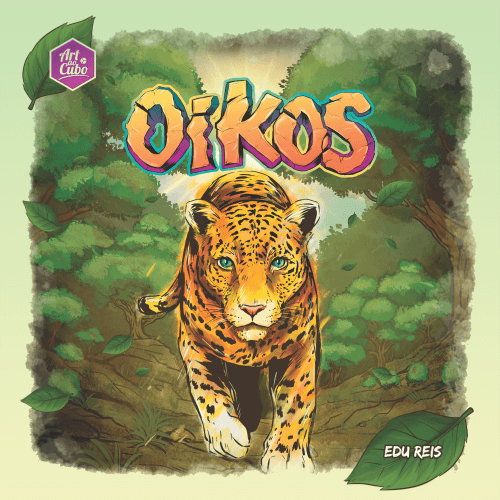
Oikos is a board game that puts you in the role of a native Brazilian species leader, guiding its population to thrive amid ecological challenges. The game unfolds over five rounds, with each species playing in ascending order of their position in the food chain, starting with the lowest-level organisms. During your turn, you add a card to the board, expanding the map and creating new habitats; then move your piece to collect resources from the spot you land on; and finally earn victory points based on what you achieved that turn.
At the end of the rounds, the final score combines points earned in each turn with resource bonuses. Each species can spend pinecones (neutral resources) to convert 2 pinecones into 1 extra point. Additionally, whoever holds the most of each resource type (meat, fruit, or eggs) receives an extra point per resource. If there are ties, the species with the lowest priority (higher in the food chain) wins.
The game stands out for its simplicity and speed: games last 15 to 30 minutes but remain strategic. The action queue mechanic lets you plan moves before execution, while map expansion and area movement keep the board dynamic and unpredictable. The variety of powers for each species creates an asymmetric experience, requiring each player to adapt their strategy to their set of abilities.
Oikos is ideal for those who enjoy ecosystems, light strategy games, and species interactions. It blends fun with an educational touch, teaching players about ecology and conservation in a playful and accessible way.
At the end of the rounds, the final score combines points earned in each turn with resource bonuses. Each species can spend pinecones (neutral resources) to convert 2 pinecones into 1 extra point. Additionally, whoever holds the most of each resource type (meat, fruit, or eggs) receives an extra point per resource. If there are ties, the species with the lowest priority (higher in the food chain) wins.
The game stands out for its simplicity and speed: games last 15 to 30 minutes but remain strategic. The action queue mechanic lets you plan moves before execution, while map expansion and area movement keep the board dynamic and unpredictable. The variety of powers for each species creates an asymmetric experience, requiring each player to adapt their strategy to their set of abilities.
Oikos is ideal for those who enjoy ecosystems, light strategy games, and species interactions. It blends fun with an educational touch, teaching players about ecology and conservation in a playful and accessible way.
Gallery
Box and component photos
Tap any photo to open fullscreen. Photos submitted by the community or publisher.
Rules manual
Official PDF file
Best player count
BGG community vote
2
OK
3
OK
4
BEST
5
REC
6
REC
Soundtrack
Ambience suggested by Melodice
Loading playlist...
Where to Buy
Prices monitored daily
Finding best prices...
Prices unavailable at this time.
Price history — last 6 months (lowest new offer)
Alert enabled!
Join the BoardGamesBot deals group
Get the best board game deals every day — without message spam.
Join the WhatsApp groupGame details
Mechanics, categories, families and credits
Mechanics
Categories
Publisher
Art ao Cubo, Conclave Editora
Designer
Eduardo M. Dos Reis
Artist
Eduardo M. Dos Reis
Community
Data from BoardGameGeek
60owners
8wishlist
Frequently Asked Questions
Quick answers before you buy
What is the average game duration?
Each game lasts between 15 and 30 minutes, depending on player count and decision speed.
How many players is it recommended for?
The game works for 2 to 6 players, offering fun for both duos and larger groups.
What is the game complexity?
The complexity is light; the rules are easy to learn, but resource control strategy keeps it engaging.
What components come with the game?
The game includes habitat cards, species pieces, resource tokens, pinecones, and a modular board that expands during play.
Who is this game for?
Ideal for those who enjoy ecology, light strategy games, and species interactions, as well as an educational experience.
How does resource scoring work?
Whichever species has the most meat, fruit, or eggs gets an extra point per resource. Pinecones are exchanged 2 for 1 extra point.
Other Games You'll Like
Based on mechanics and theme