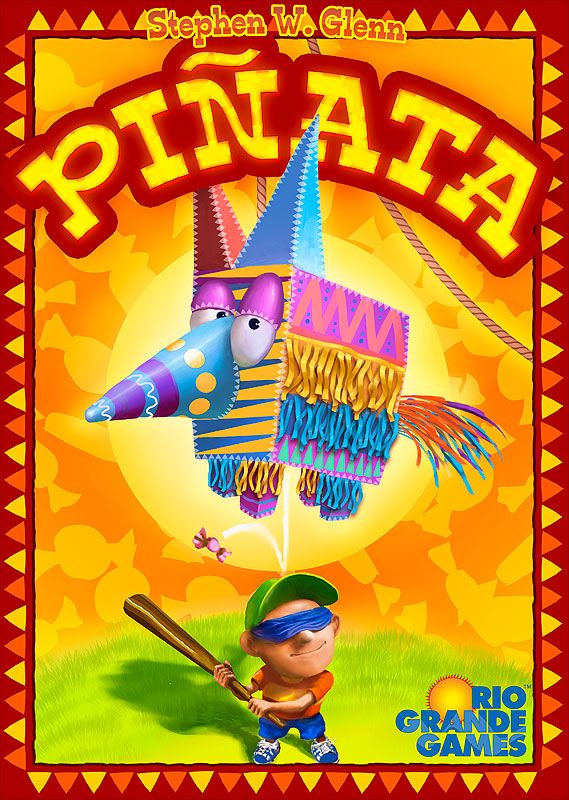
Piñata — Prices
Rio Grande Games · Board game · 2013
2 · best 2
30 min
Weight 1.5/5
Buy · from US$ 18.81
7.9
rating
Ludopedia
6.8
rating
BGG
Our Verdict
RECOMMENDED
If you enjoy fast, tactical duels, Piñata serves up colorful fun in half an hour.
Highlights
- Engaging hand management
- Thematic components
- Quick playtime
- High replay value
Keep in mind
- Strategy can become repetitive
- Card draw luck matters
- Limited depth for hardcore gamers
Rules manual not indexed yet
Upload the PDF rulebook to ask questions about this game with AI.
About the game
What you do in a play session
Piñata is a two‑player showdown where the goal is to fill your own collection of colored candies before your opponent does. Each color is represented by wooden bow‑tie markers that look like wrapped sweets; there are five different colors, each acting as a virtual "piñata". On your turn you play cards next to several lanes on the board, usually on your own side, but you may also place a card on the opponent’s lane to mess up their plan. When you gather enough candies of a given color you claim the medal card for that hue. The first player to earn three different medal cards wins the game.
The game re‑uses the core idea of Balloon Cup but adds fresh twists: wild cards that count as any color, removal of the three‑for‑one token exchange, and revised card values while keeping the same color distribution. These changes create more tactical decisions about when to cash in a wild or force the rival onto your lane. Hand management is key – deciding which cards to keep, discard, or play at the right moment can swing the outcome. Set collection (the colors) gives a "first to complete" rhythm that keeps tension high until the final turn.
Components are simple yet thematic: colored cards, candy‑shaped markers, and a few supporting mats. A typical game lasts about 30 minutes, making it perfect for a quick duel between friends or couples. With a light weight (1.5/5), Piñata is easy to learn but offers enough depth for fans of tactical card duels. If you enjoy short, strategic, and visually fun two‑player games, Piñata is worth a try.
The game re‑uses the core idea of Balloon Cup but adds fresh twists: wild cards that count as any color, removal of the three‑for‑one token exchange, and revised card values while keeping the same color distribution. These changes create more tactical decisions about when to cash in a wild or force the rival onto your lane. Hand management is key – deciding which cards to keep, discard, or play at the right moment can swing the outcome. Set collection (the colors) gives a "first to complete" rhythm that keeps tension high until the final turn.
Components are simple yet thematic: colored cards, candy‑shaped markers, and a few supporting mats. A typical game lasts about 30 minutes, making it perfect for a quick duel between friends or couples. With a light weight (1.5/5), Piñata is easy to learn but offers enough depth for fans of tactical card duels. If you enjoy short, strategic, and visually fun two‑player games, Piñata is worth a try.
Gallery
Box and component photos
Tap any photo to open fullscreen. Photos submitted by the community or publisher.
Best player count
BGG community vote
2
BEST
Soundtrack
Ambience suggested by Melodice
Loading playlist...
Where to Buy
Prices monitored daily
Finding best prices...
Prices unavailable at this time.
Price history — last 6 months (lowest new offer)
As an Amazon Associate I earn from qualifying purchases. Prices and availability subject to change.
Alert enabled!
Join the BoardGamesBot deals group
Get the best board game deals every day — without message spam.
Join the WhatsApp groupGame details
Mechanics, categories, families and credits
Mechanics
Categories
Families
Publisher
Rio Grande Games
Designer
Stephen Glenn
Artist
Claus Stephan, Martin Hoffmann
Community
Data from BoardGameGeek
1,749owners
320wishlist
80want to play
Frequently Asked Questions
Quick answers before you buy
How many players can play Piñata?
Exactly two players; the game is built for head‑to‑head duels.
What is the typical playing time?
Around 30 minutes, depending on the players' familiarity with the rules.
How complex is the game?
It has a light weight (1.5/5), making it easy to learn and perfect for a quick session.
What components are included in the box?
Colored cards, wooden bow‑tie markers in five colors, and a few mats for card placement.
Who is the game best suited for?
Couples, friends who enjoy short tactical duels, and players who like card games with hand management.
Are there any expansions or variants?
No official expansions exist; the base game is complete on its own.
Does the game rely heavily on luck?
There is a luck element in drawing cards, but good hand management and blocking choices keep randomness in check.
Other Games You'll Like
Based on mechanics and theme