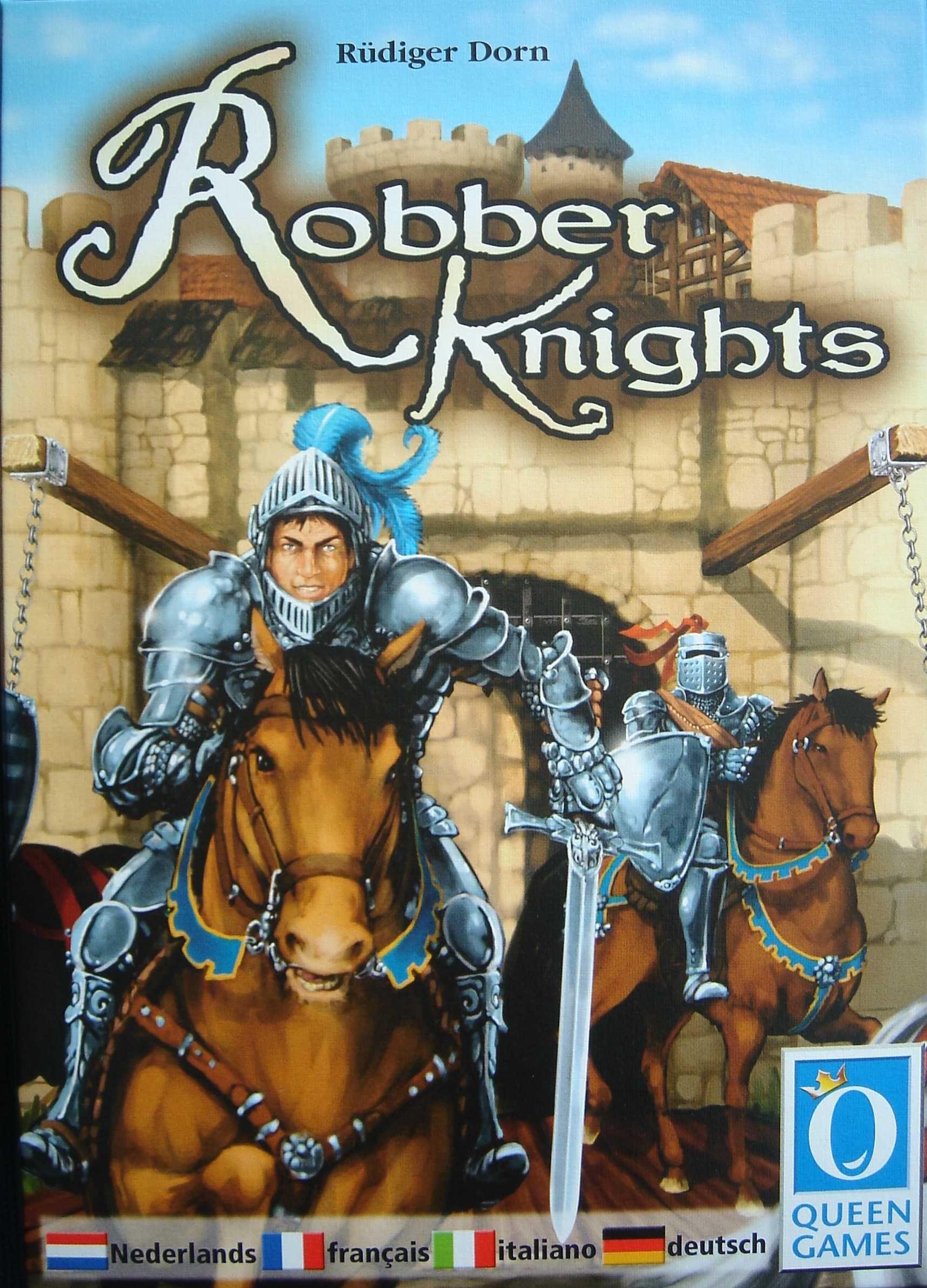
Robber Knights is one of those games that hooks you with its simple rules but challenges you with surprising tactical depth. If you enjoy a good spatial puzzle with a touch of medieval competition, this is an interesting choice. The Mancala mechanic, combined with the area control dispute, creates a fluid gameplay experience full of important decisions. It's a game for those who like to think a few steps ahead and anticipate opponents' moves.
thumb_up
Highlights
check_circle
Clever Mancala mechanic
check_circle
Engaging abstract strategy
check_circle
Fun area control dispute
check_circle
Easy to learn rules
check_circle
Important tactical decisions
warning_amber
Keep in mind
report_problem
Direct interaction can be intense
report_problem
Theme is a bit generic
report_problem
May not suit those seeking luck
upload_file
Rules manual not indexed yetUpload the PDF rulebook to ask questions about this game with AI.
info
About the game
What you do in a play session
In Robber Knights, you and your friends step into the shoes of ambitious knights, setting out from your castles to expand your domains and conquer neighboring lands. The wealth of the great villages and cities is too tempting to ignore, but possession comes with a good dose of caution. After all, what's yours today could be your rival's tomorrow! The game is a strategic race to consolidate your territory and protect your conquests. You'll need cunning to intelligently position your landscape tiles and, most importantly, your knights on the board. Each turn, the Mancala mechanic comes into play: you choose one of your knights and 'sow' adjacent knights in a straight line, one by one, into new spaces. The last knight placed determines the new position of your original knight. The goal is to surround and control as many properties as possible, ensuring your domains are safe from the hungry eyes of other players. Keep a close watch on your opponents' movements, as the opportunity to steal a newly acquired land can arise at any moment. It's an abstract strategy game with a medieval twist, where anticipation and area control are the keys to victory.
photo_library
Gallery
Box and component photos
11 photos · from the community
01 / 11
Tap any photo to open fullscreen. Photos submitted by the community or publisher.
groups
Best player count
BGG community vote
2–4 players
2
REC
3
REC
4
BEST
BestRecommendedWorks
music_note
Soundtrack
Ambience suggested by Melodice
music_noteLoading playlist...
sell
Where to Buy
Prices monitored daily
shopping_cartFinding best prices...
US$
infoPrices unavailable at this time.
Price history — last 6 months (lowest new offer)
notifications_active
Alert enabled!
Join the BoardGamesBot deals group
Get the best board game deals every day — without message spam.
Admin: Better Description Needed!Components: 10 x 10 GridsComponents: 7 x 7 GridsSeries: Small Box (Queen)Theme: Chivalry / Jousting / Tournaments (Medieval Europe)
businessPublisherQueen Games
editDesignerRüdiger Dorn
paletteArtistMichael Menzel
groups_2
Community
Data from BoardGameGeek
2,638owners
101wishlist
16want to play
quiz
Frequently Asked Questions
Quick answers before you buy
6 questions
How many players can participate in Robber Knights? expand_more
Robber Knights is a game for 2 to 4 players, making it perfect for a family game night or with a small group of friends.
What is the average game duration? expand_more
A game of Robber Knights is relatively quick, taking about 45 minutes. It's ideal for those looking for a strategic experience without committing too much time.
What is the complexity level of the game? expand_more
With a BGG weight of 2.0127/5, Robber Knights is considered a light to medium complexity game. The rules are easy to learn, but the strategic depth reveals itself with practice.
What are the main components of the game? expand_more
The game includes knight pieces, landscape tiles, and a modular board. The component quality is good and functional for the gameplay experience.
Is Robber Knights a good game for board game beginners? expand_more
Yes! Its accessible rules and intuitive Mancala mechanic make it a great entry point for abstract strategy games. However, it offers enough depth to keep more experienced players engaged.
Is there a lot of player interaction? expand_more
Absolutely! Interaction is direct and constant, as you are always trying to conquer and protect areas, and your opponents will do the same. You need to keep an eye on others' moves to avoid losing your properties.