7.1
rating
Ludopedia
6.7
rating
BGG
Our Verdict
RECOMMENDED
Perfect for those who love fast abstract games with tactical depth. The dynamic scoring system is the star here.
Highlights
- Smart and fluid scoring mechanics
- Fast and dynamic gameplay
- Variants for 3 and 4 players
- Easy to learn, hard to master
Keep in mind
- Significant language dependence
- Might feel repetitive for some
Rules manual not indexed yet
Upload the PDF rulebook to ask questions about this game with AI.
About the game
What you do in a play session
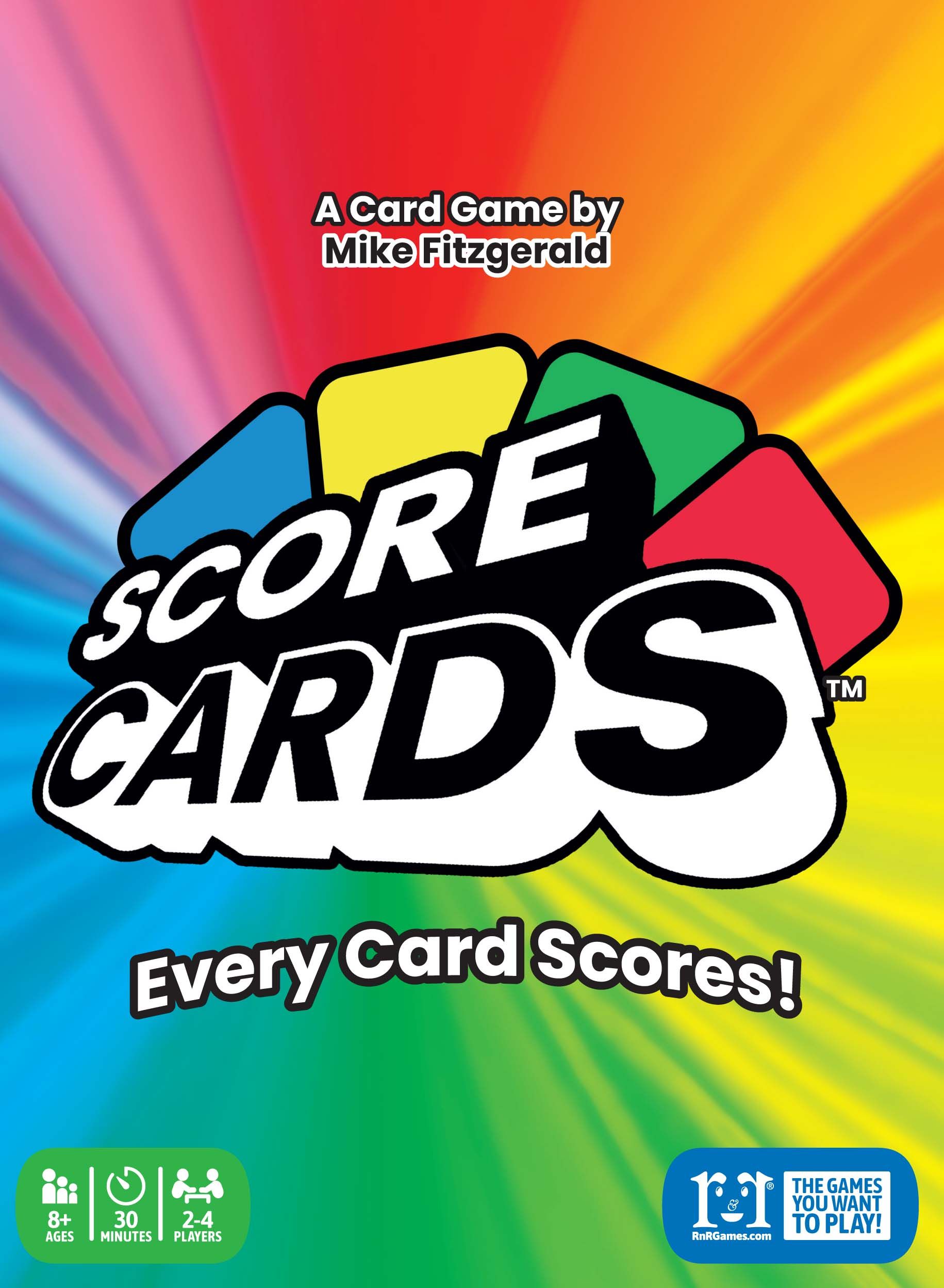
Ever played a game that's fast-paced but still makes your brain itch while trying to predict the next move? That's Score Cards. The premise is straightforward: you play a card, score its value, and draw a replacement. Sounds simple, right? But the real trick lies in the scoring conditions. Each card scores differently based on what you've already played and, more crucially, what your opponent has put on the table. It's a game of cat and mouse where you strive to maximize your gains while actively sabotaging your opponent's plans.
The game unfolds over four rounds. At the end of each round, a victory point is awarded to the player with the highest total score, and another goes to the player with the single highest-scoring card. The key detail is that your remaining hand carries over to the next round. This means you can hoard a devastating combo for the perfect moment, turning the experience into an exercise in patience and timing. If you dump everything now, you might run out of steam; if you hold back too much, you might lose the current round.
While the core experience is designed for two players, Score Cards ensures no one is left out. The game includes interesting variants: the 'Captain' mode for three players and a 'Partnerships' mode for those who want to play in teams. It's the perfect choice for fans of abstract games, where victory depends more on your ability to read the board and plan ahead than on raw luck. If you enjoy compact card games that offer tactical depth without needing a 50-page rulebook, this is for you. Get ready to plan, calculate, and try to outsmart your opponent!
The game unfolds over four rounds. At the end of each round, a victory point is awarded to the player with the highest total score, and another goes to the player with the single highest-scoring card. The key detail is that your remaining hand carries over to the next round. This means you can hoard a devastating combo for the perfect moment, turning the experience into an exercise in patience and timing. If you dump everything now, you might run out of steam; if you hold back too much, you might lose the current round.
While the core experience is designed for two players, Score Cards ensures no one is left out. The game includes interesting variants: the 'Captain' mode for three players and a 'Partnerships' mode for those who want to play in teams. It's the perfect choice for fans of abstract games, where victory depends more on your ability to read the board and plan ahead than on raw luck. If you enjoy compact card games that offer tactical depth without needing a 50-page rulebook, this is for you. Get ready to plan, calculate, and try to outsmart your opponent!
Gallery
Box and component photos
Tap any photo to open fullscreen. Photos submitted by the community or publisher.
Best player count
BGG community vote
2
BEST
3
OK
4
BEST
Soundtrack
Ambience suggested by Melodice
Loading playlist...
Where to Buy
Prices monitored daily
Finding best prices...
Prices unavailable at this time.
Price history — last 6 months (lowest new offer)
As an Amazon Associate I earn from qualifying purchases. Prices and availability subject to change.
Alert enabled!
Join the BoardGamesBot deals group
Get the best board game deals every day — without message spam.
Join the WhatsApp groupGame details
Mechanics, categories, families and credits
Mechanics
Categories
Publisher
PLAAY NOW, R&R Games
Designer
Mike Fitzgerald
Artist
Sam Avallone
Community
Data from BoardGameGeek
258owners
127wishlist
31want to play
Frequently Asked Questions
Quick answers before you buy
Is the game complex to learn?
Not at all! The basic 'play one, draw one' rule is intuitive. The complexity comes from the strategy of when to play each card to maximize points.
Can it be played with more than two people?
Yes! The game includes specific rules for 3 players (Captain mode) and 4 players (Partnerships mode).
How long does a game take?
It's quite fast, usually between 20 and 30 minutes, making it ideal as a filler game between other activities.
Is there a lot of language dependence?
Yes, there is significant language dependence because the scoring conditions on the cards must be understood for the strategy to work.
Is it suitable for beginners?
Absolutely. Being an abstract and direct game, it's a great entry point for those who want to start thinking more strategically.
Other Games You'll Like
Based on mechanics and theme