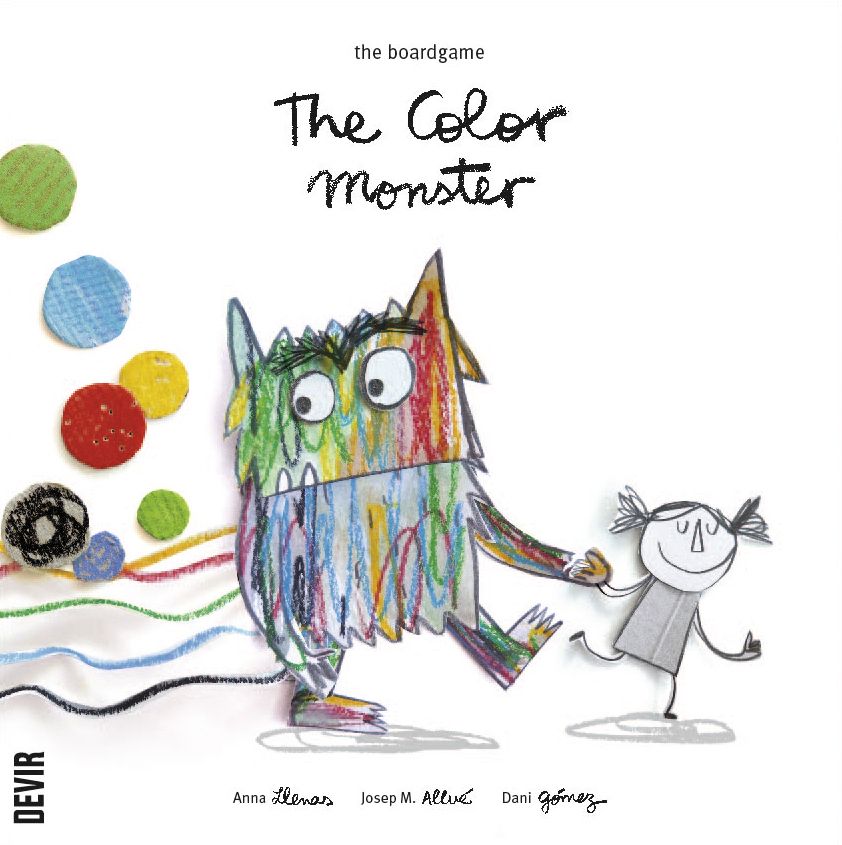
The Color Monster
Devir, Feelindigo, HUCH! · Board game · 2018
2–5 · best 2, 3
25 min
Weight 1.1/5
Buy · from US$ 11.99
7.7
rating
Ludopedia
6.5
rating
BGG
Our Verdict
RECOMMENDED
A perfect choice for parents and educators looking to teach emotional intelligence in a light and fun way.
Highlights
- Encourages communication and empathy
- Conflict-free cooperative mechanics
- Visually appealing components
- Great for emotional literacy
Keep in mind
- Very simple memory mechanics
- Lack of strategic depth
About the game
What you do in a play session
Ever felt like your emotions are just a big, tangled mess? That's exactly what's happening to our protagonist in The Color Monster! In this adorable and educational game, players don't compete against each other; instead, they team up to help the Monster organize his feelings, which are currently all mixed up. The goal is simple yet profound: place each emotion into its correct jar.
Here is how the gameplay works: on your turn, you roll the die to move the Monster across the board. When you land on a space with an emotion token, the real magic happens. But you can't just grab the token and move on! To successfully pick it up, the player must open up and share a real memory or a situation where they felt that specific emotion—whether it's happiness, sadness, anger, fear, or calm. It's a wonderful way to encourage empathy and communication among children (and adults too!).
Once the story is shared, the game turns into a memory challenge. The colored jars are hidden on shelves, and you must guess which one matches the emotion. If you pick the right color, the emotion is organized! If not, the jar goes back to the shelf, and the confusion persists. The group wins if all emotions are correctly sorted, but be careful: if the Monster becomes too confused due to too many mistakes, the game ends in defeat. It's the perfect tool for anyone looking to introduce emotional literacy in a light, playful, and affectionate way, turning the learning process about feelings into a heartwarming cooperative adventure.
Here is how the gameplay works: on your turn, you roll the die to move the Monster across the board. When you land on a space with an emotion token, the real magic happens. But you can't just grab the token and move on! To successfully pick it up, the player must open up and share a real memory or a situation where they felt that specific emotion—whether it's happiness, sadness, anger, fear, or calm. It's a wonderful way to encourage empathy and communication among children (and adults too!).
Once the story is shared, the game turns into a memory challenge. The colored jars are hidden on shelves, and you must guess which one matches the emotion. If you pick the right color, the emotion is organized! If not, the jar goes back to the shelf, and the confusion persists. The group wins if all emotions are correctly sorted, but be careful: if the Monster becomes too confused due to too many mistakes, the game ends in defeat. It's the perfect tool for anyone looking to introduce emotional literacy in a light, playful, and affectionate way, turning the learning process about feelings into a heartwarming cooperative adventure.
Gallery
Box and component photos
Tap any photo to open fullscreen. Photos submitted by the community or publisher.
Rules videos
Learn by watching before you open the box


Best player count
BGG community vote
2
BEST
3
BEST
4
REC
5
REC
Soundtrack
Ambience suggested by Melodice
Loading playlist...
Where to Buy
Prices monitored daily
Finding best prices...
Prices unavailable at this time.
Price history — last 6 months (lowest new offer)
As an Amazon Associate I earn from qualifying purchases. Prices and availability subject to change.
Alert enabled!
Join the BoardGamesBot deals group
Get the best board game deals every day — without message spam.
Join the WhatsApp groupGame details
Mechanics, categories, families and credits
Mechanics
Categories
Families
Publisher
Devir, Feelindigo, HUCH!, Kaissa Chess & Games, Lautapelit.fi, MINDOK, Purple Brain Creations, Space Cow, Spilbræt.dk
Designer
Dani Gómez, Josep M. Allué
Artist
Anna Llenas
Community
Data from BoardGameGeek
1,262owners
157wishlist
21want to play
Frequently Asked Questions
Quick answers before you buy
What is the recommended age?
It's ideal for young children, especially those who are starting to understand and name their feelings.
Is the game hard to learn?
Not at all! The rules are very simple and the game flows quickly, focusing more on interaction than complexity.
How long does a game last?
Usually around 25 minutes, which is perfect for keeping young children engaged.
How many people can play?
From 2 to 5 players, making it great for families or classroom use.
Is the game competitive?
No, it's fully cooperative. Everyone wins or loses together, encouraging mutual support.
Is reading required to play?
No, the dynamics are based on colors, icons, and oral storytelling, making it accessible for children who cannot read yet.
Other Games You'll Like
Based on mechanics and theme