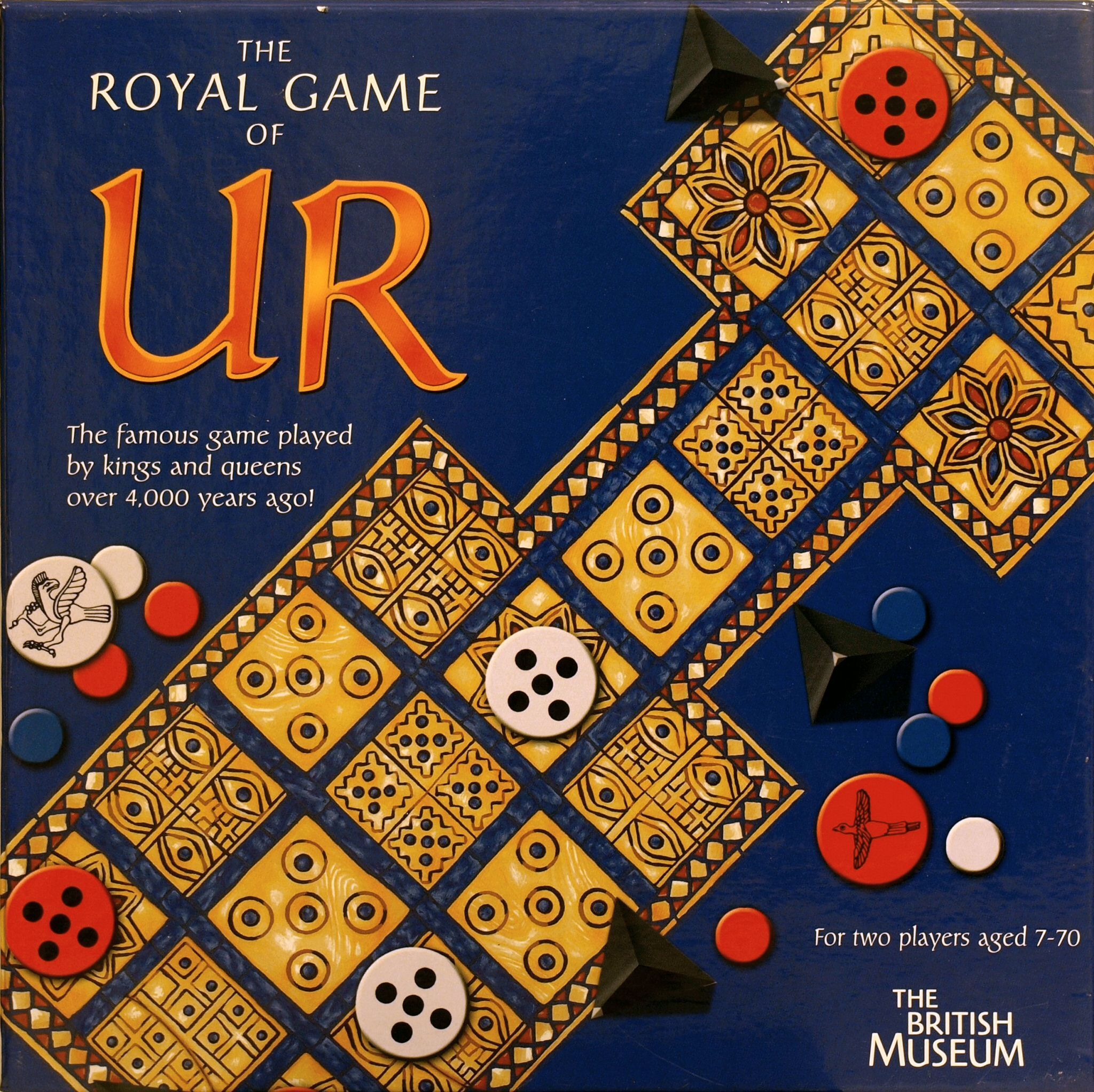
The Royal Game of Ur
(Public Domain), (Self-Published), Bibelot Games · Board game
2 · best 2
30 min
Weight 1.2/5
Buy
7.3
rating
Ludopedia
6.2
rating
BGG
Our Verdict
RECOMMENDED
Perfect for those who love classic games and want to experience human history on a board. Easy to learn, but tense to play.
Highlights
- Fascinating historical experience
- Quick and intuitive rules
- Constant tension in the central track
- Thematically styled components
Keep in mind
- Dice luck can be frustrating
- Two-player only
Rules manual not indexed yet
Upload the PDF rulebook to ask questions about this game with AI.
About the game
What you do in a play session
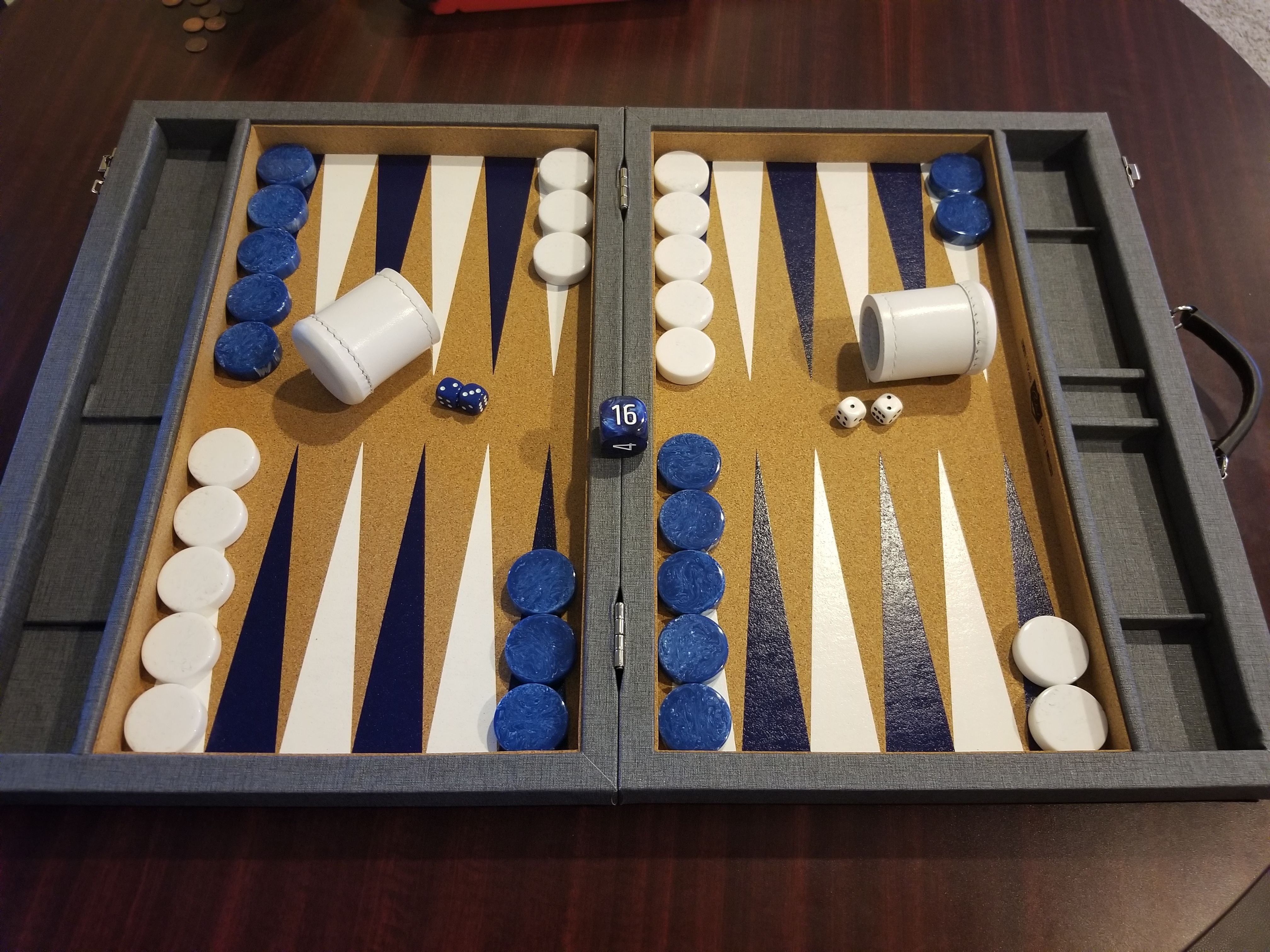
Ever wondered what people were playing nearly 5,000 years ago? The Royal Game of Ur is exactly that: a time travel trip to Mesopotamia. If you enjoy Backgammon, you'll feel right at home, as the dynamics are very similar. It's a pure and simple race game, but with that layer of tension that only a fight for space can provide.
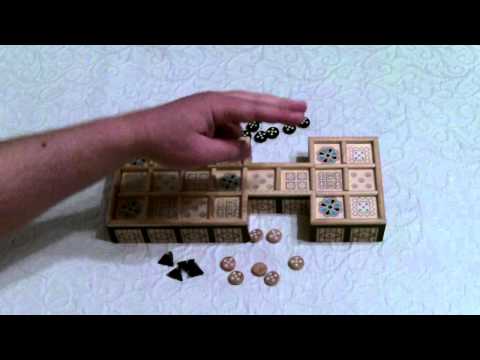
The goal is to move your 7 pieces from the outer track, cross the conflict zone in the central track, and exit the board before your opponent. But it's not just about moving forward; the real battle happens along the way. If you land on a single opponent's piece, you bump it all the way back to the start. However, be careful: if you try to do this where the opponent has two or more pieces, it's your own piece that gets sent back to square zero!
The movement system is quite curious. Instead of a standard die, you use four tetrahedral (four-sided) dice. Each die can result in a '1' or a '0'. This means you can roll anywhere from 0 to 4 points per turn. Pro tip: statistically, 2 is the most common result, so plan your moves with that in mind.
A crucial detail is the rosettes. These are special spaces: if you land on one, you are safe and cannot be bumped. Additionally, landing on any rosette allows you to roll the dice again, which can create incredible movement combos. Just remember that in each move, you must move only one single piece. The first player to bear off all 7 of their pieces wins. With rules updated based on guidance from the British Museum, this edition restores the essence of one of humanity's oldest games.
The goal is to move your 7 pieces from the outer track, cross the conflict zone in the central track, and exit the board before your opponent. But it's not just about moving forward; the real battle happens along the way. If you land on a single opponent's piece, you bump it all the way back to the start. However, be careful: if you try to do this where the opponent has two or more pieces, it's your own piece that gets sent back to square zero!
The movement system is quite curious. Instead of a standard die, you use four tetrahedral (four-sided) dice. Each die can result in a '1' or a '0'. This means you can roll anywhere from 0 to 4 points per turn. Pro tip: statistically, 2 is the most common result, so plan your moves with that in mind.
A crucial detail is the rosettes. These are special spaces: if you land on one, you are safe and cannot be bumped. Additionally, landing on any rosette allows you to roll the dice again, which can create incredible movement combos. Just remember that in each move, you must move only one single piece. The first player to bear off all 7 of their pieces wins. With rules updated based on guidance from the British Museum, this edition restores the essence of one of humanity's oldest games.
Gallery
Box and component photos
Tap any photo to open fullscreen. Photos submitted by the community or publisher.
Rules videos
Learn by watching before you open the box
In English
-
 The 5,000-year-old Royal Game of UR!
-
 How to play the Royal Game of Ur
-
 The Royal Game of Ur History and Playthrough
-
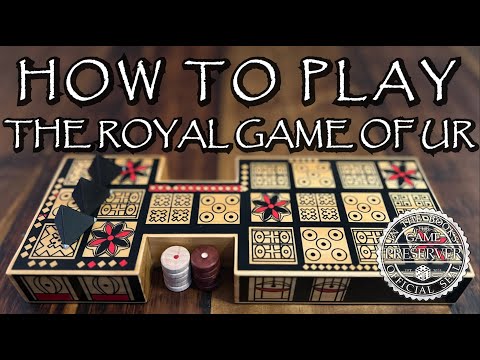 The Royal Game of Ur (3000 BC) — Instructions
-
 How to Make, Play and Win the Royal Game of Ur
-
 The Royal Game of Ur: Rules and Strategy (Part 1 of 2)
-
 Royal Game of Ur Rules Variations
-
 The Royal Game of Ur: Rules and Strategy (Part 2 of 2)
-
 Ancient Game of Ur | How to Play Board Games | Learn to Play Board Games
Best player count
BGG community vote
2
BEST
Soundtrack
Ambience suggested by Melodice
Loading playlist...
Where to Buy
Prices monitored daily
Finding best prices...
Prices unavailable at this time.
Price history — last 6 months (lowest new offer)
Alert enabled!
Join the BoardGamesBot deals group
Get the best board game deals every day — without message spam.
Join the WhatsApp groupGame details
Mechanics, categories, families and credits
Mechanics
Categories
Families
Publisher
(Public Domain), (Self-Published), Bibelot Games, The British Museum, D-Toys, Dar Al-Saffar, Editora Abril, Fratelli Fabbri Editori (Fabbri Editore), Gaudé Création, Geoludie, HEMA, HistoryGames.it, KOZAK Games, Krealudik, L. P. Septímio, Ludens Planet, Ludens Spirit, LuduScience, Merit, Mitra, NewVenture Games, Northwest Corner, Inc., Otto Maier Verlag, PICO PAO / Juegos de la Antigüedad, RNK Gaming, Selchow & Righter, Senet Belgium, Stellar Factory
Designer
(Uncredited)
Artist
Mariela Arratia, Mathew Sisson, Vlad Korniuk
Community
Data from BoardGameGeek
2,188owners
322wishlist
18want to play
Frequently Asked Questions
Quick answers before you buy
Is the game hard to learn?
Not at all! The rules are very simple and intuitive, closely resembling Backgammon. You'll be playing in a few minutes.
How many people can play?
The game is strictly for 2 players, making it a direct duel.
How long does a game last?
It usually takes about 30 minutes, depending on how many times you bump each other back to the start.
What are tetrahedral dice?
They are 4-sided dice. In this game, they aren't used to count 1 to 4, but rather to provide a '0' or '1' result each.
Is it suitable for children?
Yes, since it's a race game with clear rules, it's great for introducing basic strategy games to kids.
Is the game purely luck-based?
While dice determine movement, choosing which piece to move and managing risk in the central track adds a strategic layer.
Other Games You'll Like
Based on mechanics and theme