The Speicherstadt
eggertspiele, The Game Master BV, Pegasus Spiele · Board game · 2010
2–5 · best 4
45 min
Weight 2.3/5
7.7
rating
Ludopedia
7.0
rating
BGG
7.7
rating
Ludopedia
7.0
rating
BGG
Our Verdict
HIGHLY RECOMMENDED
Fans of auctions and economic strategy will love Speicherstadt, with its historical flair and fire risk.
Highlights
- Strategic bidding
- Rewarding contracts
- Engaging fire threat
Keep in mind
- Steep learning curve
- Three bids per round limit
Rules manual not indexed yet
Upload the PDF rulebook to ask questions about this game with AI.
About the game
What you do in a play session
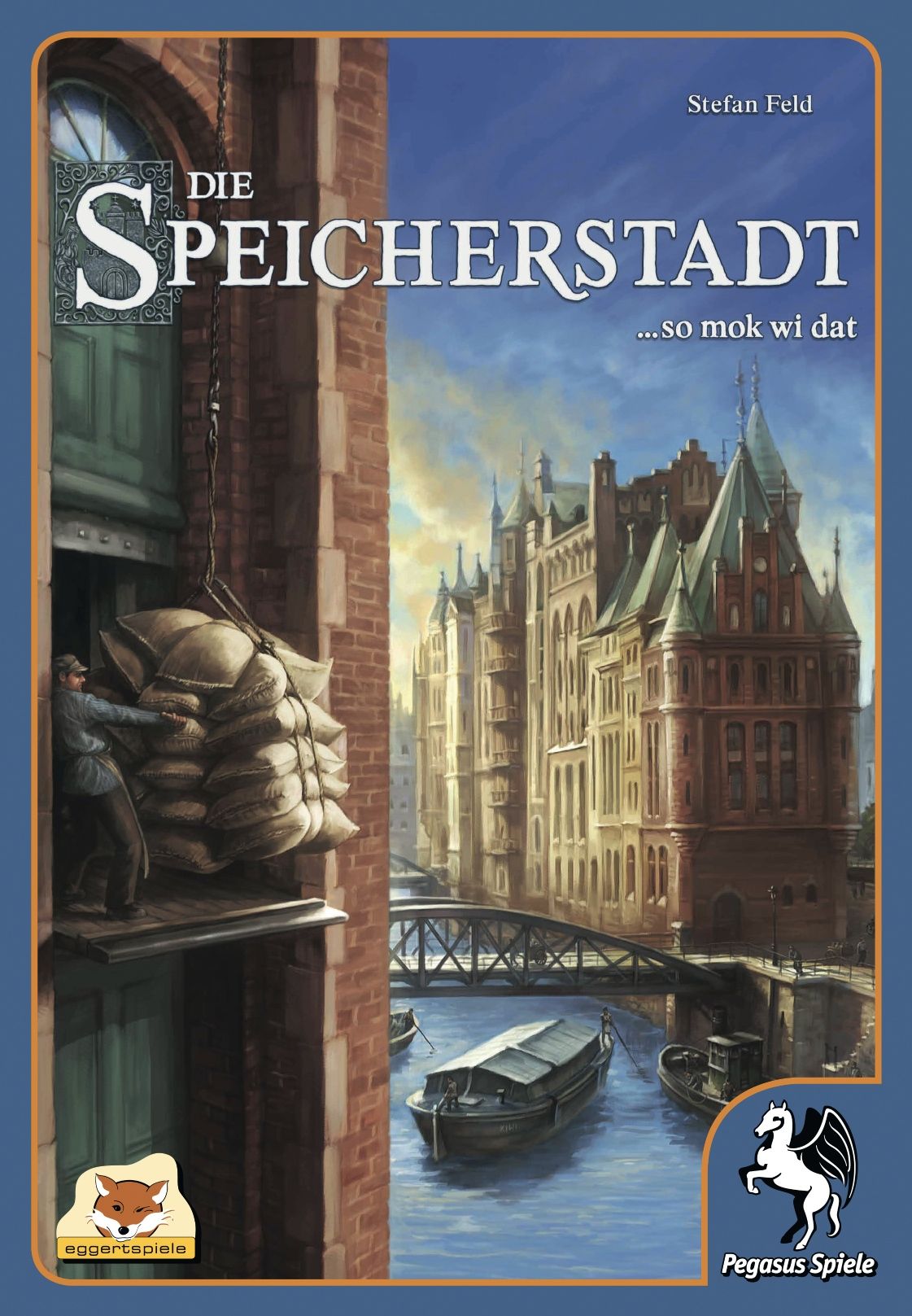
In 1900, Hamburg was Europe’s busiest port, and the Speicherstadt was the beating heart of that trade—a maze of warehouses, canals, and bridges where spices, coffee, tea, and fabrics arrived from all corners of the world. The game brings that atmosphere to the board, putting you in the shoes of a hungry merchant who must buy cargo, store it, and sell it before a fire destroys everything. The core mechanic is auctioning, but it’s not the usual "whoever bids the most wins." Each card has a cost that rises as more players place tokens on it, and the player sitting below a token pays more. This forces you to decide *when* to place your token and *when* to use tokens to make rivals pay more. You can only make three bids per round, so the choice is strategic. In addition, there are contract cards that require sets of resources and event cards that change the rules mid‑game. If you neglect to buy fire‑tender cards, you’ll lose points—the threat of fire is real. The game unfolds over four seasons, each revealing stronger cards, demanding long‑term planning. The final outcome is a race to complete contracts, accumulate income, and avoid the fire eating your profit. It’s a planning, bargaining, and luck challenge that fits perfectly into game nights with friends who love economics and competition.
In terms of components, the box comes with 200 cards, 50 auction tokens, 4 contract blocks, 4 income blocks, 4 fire blocks, and 4 end‑game bonus blocks. The board is simple, with just the card and token blocks, but the artwork is elegant and evokes Hamburg’s architecture. The game lasts between 45 and 50 minutes, ideal for quick sessions, and works well with 2 to 5 players. If you enjoy auction games, resource‑strategy, and historical themes, Speicherstadt will surprise you.
The gameplay experience is fast and engaging. Players must think on two fronts: how to maximize their own bids while simultaneously raising the cost for their opponents. Tension spikes when the event phase rolls in and fire cards appear, forcing quick decisions. In the end, the point tally can swing dramatically, and those who were safe can lose everything in an instant. That keeps everyone on the edge of their seat.
For those looking for an auction game with a historical twist and strategic depth, Speicherstadt is a great pick. If you’ve played “Power Grid” or “Railroad Ink” and enjoy planning, you’ll have fun. The only caveat is that the learning curve can be a bit steep for those who’ve never seen a Dutch‑style auction.
In short, Speicherstadt delivers a unique blend of auctioning, contracts, and fire risk, all set in a Hamburg backdrop that will make you smell spices and hear the clatter of steam engines.
In terms of components, the box comes with 200 cards, 50 auction tokens, 4 contract blocks, 4 income blocks, 4 fire blocks, and 4 end‑game bonus blocks. The board is simple, with just the card and token blocks, but the artwork is elegant and evokes Hamburg’s architecture. The game lasts between 45 and 50 minutes, ideal for quick sessions, and works well with 2 to 5 players. If you enjoy auction games, resource‑strategy, and historical themes, Speicherstadt will surprise you.
The gameplay experience is fast and engaging. Players must think on two fronts: how to maximize their own bids while simultaneously raising the cost for their opponents. Tension spikes when the event phase rolls in and fire cards appear, forcing quick decisions. In the end, the point tally can swing dramatically, and those who were safe can lose everything in an instant. That keeps everyone on the edge of their seat.
For those looking for an auction game with a historical twist and strategic depth, Speicherstadt is a great pick. If you’ve played “Power Grid” or “Railroad Ink” and enjoy planning, you’ll have fun. The only caveat is that the learning curve can be a bit steep for those who’ve never seen a Dutch‑style auction.
In short, Speicherstadt delivers a unique blend of auctioning, contracts, and fire risk, all set in a Hamburg backdrop that will make you smell spices and hear the clatter of steam engines.
Gallery
Box and component photos
Tap any photo to open fullscreen. Photos submitted by the community or publisher.
Rules videos
Learn by watching before you open the box


Best player count
BGG community vote
2
OK
3
REC
4
BEST
5
REC
Soundtrack
Ambience suggested by Melodice
Loading playlist...
Where to Buy
Prices monitored daily
Finding best prices...
Prices unavailable at this time.
Price history — last 6 months (lowest new offer)
Alert enabled!
Join the BoardGamesBot deals group
Get the best board game deals every day — without message spam.
Join the WhatsApp groupGame details
Mechanics, categories, families and credits
Mechanics
Categories
Families
Publisher
eggertspiele, The Game Master BV, Pegasus Spiele, Swan Panasia Co., Ltd., Z-Man Games
Designer
Stefan Feld
Artist
Andreas Resch, Harald Lieske, Michael Menzel
Community
Data from BoardGameGeek
5,143owners
689wishlist
166want to play
Frequently Asked Questions
Quick answers before you buy
How long does a typical game of Speicherstadt last?
Usually between 45 and 50 minutes, depending on player count and auction experience.
Who is this game recommended for?
Great for fans of auction games, resource strategy, and historical themes, especially if you’ve played “Power Grid” or “Railroad Ink.”
What’s the learning curve like?
It can be steep for those unfamiliar with Dutch‑style bidding, but after one round it becomes clearer.
What’s the ideal player count?
It works well with 2 to 5 players, though the dynamics shift a bit across ranges.
What are the essential components?
200 cards, 50 auction tokens, contract, income, fire, and end‑game bonus blocks; the board is simple and elegant.
How does the fire risk work?
Event cards can set warehouses ablaze; if you lack fire‑tender cards, you lose points.
Can it be played asynchronously?
Yes, there’s an online version on the Yucata platform that allows asynchronous play via browser.
Other Games You'll Like
Based on mechanics and theme