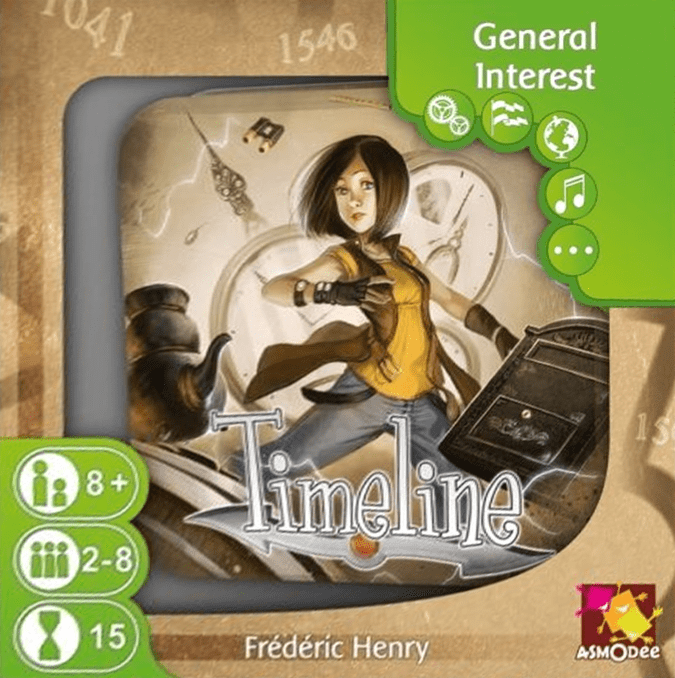
Timeline: General Interest
asmodee, Asterion Press, Esdevium · Board game · 2012
2–8 · best 4
15 min
Weight 1.1/5
Buy · from US$ 10.49
7.0
rating
Ludopedia
6.8
rating
BGG
Our Verdict
RECOMMENDED
Perfect for those looking for a smart, fast-paced party game that tests general knowledge in a lighthearted way.
Highlights
- Rules explained in 30 seconds
- Extremely portable and practical
- Sparks great debates and laughs
- Mixable with other versions
Keep in mind
- Might be frustrating for trivia-haters
- Language barrier in some versions
Rules manual not indexed yet
Upload the PDF rulebook to ask questions about this game with AI.
About the game
What you do in a play session
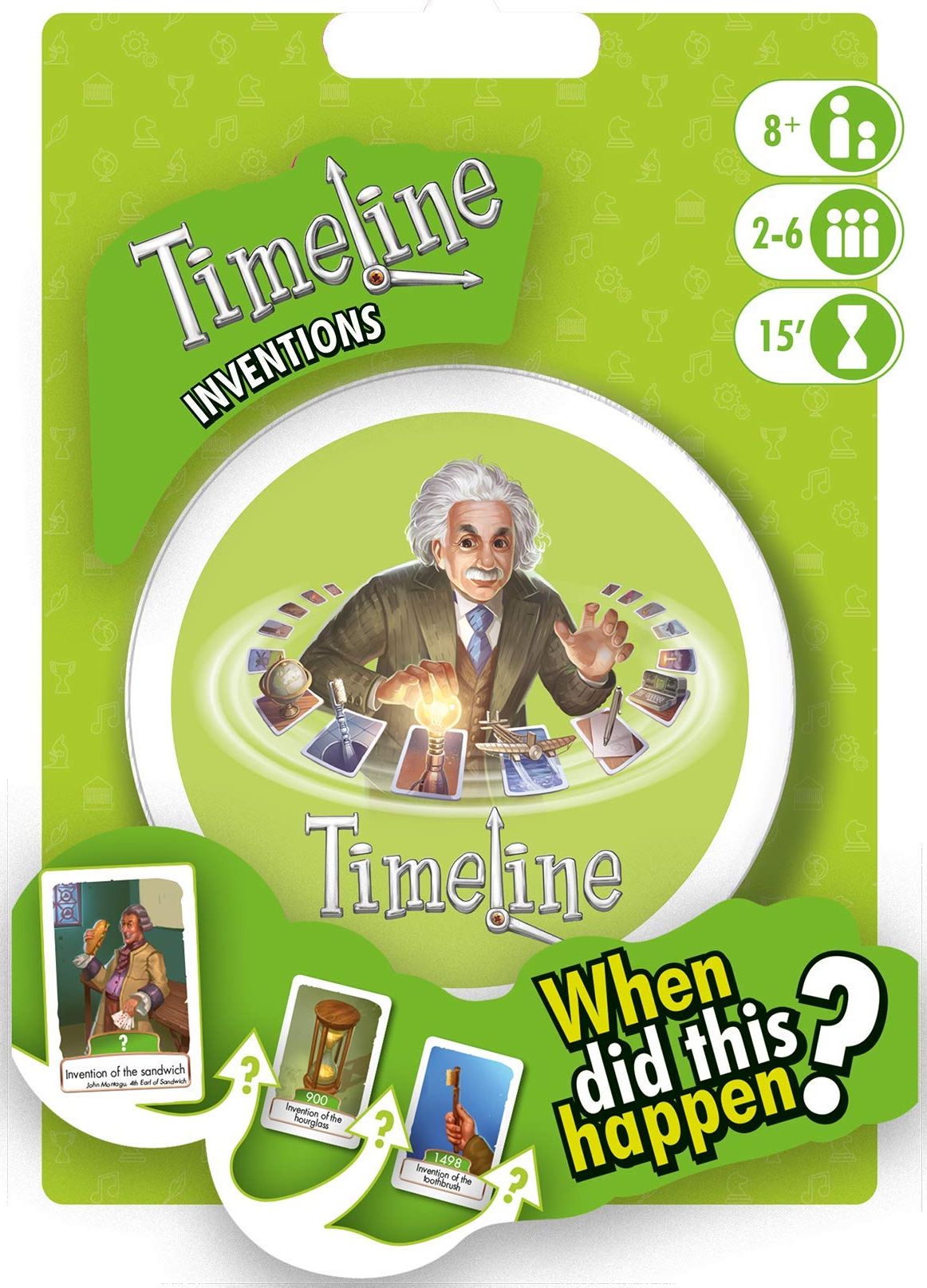
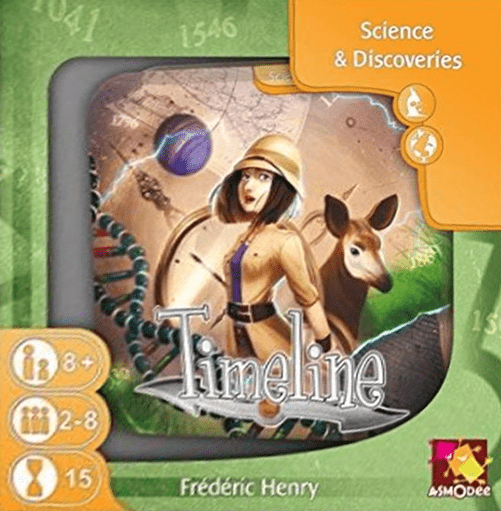
Ever had those gatherings where someone wants to see who the real 'know-it-all' is without spending an hour reading a rulebook? That's exactly where Timeline: General Interest comes in. The premise is brilliantly simple: you have cards depicting historical events and must slot them into a timeline that grows across the table. The catch? The date is only printed on one side, so you're either relying on your history degree or a very educated guess to decide if that monument was built before or after that famous discovery.
With 110 cards covering themes like arts, sports, inventions, and monuments, the game is a curated tour of human history. If you place your card correctly, it stays, and you're one step closer to victory. If you mess up, the card is discarded, and you have to draw a new one from the deck. The goal is straightforward: be the first to empty your hand. In case of a tie, a sudden-death round ensues where players draw one more card to determine the ultimate winner.
What makes this game truly great is its modularity. If 'General Interest' feels too easy or you want a more specific challenge, you can mix these cards with other Timeline editions (like Science or Cinema), creating a massive historical puzzle. It's the kind of game that sparks funny debates like 'No way that song came out before this invention!', making it far more dynamic than a standard trivia game. It's fast, portable, and perfect for breaking the ice at any party or family get-together, turning learning into a competitive and social experience.
With 110 cards covering themes like arts, sports, inventions, and monuments, the game is a curated tour of human history. If you place your card correctly, it stays, and you're one step closer to victory. If you mess up, the card is discarded, and you have to draw a new one from the deck. The goal is straightforward: be the first to empty your hand. In case of a tie, a sudden-death round ensues where players draw one more card to determine the ultimate winner.
What makes this game truly great is its modularity. If 'General Interest' feels too easy or you want a more specific challenge, you can mix these cards with other Timeline editions (like Science or Cinema), creating a massive historical puzzle. It's the kind of game that sparks funny debates like 'No way that song came out before this invention!', making it far more dynamic than a standard trivia game. It's fast, portable, and perfect for breaking the ice at any party or family get-together, turning learning into a competitive and social experience.
Gallery
Box and component photos
Tap any photo to open fullscreen. Photos submitted by the community or publisher.
Best player count
BGG community vote
2
REC
3
REC
4
BEST
5
REC
6
REC
7
REC
8
REC
Soundtrack
Ambience suggested by Melodice
Loading playlist...
Where to Buy
Prices monitored daily
Finding best prices...
Prices unavailable at this time.
Price history — last 6 months (lowest new offer)
As an Amazon Associate I earn from qualifying purchases. Prices and availability subject to change.
Alert enabled!
Join the BoardGamesBot deals group
Get the best board game deals every day — without message spam.
Join the WhatsApp groupGame details
Mechanics, categories, families and credits
Mechanics
Categories
Families
Publisher
asmodee, Asterion Press, Esdevium, Galápagos Jogos, Gémklub, Hobby Japan, Lifestyle Boardgames Ltd, More Fun Co., Ltd., Rebel Sp. z o.o., Rexhry
Designer
Frédéric Henry
Artist
Nicolas Fructus, Xavier Collette
Community
Data from BoardGameGeek
9,190owners
427wishlist
97want to play
Frequently Asked Questions
Quick answers before you buy
Is it hard to learn?
Not at all! You can explain the rules in under a minute and start playing immediately.
How many people can play?
From 2 to 8 players, making it great for various group sizes.
How long does a game take?
It's very quick, usually lasting around 15 minutes.
Can I mix it with other games in the series?
Yes! You can combine it with almost any other Timeline set to increase the challenge (except for the Star Wars version).
Is it suitable for kids?
Yes, it's a fantastic way to teach history playfully, though it depends on the child's prior knowledge.
Other Games You'll Like
Based on mechanics and theme