Tiwanaku
Sit Down!, 4GAMES, Tesla Games · Board game · 2022
1–4 · best 3
Solo
30–60 min
Weight 2.2/5
Buy
7.7
rating
Ludopedia
7.2
rating
BGG
Our Verdict
RECOMMENDED
Enjoy a cooperative game with an Andean theme and exploration? Tiwanaku takes you on an adventure of deduction and planning!
Highlights
- Thematic and engaging exploration
- Dynamic modular board
- Challenging cooperative play
- Unique placement rules
Keep in mind
- Initial learning curve
- Luck dependency
- Can feel repetitive
Rules manual not indexed yet
Upload the PDF rulebook to ask questions about this game with AI.
About the game
What you do in a play session
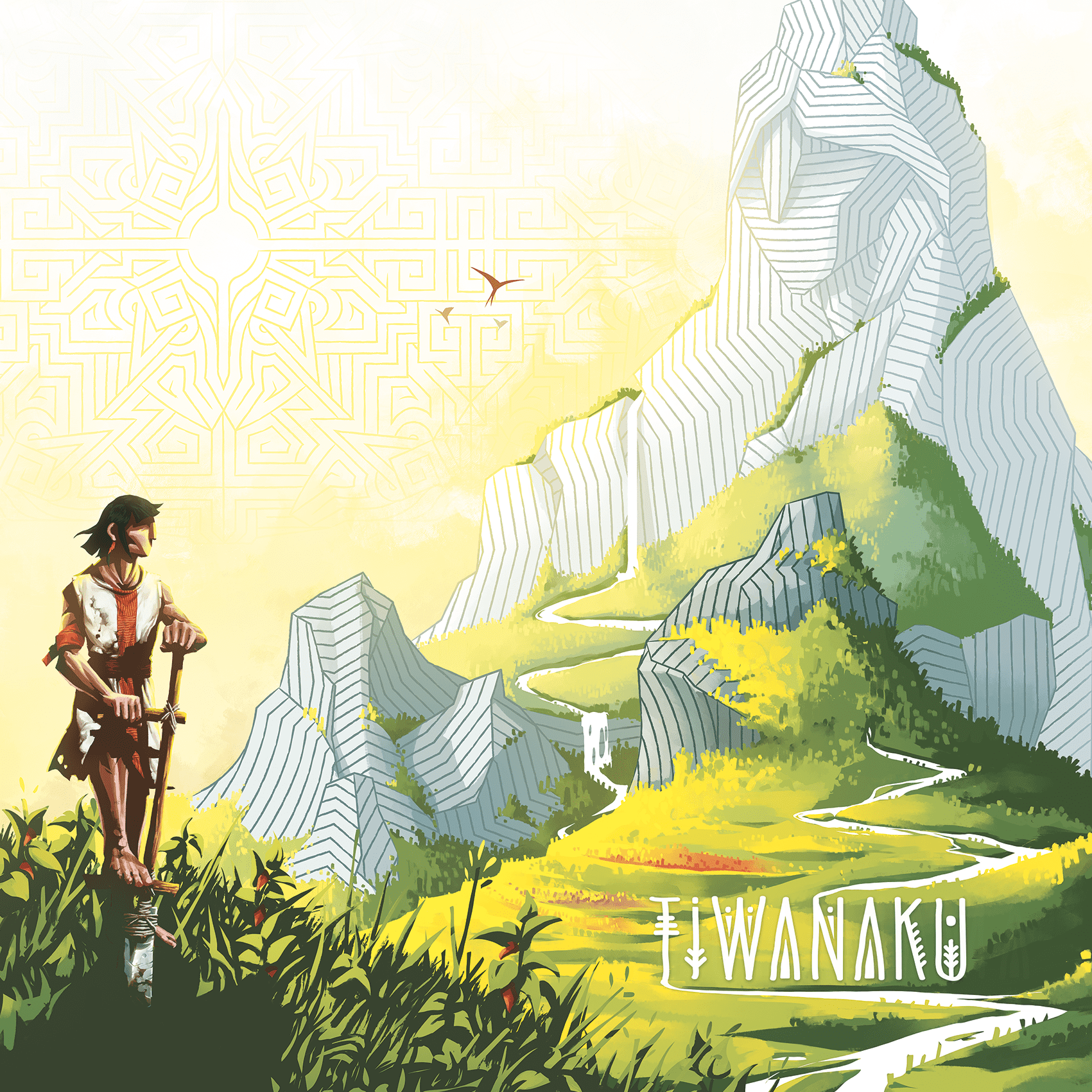
Prepare for a journey through the Andes as an Inca tribe leader in Tiwanaku! Inspired by creation legends and the veneration of Pachamama, this cooperative game invites you to explore unknown territories in search of new lands to cultivate and prosper in harmony with nature. Each scenario presents a unique challenge with a special arrangement of terrain and crop tiles, requiring strategic thinking to maximize your points and honor the principles of diversity and complementarity. Beware, for disrespecting Mother Earth can bring consequences!
On your turn, you can either explore new areas or perform a divine action. Exploration involves placing terrain tiles, each with its own adjacency and size rules, which determine the types of crops that can be found. Crops come in different values and sizes, and two identical ones can never be adjacent. Divine actions, on the other hand, offer a way to score points and advance in the game, but they also carry risks. At the end of each action, you have the chance to turn in offering cubes for points, but you can only hold one of each color. The game ends when the last terrain tile is placed, triggering a final race: each player can take one last divine action or pass. Whoever has the most points at the end wins. Tiwanaku is a game that blends deduction, planning, and a touch of luck, ideal for those who enjoy thematic challenges and clever mechanics.
On your turn, you can either explore new areas or perform a divine action. Exploration involves placing terrain tiles, each with its own adjacency and size rules, which determine the types of crops that can be found. Crops come in different values and sizes, and two identical ones can never be adjacent. Divine actions, on the other hand, offer a way to score points and advance in the game, but they also carry risks. At the end of each action, you have the chance to turn in offering cubes for points, but you can only hold one of each color. The game ends when the last terrain tile is placed, triggering a final race: each player can take one last divine action or pass. Whoever has the most points at the end wins. Tiwanaku is a game that blends deduction, planning, and a touch of luck, ideal for those who enjoy thematic challenges and clever mechanics.
Gallery
Box and component photos
Tap any photo to open fullscreen. Photos submitted by the community or publisher.
Rules videos
Learn by watching before you open the box


Best player count
BGG community vote
1
REC
2
REC
3
REC
4
REC
Soundtrack
Ambience suggested by Melodice
Loading playlist...
Where to Buy
Prices monitored daily
Finding best prices...
Prices unavailable at this time.
Price history — last 6 months (lowest new offer)
As an Amazon Associate I earn from qualifying purchases. Prices and availability subject to change.
Alert enabled!
Join the BoardGamesBot deals group
Get the best board game deals every day — without message spam.
Join the WhatsApp groupGame details
Mechanics, categories, families and credits
Mechanics
Categories
Families
Publisher
Sit Down!, 4GAMES, Tesla Games
Designer
Olivier Grégoire
Artist
Raphaël Samakh
Community
Data from BoardGameGeek
3,190owners
1,034wishlist
126want to play
Frequently Asked Questions
Quick answers before you buy
What is the average playtime for Tiwanaku?
A game of Tiwanaku typically lasts between 30 and 60 minutes.
How many players can participate?
The game is for 1 to 4 players, making it great for solo players as well as small groups.
Is Tiwanaku a difficult game to learn?
The game's average weight is considered light to medium (2.18/5), indicating that the rules are accessible, but the game offers a good strategic challenge.
Is the game's theme well integrated with its mechanics?
Yes, the theme of Andean exploration and the veneration of Pachamama are well represented by the tile placement and divine action mechanics.
Does the game have high replayability?
Absolutely! The modular board and different scenarios ensure that each game is a new and challenging experience.
Is it a competitive or cooperative game?
Tiwanaku is primarily a cooperative game, where all players work together to achieve a common goal.
Other Games You'll Like
Based on mechanics and theme