6.0
rating
Ludopedia
7.1
rating
BGG
Our Verdict
FOR GENRE FANS
If you enjoy card games that blend memory with a dash of risk and hand-shedding strategy, Tokkome might be a great pick! It's quick and makes you think.
Highlights
- Tense hand management
- Memory is key
- Fast and dynamic matches
- Interesting and unique theme
Keep in mind
- Can be frustrating
- Luck of the draw
- Little direct interaction
Rules manual not indexed yet
Upload the PDF rulebook to ask questions about this game with AI.
About the game
What you do in a play session
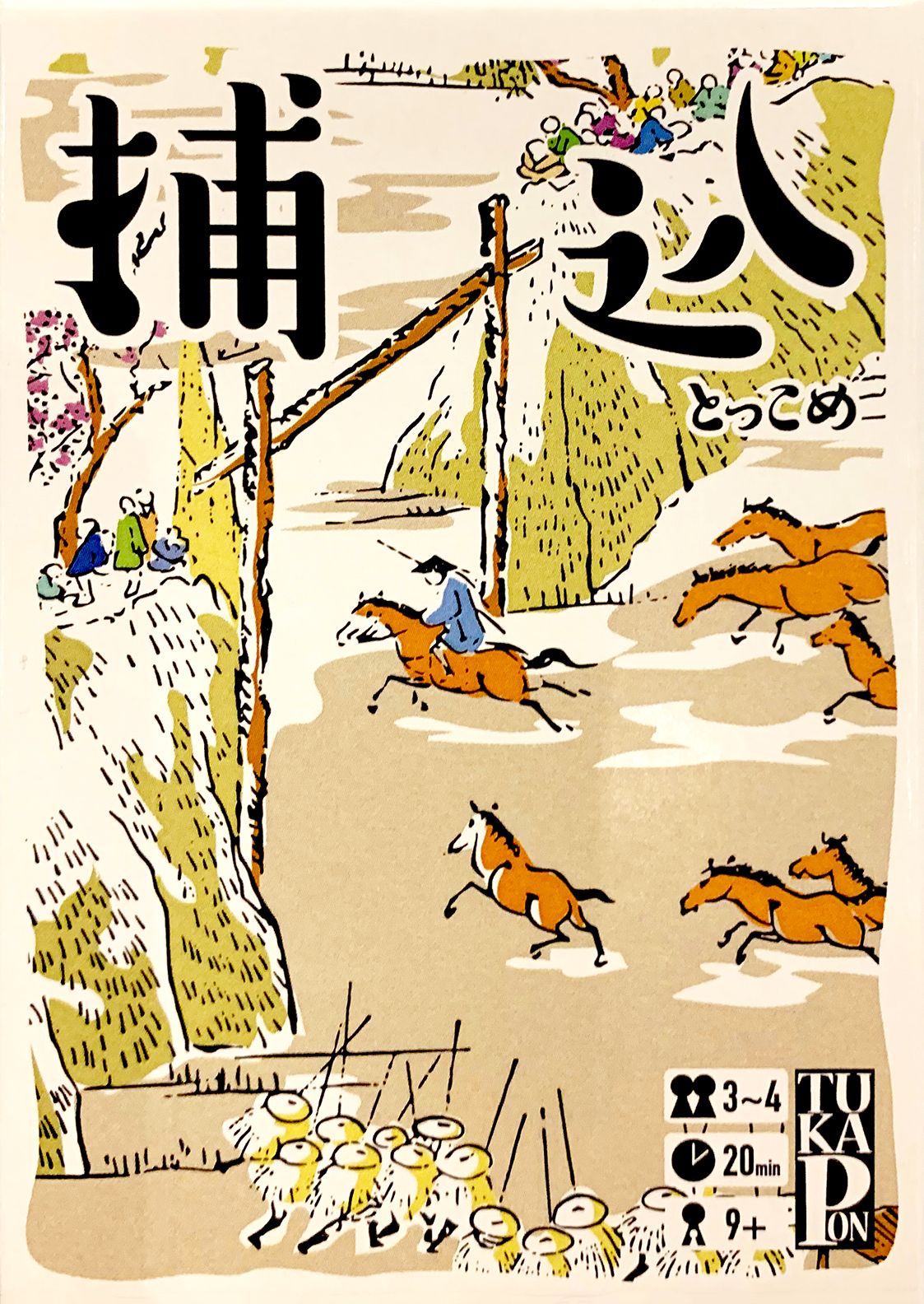
In Tokkome, you embark on a journey through feudal Japan, specifically the Edo period, where capturing wild horses was a crucial art for the military. This fast-paced and engaging card game places you in the role of a horse "catcher." Each card represents a number of horses, from 1 to 7, and the goal is to get rid of your cards as quickly as possible.
The game unfolds around two main piles: Tokkome and Maki. On each turn, you have the option to play one or three cards on top of either of these piles. A play is only valid if the cards you are playing form a sequence with the top card of the chosen pile.
A special and risky move is to "capture" all cards from the Tokkome pile. If you choose to do this, and at the end you have three cards of the same number in your hand, you can discard them and score victory points. However, this action increases the number of cards in your hand, which goes against the main objective of getting rid of them. To further complicate matters, after this capture, all cards from the Maki pile are transferred to Tokkome, making the situation even more tense.
The game ends when a player successfully empties their hand completely. At this point, other players lose victory points for each card they still hold. Whoever has the highest score at the end wins! Tokkome is a game that requires attention, memory, and a good dose of strategy to manage your hand and decide the right moment to take a risk.
The game unfolds around two main piles: Tokkome and Maki. On each turn, you have the option to play one or three cards on top of either of these piles. A play is only valid if the cards you are playing form a sequence with the top card of the chosen pile.
A special and risky move is to "capture" all cards from the Tokkome pile. If you choose to do this, and at the end you have three cards of the same number in your hand, you can discard them and score victory points. However, this action increases the number of cards in your hand, which goes against the main objective of getting rid of them. To further complicate matters, after this capture, all cards from the Maki pile are transferred to Tokkome, making the situation even more tense.
The game ends when a player successfully empties their hand completely. At this point, other players lose victory points for each card they still hold. Whoever has the highest score at the end wins! Tokkome is a game that requires attention, memory, and a good dose of strategy to manage your hand and decide the right moment to take a risk.
Gallery
Box and component photos
Tap any photo to open fullscreen. Photos submitted by the community or publisher.
Best player count
BGG community vote
3
OK
4
OK
Soundtrack
Ambience suggested by Melodice
Loading playlist...
Where to Buy
Prices monitored daily
Finding best prices...
Prices unavailable at this time.
Price history — last 6 months (lowest new offer)
As an Amazon Associate I earn from qualifying purchases. Prices and availability subject to change.
Alert enabled!
Join the BoardGamesBot deals group
Get the best board game deals every day — without message spam.
Join the WhatsApp groupGame details
Mechanics, categories, families and credits
Mechanics
Categories
Publisher
TUKAPON
Designer
Kenji Mishima
Artist
Tsutomu Dejima (出嶋 勉)
Community
Data from BoardGameGeek
56owners
22wishlist
7want to play
Frequently Asked Questions
Quick answers before you buy
What is the average playtime for Tokkome?
Tokkome matches are quite fast, usually lasting between 20 and 30 minutes, but this can vary depending on the players' familiarity with the rules and luck in their plays.
Is Tokkome a game for beginners or does it require experience?
The rules are quite straightforward, making it accessible for beginners. However, the strategy for optimizing hand management and the memory needed to play well can be a fun challenge for more experienced players.
How many players does Tokkome support?
Tokkome is designed for 3 to 4 players, which creates a good balance between table dynamics and competition for cards.
What is the main challenge in Tokkome?
The main challenge is managing your hand of cards, deciding when to play sequences, when to risk taking the Tokkome pile to score, and how to get rid of cards before your opponents, all while remembering what has already been played.
Is the horse-capturing theme very present in the mechanics?
The theme is present in the setting and the naming of actions, but the core mechanics revolve around hand management and memory, serving more as an interesting backdrop than a central gameplay element.
Is there much player interaction in Tokkome?
The interaction is indirect. You don't directly attack opponents, but your actions, like taking the Tokkome pile, can affect their hands and the availability of cards for everyone.
Other Games You'll Like
Based on mechanics and theme