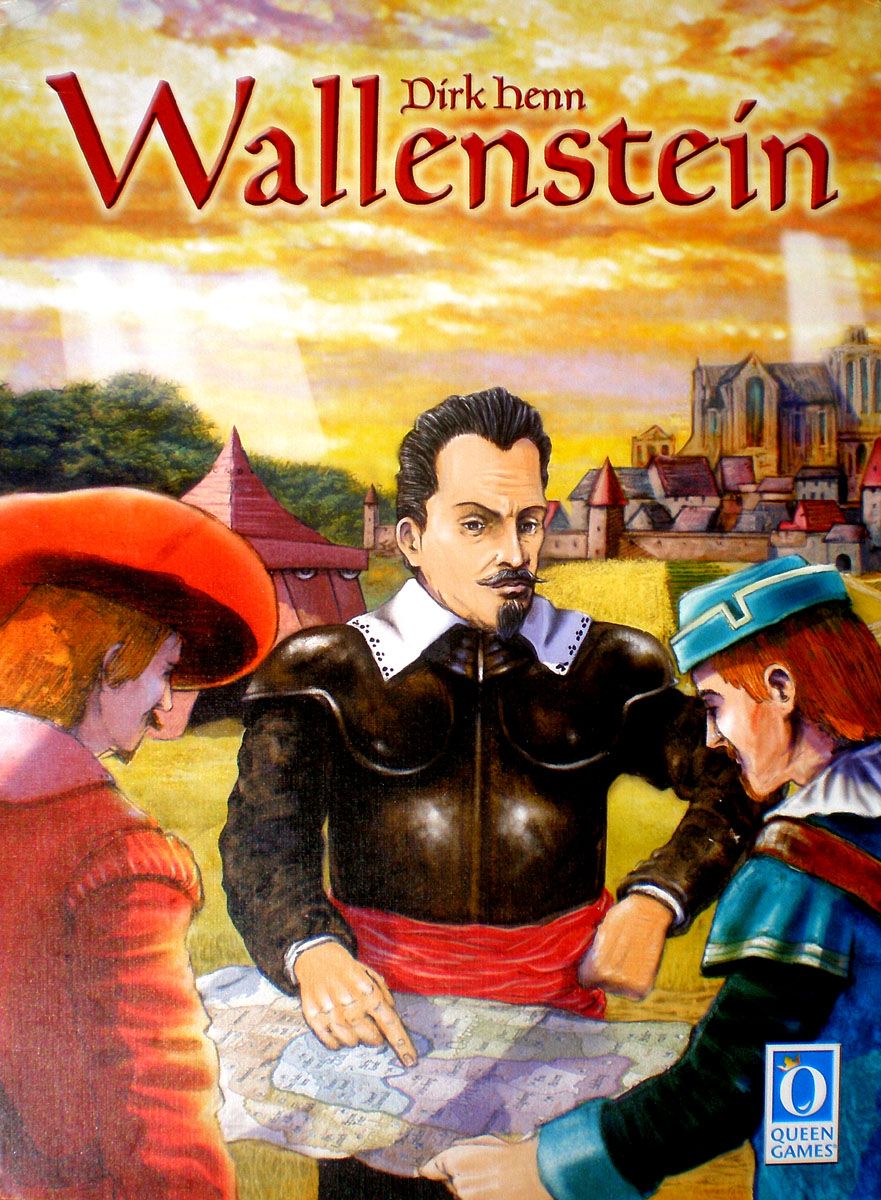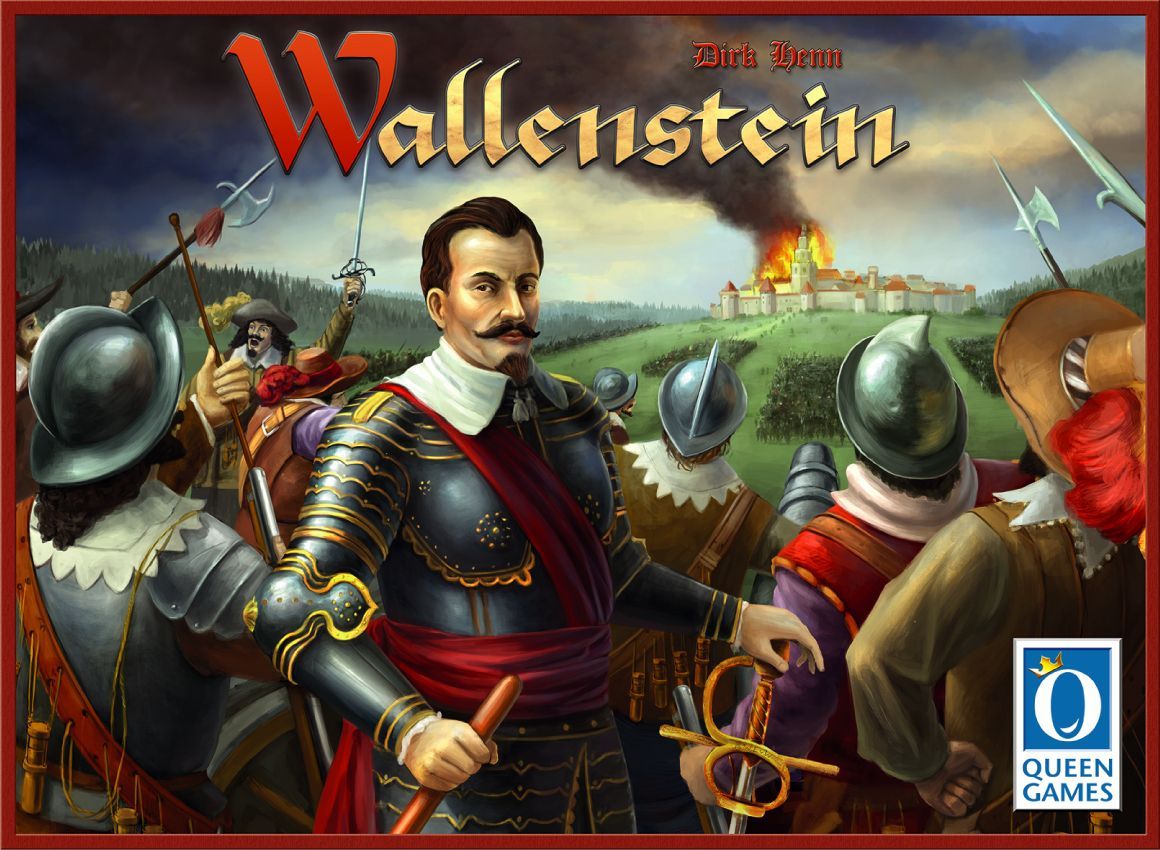
Wallenstein (Second Edition)
Queen Games · Board game · 2012
3–5 · best 5
90–120 min
Weight 3.2/5
Buy · from US$ 47.45
8.4
rating
Ludopedia
7.6
rating
BGG
Our Verdict
RECOMMENDED
If you love historic strategy with tactile choices, Wallenstein grabs you from the first turn.
Highlights
- deep tactics
- fun cube tower
- integrated expansions
Keep in mind
- needs 3‑5 players
- rules can feel dense
Rules manual not indexed yet
Upload the PDF rulebook to ask questions about this game with AI.
About the game
What you do in a play session
The 2012 second edition of Wallenstein revives Dirk Henn's classic with two built‑in expansions—Emperor's Court and Landsknechte—and a few rule tweaks. Set in 1625 amid the Thirty Years' War, princes, generals and counties vie for land, resources, and prestige. Each game spans two "years" of campaign, divided into spring, summer and fall action phases, followed by a winter that may bring grain shortages and revolts. During the action seasons, ten action cards are dealt—five face‑up and five face‑down—along with five bonus tiles that provide extra money, grain or troops. Players secretly assign one of their county cards (or a blank) to each of the ten action slots on their personal board, bid for turn order, and pick a bonus tile. After the round's event card is revealed and turn order set, actions are executed in the pre‑planned sequence, gradually uncovering the face‑down cards and giving players partial foresight.
Collecting taxes and extracting grain are vital, but over‑exploitation can spark winter revolts. Combat and uprisings are resolved using the iconic cube tower: army and peasant cubes are dropped from the top, some get trapped in the baffles while others emerge at the bottom, representing the forces that actually fight. The expansions add strategic depth: in Emperor's Court, armies that fall in the tower become courtiers competing for imperial favors; Landsknechte provides a four‑card stack per player that, when a player controls counties in four different regions, lets them draw the top card and claim bonuses such as money or troops. Although the box lists 2‑5 players, the game plays properly with 3‑5. With a 3.2/5 weight, it blends resource management, area movement, and simultaneous decision‑making, delivering a deep yet approachable experience for fans of historical strategy games.
Collecting taxes and extracting grain are vital, but over‑exploitation can spark winter revolts. Combat and uprisings are resolved using the iconic cube tower: army and peasant cubes are dropped from the top, some get trapped in the baffles while others emerge at the bottom, representing the forces that actually fight. The expansions add strategic depth: in Emperor's Court, armies that fall in the tower become courtiers competing for imperial favors; Landsknechte provides a four‑card stack per player that, when a player controls counties in four different regions, lets them draw the top card and claim bonuses such as money or troops. Although the box lists 2‑5 players, the game plays properly with 3‑5. With a 3.2/5 weight, it blends resource management, area movement, and simultaneous decision‑making, delivering a deep yet approachable experience for fans of historical strategy games.
Gallery
Box and component photos
Tap any photo to open fullscreen. Photos submitted by the community or publisher.
Rules videos
Learn by watching before you open the box

Best player count
BGG community vote
3
REC
4
REC
5
BEST
Soundtrack
Ambience suggested by Melodice
Loading playlist...
Where to Buy
Prices monitored daily
Finding best prices...
Prices unavailable at this time.
Price history — last 6 months (lowest new offer)
As an Amazon Associate I earn from qualifying purchases. Prices and availability subject to change.
Alert enabled!
Join the BoardGamesBot deals group
Get the best board game deals every day — without message spam.
Join the WhatsApp groupGame details
Mechanics, categories, families and credits
Mechanics
Categories
Families
Publisher
Queen Games
Designer
Dirk Henn
Artist
Oliver Schlemmer
Community
Data from BoardGameGeek
1,924owners
847wishlist
197want to play
Frequently Asked Questions
Quick answers before you buy
How many players can play?
The game works best with 3‑5 players; although the box lists 2‑5, playing with only 2 is not recommended.
How long does a game take?
Typically 90‑120 minutes, depending on player count and whether you use the expansions.
What is the complexity level?
BGG weight 3.2/5 – medium; it requires planning and attention to phases, but the rules are straightforward.
What are the standout components?
The wooden cube tower, bonus tiles, action cards, county cards, and colorful army/peasant cubes.
Who is the game for?
Fans of historic strategy games, especially those interested in the Renaissance and Thirty Years' War, who enjoy simultaneous decisions and area control.
Other Games You'll Like
Based on mechanics and theme