Weimar: The Fight for Democracy — Price & soundtrack
Spielworxx, Capstone Games, HIT Games · Board game · 2023
4 · best 4
180–360 min
Weight 4.0/5
Buy · from US$ 99.99
—
rating
Ludopedia
8.3
rating
BGG
Our Verdict
FOR GENRE FANS
Perfect for history buffs and heavy gamers; the ideological struggle is visceral and strategic.
Highlights
- Extremely deep historical simulation
- Excellent asymmetrical goal design
- Versatile and tactical card mechanics
- Constant tension between politics and streets
Keep in mind
- Very steep learning curve
- Long sessions requiring significant stamina
Rules manual not indexed yet
Upload the PDF rulebook to ask questions about this game with AI.
About the game
What you do in a play session
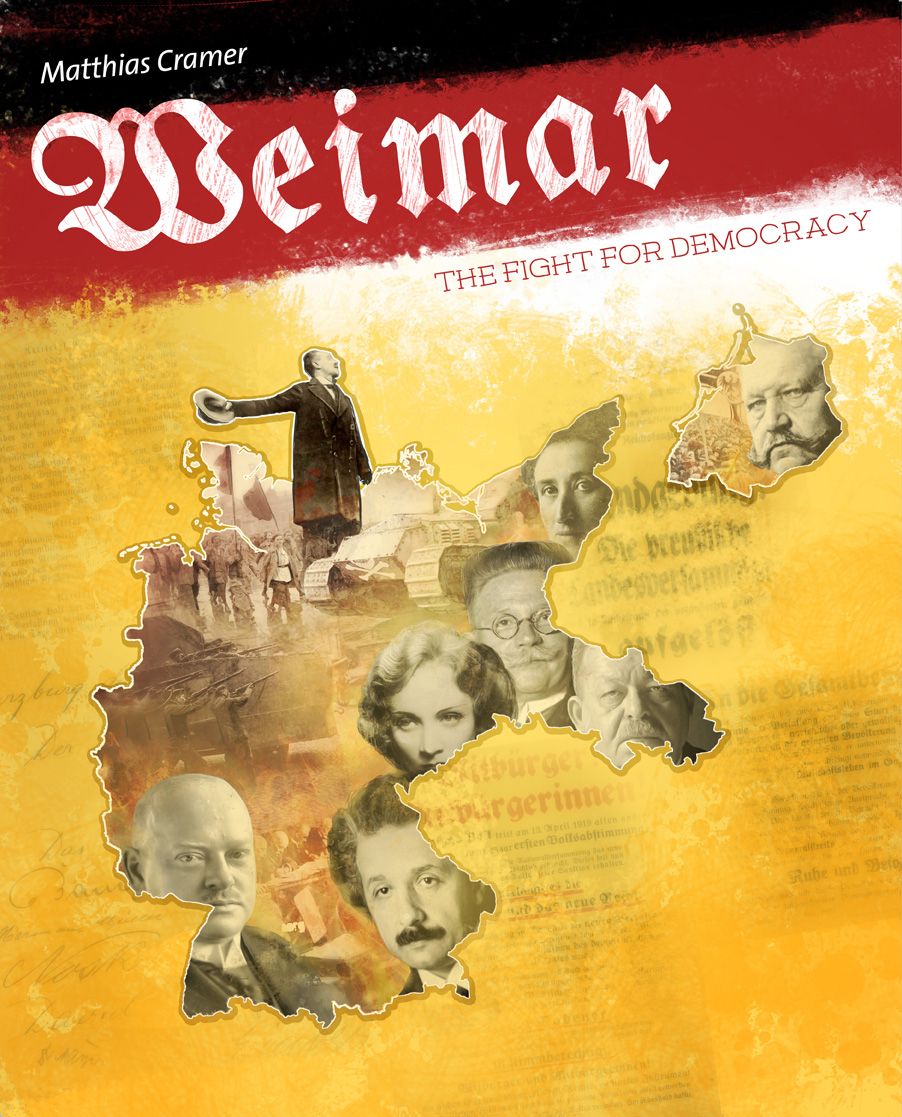
Imagine Berlin in November 1918: the air is freezing, tension is high, and the German monarchy has just collapsed. In this chaos, Germany's first democracy is born, and that's where you come in. In Weimar: The Fight for Democracy, you take control of one of the era's major political forces in a desperate struggle for the nation's fate. On one side, Social Democrats and Conservatives fight to keep democracy alive; on the other, Communists and Nationalists work to overthrow the government and install their own regimes. Will the Republic survive, or will history repeat itself with the rise of totalitarianism?
The game is divided into two main battlefields. First, there is the war for public opinion, where parties struggle for influence over crucial issues like the economy, the media, and foreign affairs. Winning these disputes grants points and the power to make pivotal decisions. Simultaneously, the fight hits the streets. You must position your followers in Germany's major cities to organize demonstrations, engage in street fights, and coordinate actions via paramilitary organizations.
As a tense and strategic Card-Driven Game (CDG), cards are the heart of the experience: you can play them to trigger events, manipulate public opinion, or perform tactical street actions. In each of the six turns, players define their agenda, adjusting their play decks or setting the current issues. With asymmetrical goals, victory depends on your ideology: while democrats score by stabilizing the state and fighting poverty, anti-democrats thrive on chaos, coups, and social unrest. It is a cerebral duel where every card played can alter the course of history.
The game is divided into two main battlefields. First, there is the war for public opinion, where parties struggle for influence over crucial issues like the economy, the media, and foreign affairs. Winning these disputes grants points and the power to make pivotal decisions. Simultaneously, the fight hits the streets. You must position your followers in Germany's major cities to organize demonstrations, engage in street fights, and coordinate actions via paramilitary organizations.
As a tense and strategic Card-Driven Game (CDG), cards are the heart of the experience: you can play them to trigger events, manipulate public opinion, or perform tactical street actions. In each of the six turns, players define their agenda, adjusting their play decks or setting the current issues. With asymmetrical goals, victory depends on your ideology: while democrats score by stabilizing the state and fighting poverty, anti-democrats thrive on chaos, coups, and social unrest. It is a cerebral duel where every card played can alter the course of history.
Gallery
Box and component photos
Tap any photo to open fullscreen. Photos submitted by the community or publisher.
Rules videos
Learn by watching before you open the box

Best player count
BGG community vote
4
BEST
Soundtrack
Ambience suggested by Melodice
Loading playlist...
Where to Buy
Prices monitored daily
Finding best prices...
Prices unavailable at this time.
Price history — last 6 months (lowest new offer)
Alert enabled!
Join the BoardGamesBot deals group
Get the best board game deals every day — without message spam.
Join the WhatsApp groupGame details
Mechanics, categories, families and credits
Mechanics
Categories
Families
Publisher
Spielworxx, Capstone Games, HIT Games, Hobby Japan, Maldito Games, Skellig Games
Designer
Matthias Cramer
Artist
Christian Opperer
Community
Data from BoardGameGeek
1,611owners
938wishlist
169want to play
Frequently Asked Questions
Quick answers before you buy
Is the game very complex?
Yes, with a BGG weight of 4.01, it's intended for experienced gamers who enjoy detailed rules and deep simulations.
How long does a game last?
Be prepared for long sessions, ranging from 3 to 6 hours, depending on the group's experience.
Can it be played with fewer than 4 people?
The game is specifically designed for 4 players, focusing on the clash between the four major political forces.
Is the theme just flavor or does it affect mechanics?
It's fully integrated. Goals are asymmetrical: those seeking democracy play differently than those seeking a coup.
What are the 'Multi-Use Cards' mentioned?
These are cards that can be used for different purposes (e.g., as an event or for influence), forcing tough decision-making.
Other Games You'll Like
Based on mechanics and theme