—
rating
Ludopedia
7.2
rating
BGG
Our Verdict
RECOMMENDED
If you love fast puzzles that mix numbers and colors, Acrylogic will hook you.
Highlights
- Quick to learn
- Language‑free
- Solo and competitive modes
Keep in mind
- Requires paper and pen
- Limited difficulty curve
Rules manual not indexed yet
Upload the PDF rulebook to ask questions about this game with AI.
About the game
What you do in a play session
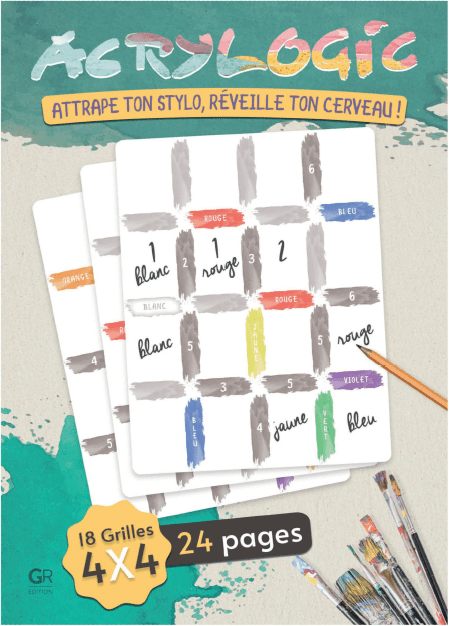
Acrylogic arrives as a logic mini‑magazine inspired by Sudoku, but with an artistic twist that makes it feel fresh. Each page presents a 3×3 or 4×4 grid of white squares where you must write a number (1‑4) and a colour (yellow, blue, red or white – which acts as “no colour”). Every square must be unique, so no two cells may share the same number‑colour pair. Between the squares are paint marks that serve as clues: a number indicates that the two adjacent squares add up to that value (e.g., a “5” means 2 + 3), and a colour indicates that the two squares are the two colours named (e.g., “green” means yellow + blue).
The game works solo, cooperatively, or as a race. In solo or co‑op you need only one copy of the magazine; each player solves the same grid at their own pace, marking answers on their own sheet. In competitive mode each participant gets their own magazine and tries to finish the grid faster than the others, turning deduction into a lively sprint. Because everything is done with paper, pen and the rules, Acrylogic is completely universal – no text, no translation needed, and it works for any age from ten upwards.
Rounds last five to fifteen minutes, offering quick yet focused brain‑teasing sessions. Its light weight (1.5/5) signals an easy learning curve, perfect for fans of short puzzles and for those who want something that fits in a backpack or a gamer’s toolbox. If you enjoy numeric challenges, colour combos, and testing your mind in short bursts, Acrylogic might become your next favorite shelf‑top brain‑teaser.
The game works solo, cooperatively, or as a race. In solo or co‑op you need only one copy of the magazine; each player solves the same grid at their own pace, marking answers on their own sheet. In competitive mode each participant gets their own magazine and tries to finish the grid faster than the others, turning deduction into a lively sprint. Because everything is done with paper, pen and the rules, Acrylogic is completely universal – no text, no translation needed, and it works for any age from ten upwards.
Rounds last five to fifteen minutes, offering quick yet focused brain‑teasing sessions. Its light weight (1.5/5) signals an easy learning curve, perfect for fans of short puzzles and for those who want something that fits in a backpack or a gamer’s toolbox. If you enjoy numeric challenges, colour combos, and testing your mind in short bursts, Acrylogic might become your next favorite shelf‑top brain‑teaser.
Gallery
Box and component photos
Tap any photo to open fullscreen. Photos submitted by the community or publisher.
Best player count
BGG community vote
1
BEST
2
REC
3
OK
4
OK
5
OK
6
OK
7
OK
8
OK
9
OK
10
OK
11
OK
12
OK
13
OK
14
OK
15
OK
16
OK
17
OK
18
OK
19
OK
20
OK
21
OK
22
OK
23
OK
24
OK
25
OK
26
OK
27
OK
28
OK
29
OK
30
OK
31
OK
32
OK
33
OK
34
OK
35
OK
36
OK
37
OK
38
OK
39
OK
40
OK
41
OK
42
OK
43
OK
44
OK
45
OK
46
OK
47
OK
48
OK
49
OK
50
OK
51
OK
52
OK
53
OK
54
OK
55
OK
56
OK
57
OK
58
OK
59
OK
60
OK
61
OK
62
OK
63
OK
64
OK
65
OK
66
OK
67
OK
68
OK
69
OK
70
OK
71
OK
72
OK
73
OK
74
OK
75
OK
76
OK
77
OK
78
OK
79
OK
80
OK
81
OK
82
OK
83
OK
84
OK
85
OK
86
OK
87
OK
88
OK
89
OK
90
OK
91
OK
92
OK
93
OK
94
OK
95
OK
96
OK
97
OK
98
OK
99
OK
Soundtrack
Ambience suggested by Melodice
Loading playlist...
Where to Buy
Prices monitored daily
Finding best prices...
Prices unavailable at this time.
Price history — last 6 months (lowest new offer)
As an Amazon Associate I earn from qualifying purchases. Prices and availability subject to change.
Alert enabled!
Join the BoardGamesBot deals group
Get the best board game deals every day — without message spam.
Join the WhatsApp groupGame details
Mechanics, categories, families and credits
Mechanics
Categories
Families
Publisher
Grammes Edition
Designer
Léandre Proust
Artist
Clément Proust
Community
Data from BoardGameGeek
117owners
7wishlist
1want to play
Frequently Asked Questions
Quick answers before you buy
How many players can join?
From 1 up to 99 players; in competitive mode each uses their own magazine.
How long does a game take?
Typically 5 to 15 minutes, depending on grid size and player experience.
Do I need any special components?
Just paper, a pen or pencil, and the magazine itself, which includes the grids and clues.
Is it suitable for kids?
Yes, recommended for ages 10 and up, as there’s no text and the rules are straightforward.
Can I play solo?
Absolutely! The game is designed to be as enjoyable alone as it is with others.
Are there expansions or variants?
Currently the magazine contains all the puzzles; future editions may add more challenges.
What is the difficulty level?
A light weight (1.5) means an easy learning curve, though puzzles can become quite challenging.
Other Games You'll Like
Based on mechanics and theme